Advances in Chromatography (eBook, ePUB)
Volume 33
Redaktion: Brown, Phyllis R.; Grushka, Eli
319,95 €
319,95 €
inkl. MwSt.
Sofort per Download lieferbar

160 °P sammeln
319,95 €
Als Download kaufen
319,95 €
inkl. MwSt.
Sofort per Download lieferbar
160 °P sammeln
Jetzt verschenken
Alle Infos zum eBook verschenken
319,95 €
inkl. MwSt.
Sofort per Download lieferbar
Alle Infos zum eBook verschenken
160 °P sammeln

Advances in Chromatography (eBook, ePUB)
Volume 33
Redaktion: Brown, Phyllis R.; Grushka, Eli
- Format: ePub
- Merkliste
- Auf die Merkliste
- Bewerten Bewerten
- Teilen
- Produkt teilen
- Produkterinnerung
- Produkterinnerung

Bitte loggen Sie sich zunächst in Ihr Kundenkonto ein oder registrieren Sie sich bei
bücher.de, um das eBook-Abo tolino select nutzen zu können.
Hier können Sie sich einloggen
Sie sind bereits eingeloggt. Klicken Sie auf 2. tolino select Abo, um fortzufahren.

Bitte loggen Sie sich zunächst in Ihr Kundenkonto ein oder registrieren Sie sich bei bücher.de, um das eBook-Abo tolino select nutzen zu können.
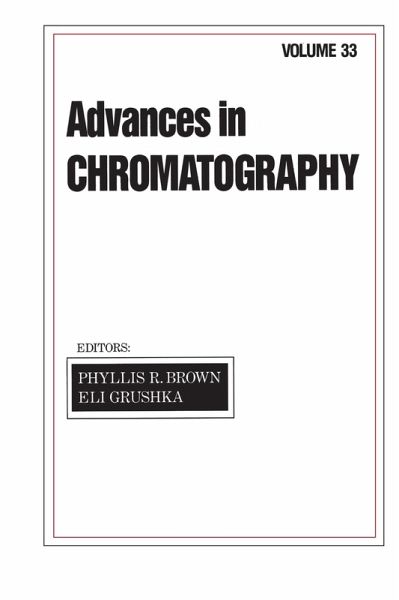
Written by experts on current innovations in their fields, this 33rd volume of Advances in Chromatography covers subjects such as planar chips technology, molecular biochromatography, fusion reaction chromatography and enantioselective liquid chromatographic separations.
- Geräte: eReader
- mit Kopierschutz
- eBook Hilfe
Andere Kunden interessierten sich auch für
Advances in Chromatography (eBook, ePUB)319,95 €
Advances in Chromatography (eBook, ePUB)61,95 €
Advances in Chromatography (eBook, ePUB)319,95 €
Henk LingemanDetection-Oriented Derivatization Techniques in Liquid Chromatography (eBook, ePUB)285,95 €
Advances in Chromatography (eBook, ePUB)43,95 €
Advances in Chromatography (eBook, ePUB)61,95 €
Advances in Chromatography (eBook, ePUB)319,95 €-
-
-
Written by experts on current innovations in their fields, this 33rd volume of Advances in Chromatography covers subjects such as planar chips technology, molecular biochromatography, fusion reaction chromatography and enantioselective liquid chromatographic separations.
Dieser Download kann aus rechtlichen Gründen nur mit Rechnungsadresse in A, B, BG, CY, CZ, D, DK, EW, E, FIN, F, GR, HR, H, IRL, I, LT, L, LR, M, NL, PL, P, R, S, SLO, SK ausgeliefert werden.
Produktdetails
- Produktdetails
- Verlag: Taylor & Francis eBooks
- Seitenzahl: 296
- Erscheinungstermin: 29. April 2021
- Englisch
- ISBN-13: 9781000447422
- Artikelnr.: 61466921
- Verlag: Taylor & Francis eBooks
- Seitenzahl: 296
- Erscheinungstermin: 29. April 2021
- Englisch
- ISBN-13: 9781000447422
- Artikelnr.: 61466921
- Herstellerkennzeichnung Die Herstellerinformationen sind derzeit nicht verfügbar.
Phyllis R. Brown UNIVERSITY OF RHODE ISLAND, Eli Grushka THE HEBREW UNIVERSITY OF JERUSALEM, JERUSALEM, ISRAEL
1. Planar Chips Technology of Separation Systems: A Developing Perspective
in Chemical Monitoring I. Introduction II. Micromachining for Flow-Handling
Components III. Theory of Miniaturization IV. Recent Examples 2. Molecular
Biochromatography: An Approach to the Liquid Chromatographic Determination
of Ligand-Biopolymer Interactions I. Introduction ll. The Concept of
Molecular Biochromatography ill. Molecular Biochroma1ography Using
Immobilized Human Serum Albumin IV. Molecular Biochroma1ography Using Other
Immobilized Biopolymers 3. Expert Systems in Chromatography I. Introduction
II. Structure of Expert Systems III. Development of an Expert System IV.
Some Future Developments V. Potential of Expert Systems VI. Application of
Expert Systems in Chromatography VII. Related Computer Programs VIII.
Intelligent Laboratory Systems 4. Information Potential of Chromatographic
Data for Pharmacological Classification and Drug Design I. Introduction II.
Hydrophobicity as a Molecular Property III. Chromatography in
Parametrization of Hydrophobicity IV. Structural Information Generated
Chromatographically and Not Related to Hydrophobicity 5. Fusion Reaction
Chromatography: A Powerful Analytical Technique for Condensation Polymers
I. Introduction II. Hydrolysis Ill. Acidic Ether Cleavage IV. Reaction
Procedures V. Polymer Systems Examined VI. Related Polymer Systems VII.
Conclusion 6. The Role of Enantioselective Liquid Chromatographic
Separations Using Chiral Stationary Phases in Pharmaceutical Analysis
in Chemical Monitoring I. Introduction II. Micromachining for Flow-Handling
Components III. Theory of Miniaturization IV. Recent Examples 2. Molecular
Biochromatography: An Approach to the Liquid Chromatographic Determination
of Ligand-Biopolymer Interactions I. Introduction ll. The Concept of
Molecular Biochromatography ill. Molecular Biochroma1ography Using
Immobilized Human Serum Albumin IV. Molecular Biochroma1ography Using Other
Immobilized Biopolymers 3. Expert Systems in Chromatography I. Introduction
II. Structure of Expert Systems III. Development of an Expert System IV.
Some Future Developments V. Potential of Expert Systems VI. Application of
Expert Systems in Chromatography VII. Related Computer Programs VIII.
Intelligent Laboratory Systems 4. Information Potential of Chromatographic
Data for Pharmacological Classification and Drug Design I. Introduction II.
Hydrophobicity as a Molecular Property III. Chromatography in
Parametrization of Hydrophobicity IV. Structural Information Generated
Chromatographically and Not Related to Hydrophobicity 5. Fusion Reaction
Chromatography: A Powerful Analytical Technique for Condensation Polymers
I. Introduction II. Hydrolysis Ill. Acidic Ether Cleavage IV. Reaction
Procedures V. Polymer Systems Examined VI. Related Polymer Systems VII.
Conclusion 6. The Role of Enantioselective Liquid Chromatographic
Separations Using Chiral Stationary Phases in Pharmaceutical Analysis
1. Planar Chips Technology of Separation Systems: A Developing Perspective
in Chemical Monitoring I. Introduction II. Micromachining for Flow-Handling
Components III. Theory of Miniaturization IV. Recent Examples 2. Molecular
Biochromatography: An Approach to the Liquid Chromatographic Determination
of Ligand-Biopolymer Interactions I. Introduction ll. The Concept of
Molecular Biochromatography ill. Molecular Biochroma1ography Using
Immobilized Human Serum Albumin IV. Molecular Biochroma1ography Using Other
Immobilized Biopolymers 3. Expert Systems in Chromatography I. Introduction
II. Structure of Expert Systems III. Development of an Expert System IV.
Some Future Developments V. Potential of Expert Systems VI. Application of
Expert Systems in Chromatography VII. Related Computer Programs VIII.
Intelligent Laboratory Systems 4. Information Potential of Chromatographic
Data for Pharmacological Classification and Drug Design I. Introduction II.
Hydrophobicity as a Molecular Property III. Chromatography in
Parametrization of Hydrophobicity IV. Structural Information Generated
Chromatographically and Not Related to Hydrophobicity 5. Fusion Reaction
Chromatography: A Powerful Analytical Technique for Condensation Polymers
I. Introduction II. Hydrolysis Ill. Acidic Ether Cleavage IV. Reaction
Procedures V. Polymer Systems Examined VI. Related Polymer Systems VII.
Conclusion 6. The Role of Enantioselective Liquid Chromatographic
Separations Using Chiral Stationary Phases in Pharmaceutical Analysis
in Chemical Monitoring I. Introduction II. Micromachining for Flow-Handling
Components III. Theory of Miniaturization IV. Recent Examples 2. Molecular
Biochromatography: An Approach to the Liquid Chromatographic Determination
of Ligand-Biopolymer Interactions I. Introduction ll. The Concept of
Molecular Biochromatography ill. Molecular Biochroma1ography Using
Immobilized Human Serum Albumin IV. Molecular Biochroma1ography Using Other
Immobilized Biopolymers 3. Expert Systems in Chromatography I. Introduction
II. Structure of Expert Systems III. Development of an Expert System IV.
Some Future Developments V. Potential of Expert Systems VI. Application of
Expert Systems in Chromatography VII. Related Computer Programs VIII.
Intelligent Laboratory Systems 4. Information Potential of Chromatographic
Data for Pharmacological Classification and Drug Design I. Introduction II.
Hydrophobicity as a Molecular Property III. Chromatography in
Parametrization of Hydrophobicity IV. Structural Information Generated
Chromatographically and Not Related to Hydrophobicity 5. Fusion Reaction
Chromatography: A Powerful Analytical Technique for Condensation Polymers
I. Introduction II. Hydrolysis Ill. Acidic Ether Cleavage IV. Reaction
Procedures V. Polymer Systems Examined VI. Related Polymer Systems VII.
Conclusion 6. The Role of Enantioselective Liquid Chromatographic
Separations Using Chiral Stationary Phases in Pharmaceutical Analysis