68,95 €
68,95 €
inkl. MwSt.
Sofort per Download lieferbar

34 °P sammeln
68,95 €
Als Download kaufen
68,95 €
inkl. MwSt.
Sofort per Download lieferbar
34 °P sammeln
Jetzt verschenken
Alle Infos zum eBook verschenken
68,95 €
inkl. MwSt.
Sofort per Download lieferbar
Alle Infos zum eBook verschenken
34 °P sammeln

Andere Kunden interessierten sich auch für
") Advocating Heightened Education (eBook, ePUB)68,95 €
Advocating Heightened Education (eBook, ePUB)68,95 €") Post-Pandemic Pedagogy (eBook, PDF)24,95 €
Post-Pandemic Pedagogy (eBook, PDF)24,95 €") Navigating the Complexities of Health Professions Education for Millennial and Generation Z Learners (eBook, PDF)64,95 €
Navigating the Complexities of Health Professions Education for Millennial and Generation Z Learners (eBook, PDF)64,95 €") Pedagogies of Post-Truth (eBook, PDF)24,95 €
Pedagogies of Post-Truth (eBook, PDF)24,95 €") Communication and Identity in the Classroom (eBook, PDF)25,95 €
Communication and Identity in the Classroom (eBook, PDF)25,95 €") Assessing Media Education (eBook, PDF)76,95 €
Assessing Media Education (eBook, PDF)76,95 €") Perspectives on Plagiarism in China (eBook, PDF)42,95 €
Perspectives on Plagiarism in China (eBook, PDF)42,95 €





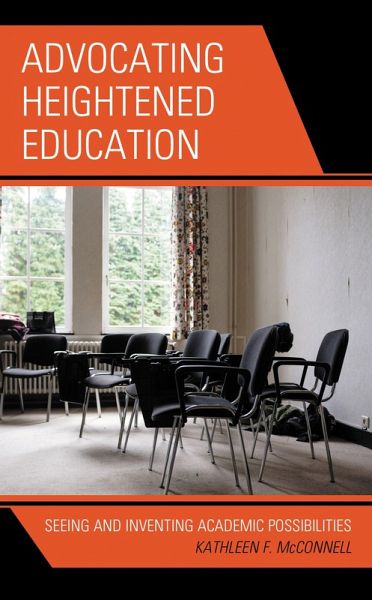
Colleges and universities face unprecedented pressure to streamline and reduce their infrastructure. A new generation of reformers, frustrated by bureaucratic obstacles and rising costs, dream of education without schools. Those reforms, if realized, promise to render education indistinguishable from other social spheres. Advocating Heightened Education mobilizes situated theories of learning to advocate the labor and expense that goes into maintaining campuses. Higher education's bulky and incommensurable institutions-from the community colleges and Ivy Leagues to the regional public universities and small liberal arts campuses-serve a critical modality. They ensure that educational forms remain visible and available for critique. Their diversity of form retains the possibility of divergent and transformative educational futures. This ethnographic and archival study of two alternative campuses, The Evergreen State College and California State University, Monterey Bay, illustrates how educators advocate their work by heightening its visibility and by modeling appreciation for situated teaching and inquiry. It provides examples of those advocacy techniques with stories of professional life and close readings of historical documents that include institutional and legislative reports, facilities memoranda, and course descriptions. These materials offer a vibrant counter-narrative to reform movements that seek to standardize the college experience. Scholars of higher education, pedagogy, and communication will find this book particularly interesting.