12,95 €
inkl. MwSt.
Sofort per Download lieferbar
6 °P sammeln

Andere Kunden interessierten sich auch für
") Urban Revitalization (eBook, ePUB)49,95 €
Urban Revitalization (eBook, ePUB)49,95 €") Palaces for the People (eBook, ePUB)8,49 €
Palaces for the People (eBook, ePUB)8,49 €") Saving Our Cities (eBook, ePUB)15,95 €
Saving Our Cities (eBook, ePUB)15,95 €") The Embrace of Buildings (eBook, ePUB)7,99 €
The Embrace of Buildings (eBook, ePUB)7,99 €") Rethinking Urbanism (eBook, ePUB)29,95 €
Rethinking Urbanism (eBook, ePUB)29,95 €") The Collaborative City (eBook, ePUB)39,95 €
The Collaborative City (eBook, ePUB)39,95 €") Homeless (eBook, ePUB)56,95 €
Homeless (eBook, ePUB)56,95 €





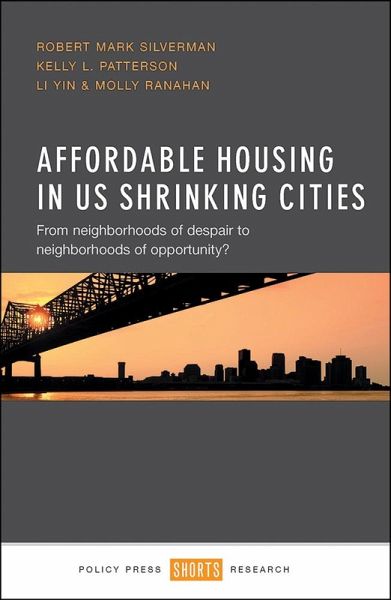
Given the rapid urbanisation of the world's population, the converse phenomenon of shrinking cities is often overlooked and little understood. Yet with almost one in ten post-industrial US cities shrinking in recent years, efforts by government and anchor institutions to regenerate these cities is gaining policy urgency, with the availability and siting of affordable housing being a key concern.
This is the first book to look at the reasons for the failure (and success) of affordable housing experiences in the fastest shrinking cities in the US. Applying quantitative and GIS analysis using data from the US Department of Housing and Urban Development, the authors make recommendations for future place-based siting practices, stressing its importance for ensuring more equitable urban revitalisation. The book will be a valuable resource for academic researchers and students in urban studies, housing and inequality, as well as policy makers.
This is the first book to look at the reasons for the failure (and success) of affordable housing experiences in the fastest shrinking cities in the US. Applying quantitative and GIS analysis using data from the US Department of Housing and Urban Development, the authors make recommendations for future place-based siting practices, stressing its importance for ensuring more equitable urban revitalisation. The book will be a valuable resource for academic researchers and students in urban studies, housing and inequality, as well as policy makers.
Dieser Download kann aus rechtlichen Gründen nur mit Rechnungsadresse in A, D ausgeliefert werden.