8,49 €
inkl. MwSt.
Sofort per Download lieferbar
0 °P sammeln

Andere Kunden interessierten sich auch für
") Competing in the Age of AI (eBook, ePUB)17,95 €
Competing in the Age of AI (eBook, ePUB)17,95 € HBR's 10 Must Reads on AI, Analytics, and the New Machine Age (with bonus article "Why Every Company Needs an Augmented Reality Strategy" by Michael E. Porter and James E. Heppelmann) (eBook, ePUB)13,95 €
") Pivot or Die (eBook, ePUB)20,42 €
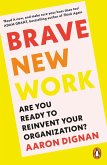
Pivot or Die (eBook, ePUB)20,42 €") Brave New Work (eBook, ePUB)9,49 €
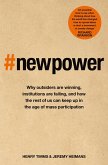
Brave New Work (eBook, ePUB)9,49 €") New Power (eBook, ePUB)9,95 €
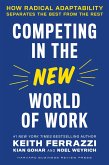
New Power (eBook, ePUB)9,95 €") Competing in the New World of Work (eBook, ePUB)16,95 €
Competing in the New World of Work (eBook, ePUB)16,95 €") The Digital Prince (eBook, ePUB)2,99 €
The Digital Prince (eBook, ePUB)2,99 €

Why do organizations become less governable as they become more intelligent?
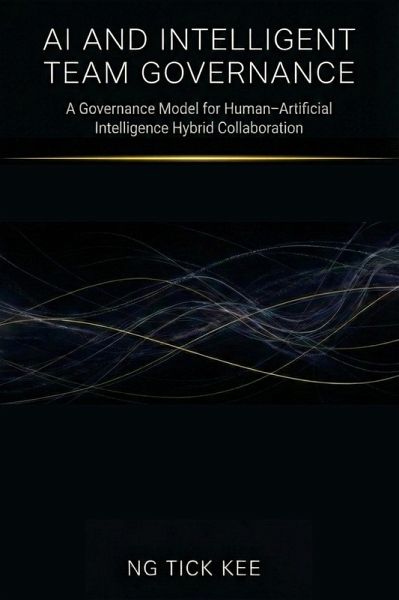
We are witnessing a structural paradox. Companies are adopting AI to increase speed and scale, yet finding that accountability is eroding, decision ownership is blurring, and traditional oversight is failing. The problem is not that AI is uncontrollable-it is that our governance models were designed for a world where intelligence was slow, human-bound, and centralized.
Control is no longer the answer.
In AI and Intelligent Team Governance, Ng Tick Kee argues that attempting to govern accelerated intelligence with heavier rules and tighter control is a losing strategy. It slows down human judgment while leaving machine-driven processes untouched, creating a dangerous gap between action and responsibility.
Instead, this book introduces Ultra-Light Governance (ULG)-a radical shift from regulating behavior to sustaining conditions.
In this book, you will discover:
*The Failure of Control: Why traditional hierarchies and approval chains collapse under the speed of AI-native systems. * Governance as Condition: How to govern by setting "ontological boundaries" rather than micromanaging decisions. * The Threshold of Irreversibility: A practical framework for determining exactly when human judgment must intervene-and when it is safe to let AI run free. * The Secondary Agent: Why AI can never bear responsibility, and how to delegate authority without abdicating accountability. * Scaling Trust: How to build high-trust, hybrid teams where transparency comes from clear commitments, not endless surveillance.
This is not a technical manual or a collection of prompts. It is a philosophical and strategic guide for founders, executives, and policymakers who need to navigate the transition to hybrid intelligence.
Intelligence can scale. Responsibility cannot.
If you are ready to move beyond the illusion of control and establish a governance model that actually works for the future of AI, this book is your blueprint.
Categories: Leadership, Organizational Behavior, AI Strategy, Business Ethics.
We are witnessing a structural paradox. Companies are adopting AI to increase speed and scale, yet finding that accountability is eroding, decision ownership is blurring, and traditional oversight is failing. The problem is not that AI is uncontrollable-it is that our governance models were designed for a world where intelligence was slow, human-bound, and centralized.
Control is no longer the answer.
In AI and Intelligent Team Governance, Ng Tick Kee argues that attempting to govern accelerated intelligence with heavier rules and tighter control is a losing strategy. It slows down human judgment while leaving machine-driven processes untouched, creating a dangerous gap between action and responsibility.
Instead, this book introduces Ultra-Light Governance (ULG)-a radical shift from regulating behavior to sustaining conditions.
In this book, you will discover:
*The Failure of Control: Why traditional hierarchies and approval chains collapse under the speed of AI-native systems. * Governance as Condition: How to govern by setting "ontological boundaries" rather than micromanaging decisions. * The Threshold of Irreversibility: A practical framework for determining exactly when human judgment must intervene-and when it is safe to let AI run free. * The Secondary Agent: Why AI can never bear responsibility, and how to delegate authority without abdicating accountability. * Scaling Trust: How to build high-trust, hybrid teams where transparency comes from clear commitments, not endless surveillance.
This is not a technical manual or a collection of prompts. It is a philosophical and strategic guide for founders, executives, and policymakers who need to navigate the transition to hybrid intelligence.
Intelligence can scale. Responsibility cannot.
If you are ready to move beyond the illusion of control and establish a governance model that actually works for the future of AI, this book is your blueprint.
Categories: Leadership, Organizational Behavior, AI Strategy, Business Ethics.
Dieser Download kann aus rechtlichen Gründen nur mit Rechnungsadresse in A, B, CY, CZ, D, DK, EW, E, FIN, F, GR, H, IRL, I, LT, L, LR, M, NL, PL, P, R, S, SLO, SK ausgeliefert werden.