Sie sind bereits eingeloggt. Klicken Sie auf 2. tolino select Abo, um fortzufahren.
Bitte loggen Sie sich zunächst in Ihr Kundenkonto ein oder registrieren Sie sich bei bücher.de, um das eBook-Abo tolino select nutzen zu können.
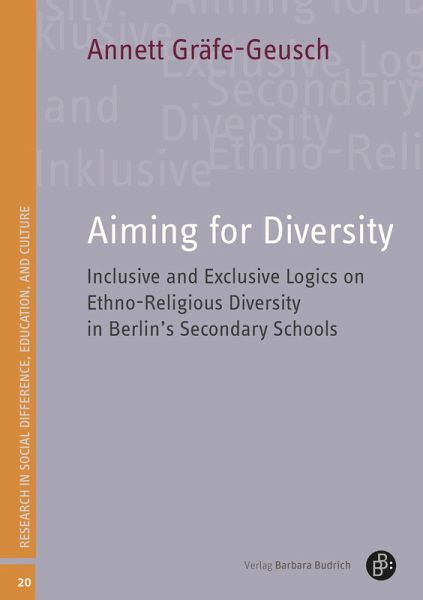
Wie verstehen Politiker*innen und Lehrer*innen ethnische und religiöse Vielfalt? Auf Grundlage einer qualitativen vertikalen Fallstudie des Ethikunterrichts an Berliner Sekundarschulen argumentiert die Autorin, dass zwei unterschiedliche Logiken der Vielfalt den politischen und pädagogischen Raum beherrschen - eine inklusive und eine exklusive. Diese Logiken prägen die pädagogische Praxis in ethnisch und religiös vielfältigen und nicht vielfältigen Klassenzimmern und führen letztlich zu einer Abwertung und teilweisen Streichung von auf Vielfalt bezogenen Inhalten aus dem Lehrplan, wie die Studie zeigt.…mehr
Wie verstehen Politiker*innen und Lehrer*innen ethnische und religiöse Vielfalt? Auf Grundlage einer qualitativen vertikalen Fallstudie des Ethikunterrichts an Berliner Sekundarschulen argumentiert die Autorin, dass zwei unterschiedliche Logiken der Vielfalt den politischen und pädagogischen Raum beherrschen - eine inklusive und eine exklusive. Diese Logiken prägen die pädagogische Praxis in ethnisch und religiös vielfältigen und nicht vielfältigen Klassenzimmern und führen letztlich zu einer Abwertung und teilweisen Streichung von auf Vielfalt bezogenen Inhalten aus dem Lehrplan, wie die Studie zeigt.
Dieser Download kann aus rechtlichen Gründen nur mit Rechnungsadresse in A, B, BG, CY, CZ, D, DK, EW, E, FIN, F, GR, HR, H, IRL, I, LT, L, LR, M, NL, PL, P, R, S, SLO, SK ausgeliefert werden.
Die Herstellerinformationen sind derzeit nicht verfügbar.
Autorenporträt
Annett Gräfe-Geusch is a postdoctoral researcher at the Helmut Schmidt University, Hamburg, Germany, and at the German Centre for Integration and Migration Research (DeZIM e.V.), Berlin, Germany.
Inhaltsangabe
AcknowledgmentsList of Figures and Tables1 Toward a Post-migrant Society? German Political Actors between Inclusion and Exclusion1.1 Integrating Diversity? The Importance of Political Actors' Negotiations1.2 Diversity, Belonging, and Violence: Situating Ethics within the larger Socio-Cultural Context1.3 The Case of Berlin1.4 Inclusion and Exclusion of Diversity in Education Policy and Practice1.4.1 Education Policy: Including Diversity in the Political Imagination1.4.2 Minority Group Academic Achievement and Teaching in Ethnically and Religiously Diverse Classrooms1.4.3 Incorporating Diversity into Teaching, Curricula, and Textbooks1.5 Diversity in German Policy and Public Opinion1.5.1 Between Inclusion and Exclusion: Immigration, Integration, and Failed Multiculturalism in Germany1.5.2 Negative Public Perception of Diversity and Growing Diverse Populations in Germany1.6 Understanding and Negotiating Logics of Diversity in Context: Research Question and Significance of the Study1.7 Overview of the Study2 Teachers als Political Actors, Diversity, and Institutional Logics2.1 Understanding and Negotiating Diversity at Various Levels of Society2.2 Neo-Institutional Explanations of the Divergence between Policy and Practice2.2.1 Institutional Logics: A Way to Account for Heterogeneity and Bringing Micro and Macro Levels Together2.2.2 Conceptualizing Diversity and Power Relations within Institutional Logics2.2.3 Situating Diversity within Institutional Logics Theory: The Institutional Order of Community2.3 Teachers as Single-Level Actors: Advocating for a Multilevel Account2.3.1 Conceptualizing Teachers Liminal Position2.4 Bringing it all together: Constructing Diversity in Berlin's Mandatory Ethics Instruction3 Methodology3.1 A Comparative Case Study of Diversity in Schools3.2 The Vertical Case Study Approach3.3 Sampling Strategy and Overall Sample Description3.3.1 Interview Data3.3.2 Observation Data3.3.4 Document Data3.4 Access and the Influence of the Socio-Political Context3.5 Data Analysis, Triangulation, and Validity3.6 Role of the Researcher3.7 Conclusion4 Ethics and the Question of Diversity: Berlin's Quest for Value Education4.1 Value education in Berlin: A Contested Field4.2 Losing Faith: Putting Value Education on the Political Agenda4.3 Diversity Matters: The Speedy Introduction of Ethics Instruction4.4 The Last Rebellion in a Lost Culture War? The Referendum for Mandatory Religious Education4.5 Productive and Destructive Diversity4.6 Arriving at Diversity5 Logics of Diversity in Ethics Teaching: Between Inclusion and Exclusion5.1 Striving for Integration5.2 Heterogeneity of Practice and Teachers as State Agents5.3 Teaching about Diversity: Exclusive and Inclusive Logics in Diverse and Non-Diverse Classrooms5.3.1 Assimilationist Teaching: Exclusion in Diverse School Contexts5.3.2 Philosophical Teaching: Exclusion in Non-Diverse School Context5.3.3 Intercultural Teaching: Inclusion in Diverse School Contexts5.3.4 Critical Teaching: Inclusion in Non-Diverse School Contexts5.3.5 Muddying the Waters: Heterogeneity and Crossing Logics within Teachers' Sense-making5.4 Creating a Peaceful Pluralistic Society: Teaching Approaches and Their Underlying Logics5.5 Political Actors and Diversity: Teaching Diversity in Ethics6 The Struggle for Legitimacy: Removing the Stigma of Diversity from Classroom Teaching6.1 Reforming Berlin's Schools to Include Diversity?6.2 Legitimacy, Diversity, and Change6.3 The Challenge to Ethics' Legitimacy: Not just a Waste of Time ("Laberfach")6.4 Invoking Elements of Professional Logics for Improvement: Teaching Degrees and the Disciplinary Grounding6.4.1 Guarding the Entrance into the Profession: The Importance of the Right Degree6.4.2 Linking a Strong Disciplinary Grounding6.4.3 Linking Professional and Community Logics: The Stigma of Teaching about Diversity6.5 Changing the Idea of Ethics Instruction: From Multidisciplinary to Philosophy
AcknowledgmentsList of Figures and Tables1 Toward a Post-migrant Society? German Political Actors between Inclusion and Exclusion1.1 Integrating Diversity? The Importance of Political Actors' Negotiations1.2 Diversity, Belonging, and Violence: Situating Ethics within the larger Socio-Cultural Context1.3 The Case of Berlin1.4 Inclusion and Exclusion of Diversity in Education Policy and Practice1.4.1 Education Policy: Including Diversity in the Political Imagination1.4.2 Minority Group Academic Achievement and Teaching in Ethnically and Religiously Diverse Classrooms1.4.3 Incorporating Diversity into Teaching, Curricula, and Textbooks1.5 Diversity in German Policy and Public Opinion1.5.1 Between Inclusion and Exclusion: Immigration, Integration, and Failed Multiculturalism in Germany1.5.2 Negative Public Perception of Diversity and Growing Diverse Populations in Germany1.6 Understanding and Negotiating Logics of Diversity in Context: Research Question and Significance of the Study1.7 Overview of the Study2 Teachers als Political Actors, Diversity, and Institutional Logics2.1 Understanding and Negotiating Diversity at Various Levels of Society2.2 Neo-Institutional Explanations of the Divergence between Policy and Practice2.2.1 Institutional Logics: A Way to Account for Heterogeneity and Bringing Micro and Macro Levels Together2.2.2 Conceptualizing Diversity and Power Relations within Institutional Logics2.2.3 Situating Diversity within Institutional Logics Theory: The Institutional Order of Community2.3 Teachers as Single-Level Actors: Advocating for a Multilevel Account2.3.1 Conceptualizing Teachers Liminal Position2.4 Bringing it all together: Constructing Diversity in Berlin's Mandatory Ethics Instruction3 Methodology3.1 A Comparative Case Study of Diversity in Schools3.2 The Vertical Case Study Approach3.3 Sampling Strategy and Overall Sample Description3.3.1 Interview Data3.3.2 Observation Data3.3.4 Document Data3.4 Access and the Influence of the Socio-Political Context3.5 Data Analysis, Triangulation, and Validity3.6 Role of the Researcher3.7 Conclusion4 Ethics and the Question of Diversity: Berlin's Quest for Value Education4.1 Value education in Berlin: A Contested Field4.2 Losing Faith: Putting Value Education on the Political Agenda4.3 Diversity Matters: The Speedy Introduction of Ethics Instruction4.4 The Last Rebellion in a Lost Culture War? The Referendum for Mandatory Religious Education4.5 Productive and Destructive Diversity4.6 Arriving at Diversity5 Logics of Diversity in Ethics Teaching: Between Inclusion and Exclusion5.1 Striving for Integration5.2 Heterogeneity of Practice and Teachers as State Agents5.3 Teaching about Diversity: Exclusive and Inclusive Logics in Diverse and Non-Diverse Classrooms5.3.1 Assimilationist Teaching: Exclusion in Diverse School Contexts5.3.2 Philosophical Teaching: Exclusion in Non-Diverse School Context5.3.3 Intercultural Teaching: Inclusion in Diverse School Contexts5.3.4 Critical Teaching: Inclusion in Non-Diverse School Contexts5.3.5 Muddying the Waters: Heterogeneity and Crossing Logics within Teachers' Sense-making5.4 Creating a Peaceful Pluralistic Society: Teaching Approaches and Their Underlying Logics5.5 Political Actors and Diversity: Teaching Diversity in Ethics6 The Struggle for Legitimacy: Removing the Stigma of Diversity from Classroom Teaching6.1 Reforming Berlin's Schools to Include Diversity?6.2 Legitimacy, Diversity, and Change6.3 The Challenge to Ethics' Legitimacy: Not just a Waste of Time ("Laberfach")6.4 Invoking Elements of Professional Logics for Improvement: Teaching Degrees and the Disciplinary Grounding6.4.1 Guarding the Entrance into the Profession: The Importance of the Right Degree6.4.2 Linking a Strong Disciplinary Grounding6.4.3 Linking Professional and Community Logics: The Stigma of Teaching about Diversity6.5 Changing the Idea of Ethics Instruction: From Multidisciplinary to Philosophy
Es gelten unsere Allgemeinen Geschäftsbedingungen: www.buecher.de/agb
Impressum
www.buecher.de ist ein Internetauftritt der buecher.de internetstores GmbH
Geschäftsführung: Monica Sawhney | Roland Kölbl | Günter Hilger
Sitz der Gesellschaft: Batheyer Straße 115 - 117, 58099 Hagen
Postanschrift: Bürgermeister-Wegele-Str. 12, 86167 Augsburg
Amtsgericht Hagen HRB 13257
Steuernummer: 321/5800/1497
USt-IdNr: DE450055826