19,95 €
19,95 €
inkl. MwSt.
Sofort per Download lieferbar

10 °P sammeln
19,95 €
Als Download kaufen
19,95 €
inkl. MwSt.
Sofort per Download lieferbar
10 °P sammeln
Jetzt verschenken
Alle Infos zum eBook verschenken
19,95 €
inkl. MwSt.
Sofort per Download lieferbar
Alle Infos zum eBook verschenken
10 °P sammeln

Andere Kunden interessierten sich auch für
") Martin R. Delany (eBook, ePUB)22,95 €
Martin R. Delany (eBook, ePUB)22,95 €") Liberation Historiography (eBook, ePUB)22,95 €
Liberation Historiography (eBook, ePUB)22,95 €") That Middle World (eBook, ePUB)16,95 €
That Middle World (eBook, ePUB)16,95 €") Race and Masculinity in Contemporary American Prison Novels (eBook, ePUB)43,95 €
Race and Masculinity in Contemporary American Prison Novels (eBook, ePUB)43,95 €") Playing in the Dark (eBook, ePUB)6,99 €
Playing in the Dark (eBook, ePUB)6,99 €") Searching for the New Black Man (eBook, ePUB)16,95 €
Searching for the New Black Man (eBook, ePUB)16,95 €") Real and Imagined Worlds (eBook, ePUB)16,95 €
Real and Imagined Worlds (eBook, ePUB)16,95 €



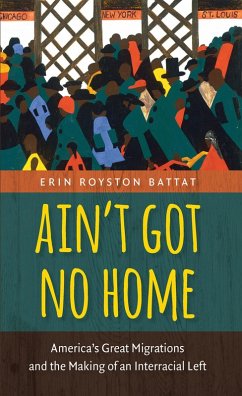
Most scholarship on the mass migrations of African Americans and southern whites during and after the Great Depression treats those migrations as separate phenomena, strictly divided along racial lines. In this engaging interdisciplinary work, Erin Royston Battat argues instead that we should understand these Depression-era migrations as interconnected responses to the capitalist collapse and political upheavals of the early twentieth century. During the 1930s and 1940s, Battat shows, writers and artists of both races created migration stories specifically to bolster the black-white Left alliance. Defying rigid critical categories, Battat considers a wide variety of media, including literary classics by John Steinbeck and Ann Petry, “lost” novels by Sanora Babb and William Attaway, hobo novellas, images of migrant women by Dorothea Lange and Elizabeth Catlett, popular songs, and histories and ethnographies of migrant shipyard workers. This vibrant rereading and recovering of the period’s literary and visual culture expands our understanding of the migration narrative by uniting the political and aesthetic goals of the black and white literary Left and illuminating the striking interrelationship between American populism and civil rights.
Dieser Download kann aus rechtlichen Gründen nur mit Rechnungsadresse in A, D ausgeliefert werden.