1,99 €
inkl. MwSt.
Sofort per Download lieferbar
1 °P sammeln

Andere Kunden interessierten sich auch für
") Dog Training: It Ain't An Accountant's Job (eBook, ePUB)11,89 €
Dog Training: It Ain't An Accountant's Job (eBook, ePUB)11,89 €") Henry de Monfreid, impossible grand-père (eBook, ePUB)9,99 €
Henry de Monfreid, impossible grand-père (eBook, ePUB)9,99 €") The Best That Can Happen: The Grand Trek (eBook, ePUB)8,99 €
The Best That Can Happen: The Grand Trek (eBook, ePUB)8,99 €") Field Guide to the Grand Canyon (eBook, ePUB)11,95 €
Field Guide to the Grand Canyon (eBook, ePUB)11,95 €") Pluto: Grand Saga of the Epic Astronomical Object (eBook, ePUB)2,99 €
Pluto: Grand Saga of the Epic Astronomical Object (eBook, ePUB)2,99 €") Minor Creatures (eBook, ePUB)31,95 €
Minor Creatures (eBook, ePUB)31,95 €") Hagfish Slime and Lobster Rolls (eBook, ePUB)1,99 €
Hagfish Slime and Lobster Rolls (eBook, ePUB)1,99 €






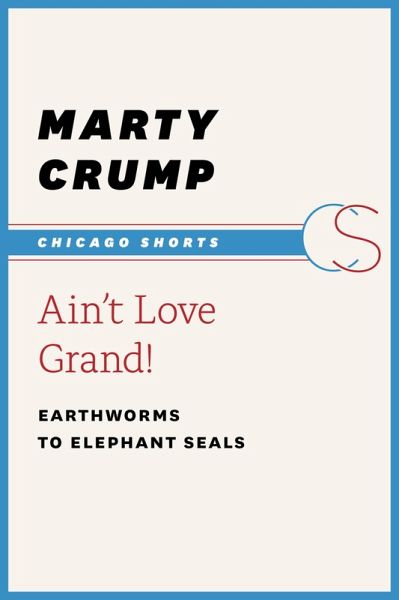
The natural world is filled with diverse-not to mention quirky and odd-animal behaviors. Consider the male praying mantis that continues to mate after being beheaded; the insects, insects, and birds that offer gifts of food in return for sex; the male hip-pocket frog that carries his own tadpoles; the baby spiders that dine on their mother; or the starfish that sheds an arm or two to escape a predator''s grasp. In Ain't Love Grand, Marty Crump-a tropical field biologist well known for her work with the reproductive behavior of amphibians-examines the bizarre conduct of animals as they mate, parent, feed, defend themselves, and communicate. More importantly, Crump points out that diverse and unrelated animals often share seemingly erratic behaviors-evidence, Crump argues, that these natural histories, though outwardly weird, are actually successful ways of living.
Dieser Download kann aus rechtlichen Gründen nur mit Rechnungsadresse in A, B, BG, CY, CZ, D, DK, EW, E, FIN, F, GR, HR, H, IRL, I, LT, L, LR, M, NL, PL, P, R, S, SLO, SK ausgeliefert werden.