112,95 €
112,95 €
inkl. MwSt.
Sofort per Download lieferbar

56 °P sammeln
112,95 €
Als Download kaufen
112,95 €
inkl. MwSt.
Sofort per Download lieferbar
56 °P sammeln
Jetzt verschenken
Alle Infos zum eBook verschenken
112,95 €
inkl. MwSt.
Sofort per Download lieferbar
Alle Infos zum eBook verschenken
56 °P sammeln

Andere Kunden interessierten sich auch für
") In Vivo Self-Assembly Nanotechnology for Biomedical Applications (eBook, PDF)60,95 €
In Vivo Self-Assembly Nanotechnology for Biomedical Applications (eBook, PDF)60,95 €") Nanooncology (eBook, PDF)152,95 €
Nanooncology (eBook, PDF)152,95 €") Multifunctional Nanoprobes (eBook, PDF)40,95 €
Multifunctional Nanoprobes (eBook, PDF)40,95 €") Biomaterials for Musculoskeletal Regeneration (eBook, PDF)112,95 €
Biomaterials for Musculoskeletal Regeneration (eBook, PDF)112,95 €") Developments and Applications of Calcium Phosphate Bone Cements (eBook, PDF)167,95 €
Developments and Applications of Calcium Phosphate Bone Cements (eBook, PDF)167,95 €") Biomaterials for Musculoskeletal Regeneration (eBook, PDF)72,95 €
Biomaterials for Musculoskeletal Regeneration (eBook, PDF)72,95 €") Biomimetic Lipid Membranes: Fundamentals, Applications, and Commercialization (eBook, PDF)72,95 €
Biomimetic Lipid Membranes: Fundamentals, Applications, and Commercialization (eBook, PDF)72,95 €


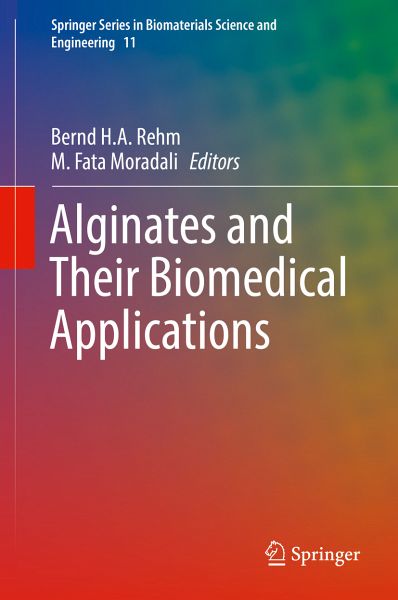
Discusses the fundamentals of the structure, chemistry, biosynthesis, formulation and properties of alginate-based biomaterials and their use in medicine and biomedical engineering
Reviews the latest advances in using alginates and their derivatives in the pharmaceutical industry, as drug carriers, wound dressing, and in tissue engineering, bone regeneration, organ weaving and cell therapy
Discusses the latest generation of alginate-based biomaterials, combining research, clinical and technological advances and current relevant issues and limitations
Allows biomaterials researchers and experts to better understand the potential clinical applications of alginates in regenerative medicine and therapeutic methods
Reviews the latest advances in using alginates and their derivatives in the pharmaceutical industry, as drug carriers, wound dressing, and in tissue engineering, bone regeneration, organ weaving and cell therapy
Discusses the latest generation of alginate-based biomaterials, combining research, clinical and technological advances and current relevant issues and limitations
Allows biomaterials researchers and experts to better understand the potential clinical applications of alginates in regenerative medicine and therapeutic methods
Dieser Download kann aus rechtlichen Gründen nur mit Rechnungsadresse in A, B, BG, CY, CZ, D, DK, EW, E, FIN, F, GR, HR, H, IRL, I, LT, L, LR, M, NL, PL, P, R, S, SLO, SK ausgeliefert werden.