52,95 €
52,95 €
inkl. MwSt.
Sofort per Download lieferbar

26 °P sammeln
52,95 €
Als Download kaufen
52,95 €
inkl. MwSt.
Sofort per Download lieferbar
26 °P sammeln
Jetzt verschenken
Alle Infos zum eBook verschenken
52,95 €
inkl. MwSt.
Sofort per Download lieferbar
Alle Infos zum eBook verschenken
26 °P sammeln

Andere Kunden interessierten sich auch für
") Alternatives to Incarceration (eBook, ePUB)52,95 €
Alternatives to Incarceration (eBook, ePUB)52,95 €") Key Contested Issues in Criminology and Criminal Justice (eBook, PDF)39,95 €
Key Contested Issues in Criminology and Criminal Justice (eBook, PDF)39,95 €") Prisons and Health in the Age of Mass Incarceration (eBook, PDF)11,95 €
Prisons and Health in the Age of Mass Incarceration (eBook, PDF)11,95 €") The Politics of Redress (eBook, PDF)27,95 €
The Politics of Redress (eBook, PDF)27,95 €") Punishment (eBook, PDF)37,95 €
Punishment (eBook, PDF)37,95 €") The Law of Disclosure (eBook, PDF)41,95 €
The Law of Disclosure (eBook, PDF)41,95 €") Sexual Offences Against Children in India (eBook, PDF)21,95 €
Sexual Offences Against Children in India (eBook, PDF)21,95 €







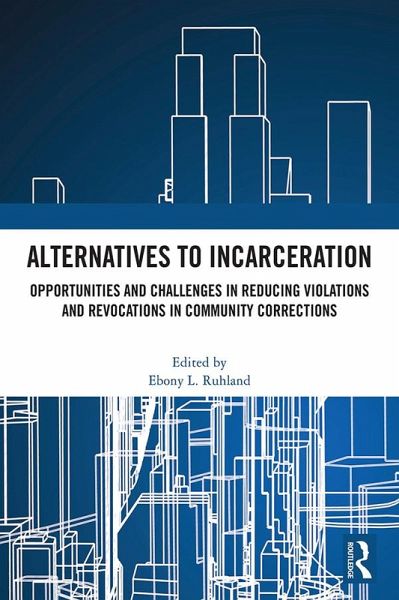
Mass incarceration has been an ongoing problem in the United States. There have been several research studies that explain the causes and consequences of mass incarceration. A major contributor to incarceration is what happens in community supervision. In several states, many prison admissions result from technical violations from community supervision. Historically, alternatives to incarceration were developed to reduce prison populations and decrease the fiscal cost of incarceration. They were to function as a diversion away from prison. Alternatives also keep people in the community while holding them accountable and protecting community safety. Yet, given the high violations and revocations, rather than serving as an alternative to incarceration, community supervision becomes a delayed prison sentence. The book underscores the importance of ongoing research and the need for effective strategies to reduce violations and revocations. There is a clear need for more research to explore what works in reducing violations and revocations, including the factors that contribute to these issues. This ongoing exploration is crucial for the continued development and improvement of community corrections. Chapters in this book address how barriers, such as mental illness, COVID- 19, and financial constraints, may impede success on supervision and highlight in the findings ways to increase success despite these barriers. Further, two chapters provide results on two commonly used strategies in community corrections: risk assessments and electronic monitoring. The chapter's findings build on previous works and provide recommendations for policy and research. This book advances knowledge on reducing violations and revocations and increasing success in community supervision. It was originally published as a special issue of Corrections - Policy, Practice and Research.
Dieser Download kann aus rechtlichen Gründen nur mit Rechnungsadresse in A, B, BG, CY, CZ, D, DK, EW, E, FIN, F, GR, HR, H, IRL, I, LT, L, LR, M, NL, PL, P, R, S, SLO, SK ausgeliefert werden.