Sie sind bereits eingeloggt. Klicken Sie auf 2. tolino select Abo, um fortzufahren.
Bitte loggen Sie sich zunächst in Ihr Kundenkonto ein oder registrieren Sie sich bei bücher.de, um das eBook-Abo tolino select nutzen zu können.
The vast numbers of new educational policies, programs, and practices being implemented as educational reform in American public schools have not been analyzed for short or long-term effectiveness or impact on students and their learning. Not only are conditions for many learners still a concern, new information about conditions for students who are not under-performing informs us that they are falling short of the desired mark. This calls for expert educators, researchers, school leaders, teachers, families, students, and interested others to determine the degree to which policies and…mehr
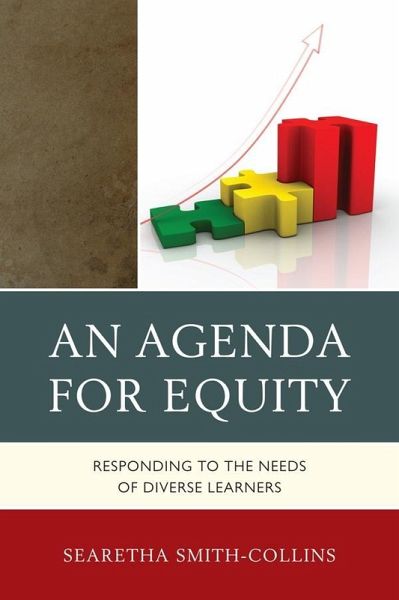
The vast numbers of new educational policies, programs, and practices being implemented as educational reform in American public schools have not been analyzed for short or long-term effectiveness or impact on students and their learning. Not only are conditions for many learners still a concern, new information about conditions for students who are not under-performing informs us that they are falling short of the desired mark. This calls for expert educators, researchers, school leaders, teachers, families, students, and interested others to determine the degree to which policies and practices have a positive impact on student outcomes, and the aims of public education. Using Response to Intervention as an innovative model, An Agenda for Equity contributes to filling the void by analyzing the essence of educational reforms for increasing enduring, equitable effectiveness, and improving conditions and teaching and learning for both teachers and students.
Die Herstellerinformationen sind derzeit nicht verfügbar.
Autorenporträt
By Searetha Smith-Collins
Inhaltsangabe
Preface 6Introduction 12Chapter 1:Identifying the NeedThe Optimal Mix: Responding to the Needs of Students 25 From Parts to Whole 30 Revisiting Past Practice 33 Chapter 2 Understanding the NeedDelving Deeper into Response to Intervention 42Adoption Trends 44 The Promise of RtIChapter 3:A Glance into the "Regular" Classroom 52 Sharpening the Focus 53 Teacher Assessment 56 Leadership Matters 59Chapter 4: Meeting the Need Promising Practices Snapshot: High School 63 Snapshot: National/State Pre-K Network 70 Snapshot: School District 71 Snapshot: An Affective Model 77 Snapshot: RtI and Gifted Education 79Chapter 5: The Black Male Agenda An Out-of-School Snapshot: The Bridge 84 Expanding the Agenda: Building a New System 87 of Opportunity for Youth Implications for Today 93Chapter 6: Assessing the Outcomes 97 National Outcomes (Academic) 98 National Outcomes (Behavioral) 99 Measuring Success 100Chapter 7: The Learning Target Teach, Test, and Hope for the Best 102 Moving from Random Acts of Curriculum and Instruction 105 Common Language, Common Mission 107 Optimizing Curriculum for All 109 Fitting the Pieces Together 112 The Design Process 114 Curriculum Architects 116 Deeper Levels of Knowledge and Thinking 119 Chapter 8: Avoiding Struggles and Pitfalls 122 Refining the Plan 123 Evaluating the Impact and Results 124 Planning to Make Change Happen: The Payoff 126 Unexpected Outcomes 127 Chapter 9: Queries and Opportunities 133 Recommendations 134 Chapter 10: Transitioning to Schools of the Future 144 Teaching This Generation of Students 148 The Moral Imperative 150 Chapter 11: Understanding the LandscapeLessons Learned: Bringing Order to the Potential of Chaos 153 Parallel Modeling 155 Chapter 12: Meet the Kids 161 The Beginning of Shortcomings 164 A Recipe for Potential 166 Final Thoughts 172 References 174 Appendix: Resources A Curriculum/RtI Framework Design Tool 179
Es gelten unsere Allgemeinen Geschäftsbedingungen: www.buecher.de/agb
Impressum
www.buecher.de ist ein Internetauftritt der buecher.de internetstores GmbH
Geschäftsführung: Monica Sawhney | Roland Kölbl | Günter Hilger
Sitz der Gesellschaft: Batheyer Straße 115 - 117, 58099 Hagen
Postanschrift: Bürgermeister-Wegele-Str. 12, 86167 Augsburg
Amtsgericht Hagen HRB 13257
Steuernummer: 321/5800/1497
USt-IdNr: DE450055826