19,99 €
inkl. MwSt.
Sofort per Download lieferbar
0 °P sammeln

Andere Kunden interessierten sich auch für
") Tinnitus Retraining Therapy (eBook, ePUB)5,49 €
Tinnitus Retraining Therapy (eBook, ePUB)5,49 €") Post-Polio Syndrome (eBook, ePUB)5,02 €
Post-Polio Syndrome (eBook, ePUB)5,02 €") Understanding Type 2 Diabetes (eBook, ePUB)8,99 €
Understanding Type 2 Diabetes (eBook, ePUB)8,99 €") Treatment of the diseases of the eye, by means of prussic acid vapour, and other medicinal agents (eBook, ePUB)19,99 €
Treatment of the diseases of the eye, by means of prussic acid vapour, and other medicinal agents (eBook, ePUB)19,99 €") Anti-obesity Drug Discovery and Development: Volume 4 (eBook, ePUB)72,24 €
Anti-obesity Drug Discovery and Development: Volume 4 (eBook, ePUB)72,24 €") Anti-obesity Drug Discovery and Development: Volume 3 (eBook, ePUB)35,66 €
Anti-obesity Drug Discovery and Development: Volume 3 (eBook, ePUB)35,66 €") Healthcare Call Center Essentials (eBook, ePUB)5,99 €
Healthcare Call Center Essentials (eBook, ePUB)5,99 €






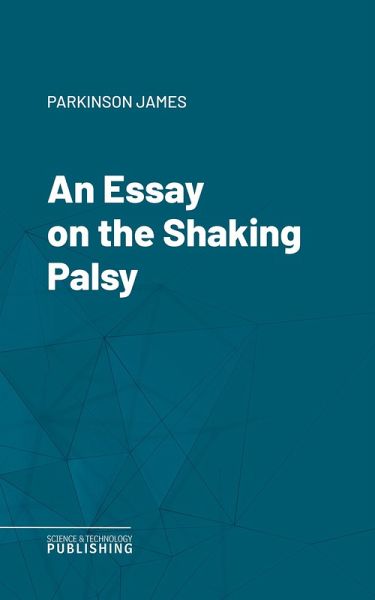
An Essay on the Shaking Palsy is a seminal medical treatise written by James Parkinson and first published in 1817. This groundbreaking work is widely recognized as the first systematic description of the neurological disorder now known as Parkinson's disease. In this detailed and methodical essay, Parkinson meticulously documents the symptoms, progression, and possible causes of the condition he termed the shaking palsy. Drawing from his own clinical observations and case studies, he describes the characteristic tremors, muscular rigidity, and postural instability that define the disorder, as well as the gradual deterioration of motor function experienced by patients. Parkinson's essay is notable for its clarity, compassion, and scientific rigor. He carefully distinguishes the shaking palsy from other similar ailments, providing a clear clinical picture that would guide future generations of physicians. The book also explores potential etiologies, including environmental and hereditary factors, and discusses the challenges of diagnosis and treatment in the early nineteenth century. Although limited by the medical knowledge of his time, Parkinson's insights laid the foundation for modern neurology and the study of movement disorders. An Essay on the Shaking Palsy remains a landmark in medical literature, not only for its historical significance but also for its enduring relevance. It offers readers a fascinating glimpse into the early days of clinical neurology and the compassionate approach of a pioneering physician. The essay continues to be studied by medical professionals, historians, and anyone interested in the origins of our understanding of Parkinson's disease.
Dieser Download kann aus rechtlichen Gründen nur mit Rechnungsadresse in A, B, BG, CY, CZ, D, DK, EW, E, FIN, F, GR, HR, H, IRL, I, LT, L, LR, M, NL, PL, P, R, S, SLO, SK ausgeliefert werden.