24,95 €
24,95 €
inkl. MwSt.
Sofort per Download lieferbar

12 °P sammeln
24,95 €
Als Download kaufen
24,95 €
inkl. MwSt.
Sofort per Download lieferbar
12 °P sammeln
Jetzt verschenken
Alle Infos zum eBook verschenken
24,95 €
inkl. MwSt.
Sofort per Download lieferbar
Alle Infos zum eBook verschenken
12 °P sammeln

Andere Kunden interessierten sich auch für
") Trade and Romance (eBook, ePUB)17,95 €
Trade and Romance (eBook, ePUB)17,95 €") Animal Question in Deconstruction (eBook, ePUB)22,95 €
Animal Question in Deconstruction (eBook, ePUB)22,95 €") Looking for The Stranger (eBook, ePUB)18,18 €
Looking for The Stranger (eBook, ePUB)18,18 €") Piers Plowman (eBook, ePUB)0,88 €
Piers Plowman (eBook, ePUB)0,88 €") Having It All in the Belle Epoque (eBook, ePUB)13,95 €
Having It All in the Belle Epoque (eBook, ePUB)13,95 €") Writing, the Other Life (eBook, ePUB)17,95 €
Writing, the Other Life (eBook, ePUB)17,95 €") Dante's Inferno, The Indiana Critical Edition (eBook, ePUB)18,18 €
Dante's Inferno, The Indiana Critical Edition (eBook, ePUB)18,18 €



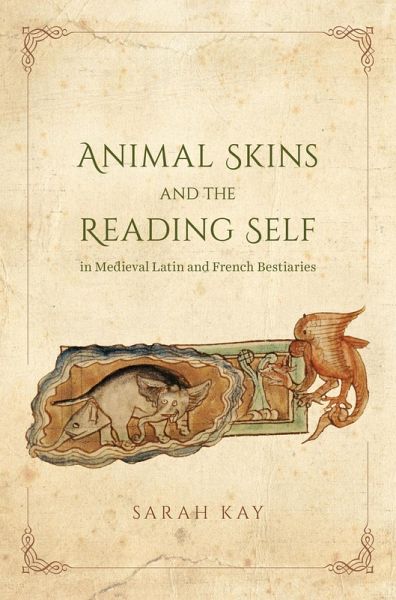
Just like we do today, people in medieval times struggled with the concept of human exceptionalism and the significance of other creatures. Nowhere is this more apparent than in the medieval bestiary. Sarah Kay's exploration of French and Latin bestiaries offers fresh insight into how this prominent genre challenged the boundary between its human readers and other animals. Bestiaries present accounts of animals whose fantastic behaviors should be imitated or avoided, depending on the given trait. In a highly original argument, Kay suggests that the association of beasts with books is here both literal and material, as nearly all surviving bestiaries are copied on parchment made of animal skin, which also resembles human skin. Using a rich array of examples, she shows how the content and materiality of bestiaries are linked due to the continual references in the texts to the skins of other animals, as well as the ways in which the pages themselves repeatedly-and at times, it would seem, deliberately-intervene in the reading process. A vital contribution to animal studies and medieval manuscript studies, this book sheds new light on the European bestiary and its profound power to shape readers' own identities.