146,95 €
146,95 €
inkl. MwSt.
Erscheint vor. 23.12.25

73 °P sammeln
146,95 €
Als Download kaufen
146,95 €
inkl. MwSt.
Erscheint vor. 23.12.25
73 °P sammeln
Jetzt verschenken
Alle Infos zum eBook verschenken
146,95 €
inkl. MwSt.
Erscheint vor. 23.12.25
Alle Infos zum eBook verschenken
73 °P sammeln

Andere Kunden interessierten sich auch für
") Anticancer Activity in Heterocyclic Organic Structures (eBook, PDF)146,95 €
Anticancer Activity in Heterocyclic Organic Structures (eBook, PDF)146,95 €") Studies in Natural Products Chemistry (eBook, ePUB)164,95 €
Studies in Natural Products Chemistry (eBook, ePUB)164,95 €") Invasomes as Drug Nanocarriers for Innovative Pharmaceutical Dosage Forms (eBook, ePUB)19,95 €
Invasomes as Drug Nanocarriers for Innovative Pharmaceutical Dosage Forms (eBook, ePUB)19,95 €") Handbook of Pharmacokinetics and Toxicokinetics (eBook, ePUB)42,95 €
Handbook of Pharmacokinetics and Toxicokinetics (eBook, ePUB)42,95 €") Predicting Solubility of New Drugs (eBook, ePUB)245,95 €
Predicting Solubility of New Drugs (eBook, ePUB)245,95 €") Modern Medicines from Plants (eBook, ePUB)28,95 €
Modern Medicines from Plants (eBook, ePUB)28,95 €") Heterocyclic Anticancer Agents (eBook, ePUB)174,95 €
Heterocyclic Anticancer Agents (eBook, ePUB)174,95 €
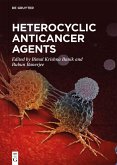
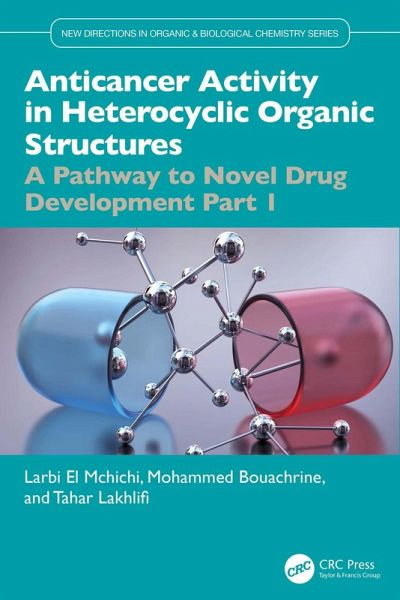
This new volume in New Directions in Organic & Biological Chemistry, explores the development of cancer therapeutics, focusing on molecular chemistry and advanced drug design approaches. Written by experts in theoretical chemistry and molecular chemistry, they bridge the gap between theoretical chemistry, molecular biology, and drug development. In Part I, they focus on the fundamental properties of heterocyclic compounds and innovative methodologies being employed to enhance therapeutic potential. By exploring various classes of heterocyclic compounds and diverse anticancer mechanisms, this book provides a valuable resource for researchers, pharmaceutical scientists, and oncologists.
- Provides an overview of computational approaches used in drug discovery, including molecular docking, QSAR, and virtual screening
- Focuses on the theoretical and practical aspects of these techniques, with applications across various therapeutic areas, including cancer
- Addresses the challenges in translating scientific research into effective treatments, offering insights into overcoming common obstacles in the development process
- These compounds represent a significant opportunity for the pharmaceutical industry to provide more effective and tailored cancer treatments, further driving market growth
- The breadth of the market for heterocyclic anticancer agents is vast and continues to expand as scientific advancements uncover new therapeutic targets
Dieser Download kann aus rechtlichen Gründen nur mit Rechnungsadresse in A, B, BG, CY, CZ, D, DK, EW, E, FIN, F, GR, HR, H, IRL, I, LT, L, LR, M, NL, PL, P, R, S, SLO, SK ausgeliefert werden.