Sie sind bereits eingeloggt. Klicken Sie auf 2. tolino select Abo, um fortzufahren.
Bitte loggen Sie sich zunächst in Ihr Kundenkonto ein oder registrieren Sie sich bei bücher.de, um das eBook-Abo tolino select nutzen zu können.
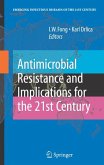
Contributors are leading international experts on antimicrobial resistance Provides comprehensive coverage of antimicrobial resistance Tool to help control and slow the emergence of antimicrobial resistance
Contributors are leading international experts on antimicrobial resistance
Provides comprehensive coverage of antimicrobial resistance
Tool to help control and slow the emergence of antimicrobial resistance
Dieser Download kann aus rechtlichen Gründen nur mit Rechnungsadresse in A, B, BG, CY, CZ, D, DK, EW, E, FIN, F, GR, HR, H, IRL, I, LT, L, LR, M, NL, PL, P, R, S, SLO, SK ausgeliefert werden.
Die Herstellerinformationen sind derzeit nicht verfügbar.
Autorenporträt
Ignatius Fong is the Editor of Springer's Emerging Infectious Diseases of the 21st Century series. He was the Chief Editor for six books and the sole author for another six books published in the series. He completed his residency training in Internal Medicine at the University of Toronto and as a Fellow in Infectious Diseases at the University of Washington, Seattle. Dr. Fong has published studies concerning a variety of infectious diseases that include therapeutics and pharmacology of antibiotics, AIDS and the treatment of opportunistic infections, mechanistic and treatment studies of mucosal candidiasis, and pathogenic studies on infection and induction of atherosclerosis in animal models. He was Chief of Infectious Diseases at St. Michael's Hospital (Toronto) for 34 years; he is still on staff in Infectious Diseases and is a Professor of Medicine, Department of Medicine at the University of Toronto, Canada. Dr. David Shlaes, authorof Antibiotics, The Perfect Storm (Springer) and The Drug Makers (Lulu), has had a thirty-year career in anti-infectives spanning academia and industry with a long-standing scientific interest in antimicrobial resistance. He trained in infectious diseases at Case Western Reserve University in Cleveland. He then joined the faculty and ultimately became a Professor of Medicine there. Dr. Shlaes left academia to become Vice President for Infectious Diseases at Wyeth Pharmaceuticals in 1996, where he was an important leader in the development of tigecycline. In 1998, he was the cover feature in the April issue of Business Week that was dedicated to antibiotics research. He also served as a member of the Forum for Emerging Infections of the National Academy of Sciences for seven years. In 2002, Dr. Shlaes became Executive Vice President, Research and Development, for Idenix Pharmaceuticals, a company located in Cambridge, MA that focused on the discovery and developmentof antivirals. In 2005, he established a consulting company. During his consulting years, he contributed significantly to the development of avibactam, eravacycline, and lefamulin. During his working career, he lived in Paris, France for several years. Although Dr. Shlaes has retired from Anti-infectives Consulting, he remains an Editor for the journal Antimicrobial Agents and Chemotherapy, writes a blog - Antibiotics - The Perfect Storm - and continues to be active in antibiotic policy making. Karl Drlica is a molecular biologist (Ph.D. University of California, Berkeley) whose early work focused on DNA gyrase and the control of DNA supercoiling. His studies contributed to the discovery that bacterial supercoiling is homeostatically regulated by topoisomerases having opposing activities and that environmental conditions (oxygen tension, salt concentrations) can alter global supercoiling levels. Thus, bacterial chromosome structure is sensitive to conditions outside the cell. The finding by his laboratory that transcription can alter supercoiling opened studies on local control of supercoiling. In the 1990s, when immunosuppressed patients in New York City suffered an outbreak of multidrug-resistant tuberculosis, Drlica shifted his focus to the fluoroquinolone inhibitors of bacterial DNA topoisomerases. Studies of fluoroquinolone mechanism and resistance were aimed at combatting the expanding problem of antimicrobial-resistant bacterial infections, in particular tuberculosis. In collaboration with Xilin Zhao, Drlica developed the idea that resistant mutant subpopulations are selectively enriched within a specific range of antimicrobial concentration. This concept revealed a fundamental flaw in our antimicrobial dosing strategies, since with most drug-pathogen combinations the concentrations within patients fall in the mutant-enriching range and thus encourage the emergence of resistance. Drlica's work is currently focused onimproving the lethal activity of antimicrobials to suppress the enrichment of induced and pre-existing mutant subpopulations. Drlica has also served on NIH Study Sections, on the editorial board of several scientific journals, and as a consultant for patent disputes involving gene cloning and fluoroquinolones. His publications include three books (Understanding DNA and Gene Cloning, Double-Edged Sword, Antibiotic Resistance), and with Dr. Fong he has edited two others. Drlica has carried out his work as a member of the faculty of the University of Rochester and the Public Health Research Institute (now a part of Rutgers University) with visiting scientist positions at the Pasteur Institute (Paris), University of California (Berkeley), and the Indian Institute for Science (Bangalore).
Inhaltsangabe
Chapter1: Introduction : Coordinated Global Action is Needed to Combat Antimicrobial Resistance.- Part I: Examples of Resistance.- Chapter2: Antimicrobial Resistance Among Streptococcus pneumoniae.- Chapter3: Emergence of MRSA in the Community.- Chapter4: Resistance of Gram-negative Bacilli to Antimicrobials.- Chapter5: Drug Resistance in Tuberculosis.- Chapter6: Anaerobic Bacteria: Antimicrobial Susceptibility Testing and Resistance Patterns.- Chapter7: Clinical Significance and Biologic Basis of HIV Drug Resistance.- Chapter8: Resistance of Herpesviruses to Antiviral Agents.- Chapter9: Heteroresistance: A Harbinger of Future Resistance.- Part II: Biology of Resistance.- Chapter10: Epidemiology of Bacterial Resistance.- Chapter11: Transmissible Antibiotic Resistance.- Chapter12: Antibiotics and Resistance in the Environment.- Chapter13: Phenotypic Tolerance and Bacterial Persistence.- Chapter14: Staphylococcus aureus Adaptation During Infection.- Chapter15: Bacterial Signal Transduction Systems in Antimicrobial Resistance.- Chapter16: Fluoroquinolone Interactions with Bacterial Type II Topoisomerases and Target-mediated Drug Resistance.- Part III: Finding New Antimicrobials.- Chapter17: Natural Products in Antibiotic Discovery.- Chapter18: The New vs. Old Target Debate For Drug Discovery.- Chapter19: Non-quinolone Topoisomerase Inhibitors.- Chapter20: Antimicrobial-Mediated Bacterial Suicide.- Chapter21: PK/PD-based Prediction of "Anti-mutant" Antibiotic Exposures Using In Vitro Dynamic Models.- Part IV: Bringing Compounds to Market.- Chapter22: The Role of Pharmacometrics in the Development of Antimicrobial Agents.- Chapter23: New Regulatory Pathways for Antibacterial Drugs.- Chapter24: Economic Incentives for Antibacterial Drug Development: Alternative Market Structures to Promote Innovation.
Chapter1: Introduction : Coordinated Global Action is Needed to Combat Antimicrobial Resistance.- Part I: Examples of Resistance.- Chapter2: Antimicrobial Resistance Among Streptococcus pneumoniae.- Chapter3: Emergence of MRSA in the Community.- Chapter4: Resistance of Gram-negative Bacilli to Antimicrobials.- Chapter5: Drug Resistance in Tuberculosis.- Chapter6: Anaerobic Bacteria: Antimicrobial Susceptibility Testing and Resistance Patterns.- Chapter7: Clinical Significance and Biologic Basis of HIV Drug Resistance.- Chapter8: Resistance of Herpesviruses to Antiviral Agents.- Chapter9: Heteroresistance: A Harbinger of Future Resistance.- Part II: Biology of Resistance.- Chapter10: Epidemiology of Bacterial Resistance.- Chapter11: Transmissible Antibiotic Resistance.- Chapter12: Antibiotics and Resistance in the Environment.- Chapter13: Phenotypic Tolerance and Bacterial Persistence.- Chapter14: Staphylococcus aureus Adaptation During Infection.- Chapter15: Bacterial Signal Transduction Systems in Antimicrobial Resistance.- Chapter16: Fluoroquinolone Interactions with Bacterial Type II Topoisomerases and Target-mediated Drug Resistance.- Part III: Finding New Antimicrobials.- Chapter17: Natural Products in Antibiotic Discovery.- Chapter18: The New vs. Old Target Debate For Drug Discovery.- Chapter19: Non-quinolone Topoisomerase Inhibitors.- Chapter20: Antimicrobial-Mediated Bacterial Suicide.- Chapter21: PK/PD-based Prediction of "Anti-mutant" Antibiotic Exposures Using In Vitro Dynamic Models.- Part IV: Bringing Compounds to Market.- Chapter22: The Role of Pharmacometrics in the Development of Antimicrobial Agents.- Chapter23: New Regulatory Pathways for Antibacterial Drugs.- Chapter24: Economic Incentives for Antibacterial Drug Development: Alternative Market Structures to Promote Innovation.
Rezensionen
"Each chapter is considered a scientific review article and is well written and well referenced. ... This book has been written for both students and clinicians. However, graduate students in microbiology would be a more appropriate audience than professional students." (Christopher J Destache, Doody's Book Reviews, May 17, 2019)
Es gelten unsere Allgemeinen Geschäftsbedingungen: www.buecher.de/agb
Impressum
www.buecher.de ist ein Internetauftritt der buecher.de internetstores GmbH
Geschäftsführung: Monica Sawhney | Roland Kölbl | Günter Hilger
Sitz der Gesellschaft: Batheyer Straße 115 - 117, 58099 Hagen
Postanschrift: Bürgermeister-Wegele-Str. 12, 86167 Augsburg
Amtsgericht Hagen HRB 13257
Steuernummer: 321/5800/1497
USt-IdNr: DE450055826