Sie sind bereits eingeloggt. Klicken Sie auf 2. tolino select Abo, um fortzufahren.
Bitte loggen Sie sich zunächst in Ihr Kundenkonto ein oder registrieren Sie sich bei bücher.de, um das eBook-Abo tolino select nutzen zu können.
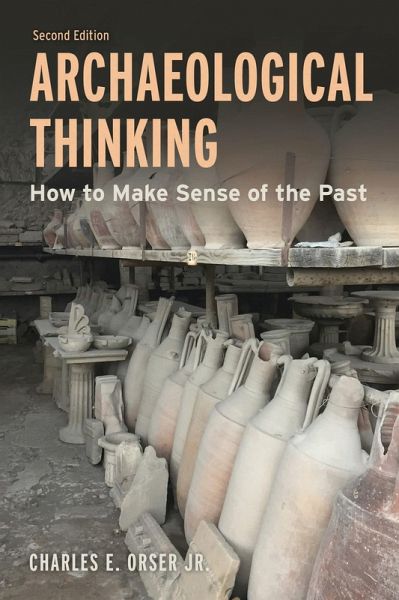
How do archaeologists think? How do archaeologists take the scattered and fragmentary remains collected from past settlements and create meaningful, reasonable interpretations of past human history? In the second edition of Archaeological Thinking, Charles E. Orser, Jr. provides answers to these questions and more by explaining in non-technical language the most basic elements of critical thinking in archaeology. This book explores and explains such topics as: the use of logic in framing argumentsthe curious issue of fact selectionthe use of analogiesthe role of archaeology in contemporary…mehr
How do archaeologists think? How do archaeologists take the scattered and fragmentary remains collected from past settlements and create meaningful, reasonable interpretations of past human history? In the second edition of Archaeological Thinking, Charles E. Orser, Jr. provides answers to these questions and more by explaining in non-technical language the most basic elements of critical thinking in archaeology. This book explores and explains such topics as: the use of logic in framing argumentsthe curious issue of fact selectionthe use of analogiesthe role of archaeology in contemporary society and among present-day communitiesapproaches to understanding the pastand the dangers of deceitful archaeological thinking. Examples taken from the world of ancient aliens, mythical sunken cities, and mysterious creatures help readers learn how to separate reality from fiction regardless of their desire to become a professional archaeologist.
Die Herstellerinformationen sind derzeit nicht verfügbar.
Autorenporträt
Charles E. Orser, Jr. is an anthropological archaeologist who investigates the modern world as it was created after about 1492. A retired Distinguished Professor at Illinois State University, he is now affiliated with the School of Human Evolution and Social Change at Arizona State University. He is the author of one hundred professional articles and several books and is the founder and editor of the International Journal of Historical Archaeology.
Inhaltsangabe
Preface Chapter 1. Thinking in Archaeology A Question of Belief? Science and History Thinking to Some Purpose The Process of Clear Thinking Sources for Continued Reading Chapter 2. A Brief History of Archaeological Thinking The Early Years The Middle Years The Recent Years Seriation The Conjunctive Approach Postmodern Thinking Archaeological Thinking in the New Millennium Sources for Continued Reading Chapter 3. Archaeology and the Evaluation of Claims SEARCHing Step 1: State the Claim Step 2: Examine the Evidence Step 3: Consider Alternative Claims Step 4: Rate each Claim Plausibility The Exeter Mystery The On-Going Battle Between Evidence and Perspective Sources for Continued Reading Chapter 4. Understanding and Selecting Facts Fact Selection Is Fact Selection Dishonest? Clovis Points Glass Trade Beads Sources for Continued Reading Chapter 5. Archaeological Thinking and Logic The Importance of Logical Thinking Deduction Induction Abduction Sources for Continued Reading Chapter 6. Analogy and Archaeological Thinking Archaeologists and Analogy Artifact Analogies Ethnographic Analogies The Direct Historical Approach More Recent Comparative Ethnographic Analogy Evaluating Analogy Strength What Is the Purpose of Analogy in Archaeology? Sources for Continued Reading Chapter 7. Thinking with Things A Cultural Systems Approach A Behavioral Approach A Commodities Approach A Semiotics Approach A Social Activism Approach Sources for Continued Reading Chapter 8. Deceitful Archaeological Thinking Great Zimbabwe and Silencing the African Past Pseudo-archaeology in Nazi Hands The Dangers of Deceitful Archaeological Thinking Sources for Continued Reading Chapter 9. Archaeological Thinking in Public Bones of Contention The Cheyenne Outbreak of 1879 Timbuctoo, New Jersey Sources for Continued Reading Chapter 10. Archaeological Thinking for the Twenty-First Century Sources for Continued Reading
Preface Chapter 1. Thinking in Archaeology A Question of Belief? Science and History Thinking to Some Purpose The Process of Clear Thinking Sources for Continued Reading Chapter 2. A Brief History of Archaeological Thinking The Early Years The Middle Years The Recent Years Seriation The Conjunctive Approach Postmodern Thinking Archaeological Thinking in the New Millennium Sources for Continued Reading Chapter 3. Archaeology and the Evaluation of Claims SEARCHing Step 1: State the Claim Step 2: Examine the Evidence Step 3: Consider Alternative Claims Step 4: Rate each Claim Plausibility The Exeter Mystery The On-Going Battle Between Evidence and Perspective Sources for Continued Reading Chapter 4. Understanding and Selecting Facts Fact Selection Is Fact Selection Dishonest? Clovis Points Glass Trade Beads Sources for Continued Reading Chapter 5. Archaeological Thinking and Logic The Importance of Logical Thinking Deduction Induction Abduction Sources for Continued Reading Chapter 6. Analogy and Archaeological Thinking Archaeologists and Analogy Artifact Analogies Ethnographic Analogies The Direct Historical Approach More Recent Comparative Ethnographic Analogy Evaluating Analogy Strength What Is the Purpose of Analogy in Archaeology? Sources for Continued Reading Chapter 7. Thinking with Things A Cultural Systems Approach A Behavioral Approach A Commodities Approach A Semiotics Approach A Social Activism Approach Sources for Continued Reading Chapter 8. Deceitful Archaeological Thinking Great Zimbabwe and Silencing the African Past Pseudo-archaeology in Nazi Hands The Dangers of Deceitful Archaeological Thinking Sources for Continued Reading Chapter 9. Archaeological Thinking in Public Bones of Contention The Cheyenne Outbreak of 1879 Timbuctoo, New Jersey Sources for Continued Reading Chapter 10. Archaeological Thinking for the Twenty-First Century Sources for Continued Reading
Es gelten unsere Allgemeinen Geschäftsbedingungen: www.buecher.de/agb
Impressum
www.buecher.de ist ein Internetauftritt der buecher.de internetstores GmbH
Geschäftsführung: Monica Sawhney | Roland Kölbl | Günter Hilger
Sitz der Gesellschaft: Batheyer Straße 115 - 117, 58099 Hagen
Postanschrift: Bürgermeister-Wegele-Str. 12, 86167 Augsburg
Amtsgericht Hagen HRB 13257
Steuernummer: 321/5800/1497
USt-IdNr: DE450055826