132,95 €
inkl. MwSt.
Sofort per Download lieferbar
66 °P sammeln

Andere Kunden interessierten sich auch für
") Chemical Reactivity (eBook, ePUB)127,95 €
Chemical Reactivity (eBook, ePUB)127,95 €") Chemical Reactivity (eBook, ePUB)127,95 €
Chemical Reactivity (eBook, ePUB)127,95 €") Chemistry of Nanomaterials (eBook, ePUB)127,95 €
Chemistry of Nanomaterials (eBook, ePUB)127,95 €") Some Problems of Chemical Kinetics and Reactivity (eBook, ePUB)40,95 €
Some Problems of Chemical Kinetics and Reactivity (eBook, ePUB)40,95 €") Atomic Clusters with Unusual Structure, Bonding and Reactivity (eBook, ePUB)142,95 €
Atomic Clusters with Unusual Structure, Bonding and Reactivity (eBook, ePUB)142,95 €") Handbook on the Physics and Chemistry of Rare Earths (eBook, ePUB)256,95 €
Handbook on the Physics and Chemistry of Rare Earths (eBook, ePUB)256,95 €") Progress in Medicinal Chemistry (eBook, ePUB)122,95 €
Progress in Medicinal Chemistry (eBook, ePUB)122,95 €


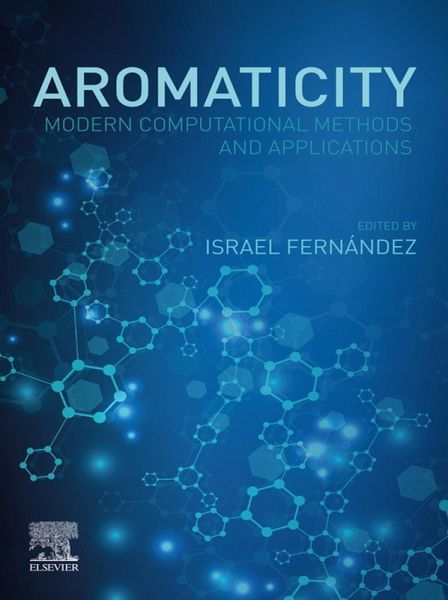
Evaluating the aromaticity of a molecular system and the influence of this concept on its properties is a crucial step in the development of novel aromatic systems. Modern computational methods can provide researchers with a high level of insight into such aromaticity, but identifying the most appropriate method for assessing a specific system can prove difficult. Aromaticity: Modern Computational Methods and Applications reviews the latest state-of-the-art computational methods in this field and discusses their applicability for evaluating the aromaticity of a system. In addition to covering aromaticity for typical organic molecules, this volume also explores systems possessing transition metals in their structures, macrocycles and even transition structures. The influence of the aromaticity on the properties of these species (including the structure, magnetic properties and reactivity) is highlighted, along with potential applications in fields including materials science and medicinal chemistry. Finally, the controversial and fuzzy nature of aromaticity as a concept is discussed, providing the basis for an updated and more comprehensive definition of this concept. Drawing on the knowledge of an international team of experts, Aromaticity: Modern Computational Methods and Applications is a unique guide for anyone researching, studying or applying principles of aromaticity in their work, from computational and organic chemists to pharmaceutical and materials scientists. - Reviews a range of computational methods to assess the aromatic nature of different compounds, helping readers select the most useful tool for the system they are studying - Presents a complete guide to the key concepts and fundamental principles of aromaticity - Provides guidance on identifying which variables should be modified to tune the properties of an aromatic system for different potential applications
Dieser Download kann aus rechtlichen Gründen nur mit Rechnungsadresse in A, B, BG, CY, CZ, D, DK, EW, E, FIN, F, GR, HR, H, IRL, I, LT, L, LR, M, NL, PL, P, R, S, SLO, SK ausgeliefert werden.