Sie sind bereits eingeloggt. Klicken Sie auf 2. tolino select Abo, um fortzufahren.
Bitte loggen Sie sich zunächst in Ihr Kundenkonto ein oder registrieren Sie sich bei bücher.de, um das eBook-Abo tolino select nutzen zu können.
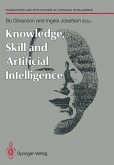
Mathematical and engineering models are not sufficient to explain the effects of computers on the concept and exercise of knowledge. This was the premise of a conference in Stockholm in 1988, papers from which are presented in this book.
Mathematical and engineering models are not sufficient to explain the effects of computers on the concept and exercise of knowledge. This was the premise of a conference in Stockholm in 1988, papers from which are presented in this book.
Dieser Download kann aus rechtlichen Gründen nur mit Rechnungsadresse in A, B, BG, CY, CZ, D, DK, EW, E, FIN, F, GR, HR, H, IRL, I, LT, L, LR, M, NL, PL, P, R, S, SLO, SK ausgeliefert werden.
Die Herstellerinformationen sind derzeit nicht verfügbar.
Autorenporträt
Magnus Florin, schwedischer Schriftsteller, Kritiker und Dramaturg, wurde 1955 in Uppsala geboren. Er schreibt Kurzprosa, Lyrik, Libretti, Romane und Essays. Unter anderem leitete Florin das Radiotheater von Sveriges Radio, heute ist er Chefdramaturg am Königlichen Dramatischen Theater in Stockholm.
Inhaltsangabe
Section I. Introduction.- 1. Introduction.- Section II. Language and Knowledge.- 2. Artificial Intelligence and The Empiricist Picture of Thought.- 3. Seeing and Seeing-As.- 4. Cognitive Science and the Computer Metaphor.- Section III. Tacit Knowledge.- 5. Rule-following and Intransitive Understanding.- 6. Tacit knowledge, Rule-following and Learning.- 7. Tacit Knowledge - An Impediment for AI?.- 8. Language and Action.- 9. Language and Experience.- 10. The Inner Weather Picture.- Section IV. Education, Training, Skill and Work.- 11. The New Technology and the New Training: Reflections on the Past and Prospects for the Future.- 12. Engineering as an Art.- 13. Automation and Skill.- 14. Farmers and Computers.- 15. How to make Materials Data Systems Useful for Designers.- 16. Technological Information and Information Technology in the Information Society.- 17. A Learning Society: Japan Through Australian Eyes.- 18. Unleashing Human Intelligence - More Than a Matter of Computer Technology.- Section V. Expert Systems.- 19. Cultures, Languages, Mediation.- 20. Professional Skill and Traditions of Knowledge.- 21. Design of an Intelligent Tutor System for Use in Medical Education.- 22. Practical Applications of Artificial Intelligence in Education and Training.- Section VI. The Information Society.- 23. "I have no idea where I am going, so to make up for that I go faster".- 24. Is Socrates to Blame for Cognitivism?.- 25. Socratic Dialogue: On Dialogue and Discussion in the Formation of Knowledge.- 26. And in the End, the Epilogue?.- 27. The Personal Signature.
Section I. Introduction.- 1. Introduction.- Section II. Language and Knowledge.- 2. Artificial Intelligence and The Empiricist Picture of Thought.- 3. Seeing and Seeing-As.- 4. Cognitive Science and the Computer Metaphor.- Section III. Tacit Knowledge.- 5. Rule-following and Intransitive Understanding.- 6. Tacit knowledge, Rule-following and Learning.- 7. Tacit Knowledge - An Impediment for AI?.- 8. Language and Action.- 9. Language and Experience.- 10. The Inner Weather Picture.- Section IV. Education, Training, Skill and Work.- 11. The New Technology and the New Training: Reflections on the Past and Prospects for the Future.- 12. Engineering as an Art.- 13. Automation and Skill.- 14. Farmers and Computers.- 15. How to make Materials Data Systems Useful for Designers.- 16. Technological Information and Information Technology in the Information Society.- 17. A Learning Society: Japan Through Australian Eyes.- 18. Unleashing Human Intelligence - More Than a Matter of Computer Technology.- Section V. Expert Systems.- 19. Cultures, Languages, Mediation.- 20. Professional Skill and Traditions of Knowledge.- 21. Design of an Intelligent Tutor System for Use in Medical Education.- 22. Practical Applications of Artificial Intelligence in Education and Training.- Section VI. The Information Society.- 23. "I have no idea where I am going, so to make up for that I go faster".- 24. Is Socrates to Blame for Cognitivism?.- 25. Socratic Dialogue: On Dialogue and Discussion in the Formation of Knowledge.- 26. And in the End, the Epilogue?.- 27. The Personal Signature.
Es gelten unsere Allgemeinen Geschäftsbedingungen: www.buecher.de/agb
Impressum
www.buecher.de ist ein Internetauftritt der buecher.de internetstores GmbH
Geschäftsführung: Monica Sawhney | Roland Kölbl | Günter Hilger
Sitz der Gesellschaft: Batheyer Straße 115 - 117, 58099 Hagen
Postanschrift: Bürgermeister-Wegele-Str. 12, 86167 Augsburg
Amtsgericht Hagen HRB 13257
Steuernummer: 321/5800/1497
USt-IdNr: DE450055826