42,95 €
42,95 €
inkl. MwSt.
Sofort per Download lieferbar

21 °P sammeln
42,95 €
Als Download kaufen
42,95 €
inkl. MwSt.
Sofort per Download lieferbar
21 °P sammeln
Jetzt verschenken
Alle Infos zum eBook verschenken
42,95 €
inkl. MwSt.
Sofort per Download lieferbar
Alle Infos zum eBook verschenken
21 °P sammeln

Andere Kunden interessierten sich auch für
") Artificial Intelligence, Humans and the Law (eBook, ePUB)42,95 €
Artificial Intelligence, Humans and the Law (eBook, ePUB)42,95 €") Rhetoric of InSecurity (eBook, PDF)39,95 €
Rhetoric of InSecurity (eBook, PDF)39,95 €") Genetic Testing (eBook, PDF)51,95 €
Genetic Testing (eBook, PDF)51,95 €") Gene Editing, Law, and the Environment (eBook, PDF)45,95 €
Gene Editing, Law, and the Environment (eBook, PDF)45,95 €") Attacks on Artificial Intelligence (eBook, PDF)148,95 €
Attacks on Artificial Intelligence (eBook, PDF)148,95 €") Knowledge, Technology and Law (eBook, PDF)51,95 €
Knowledge, Technology and Law (eBook, PDF)51,95 €") Technologies of InSecurity (eBook, PDF)45,95 €
Technologies of InSecurity (eBook, PDF)45,95 €






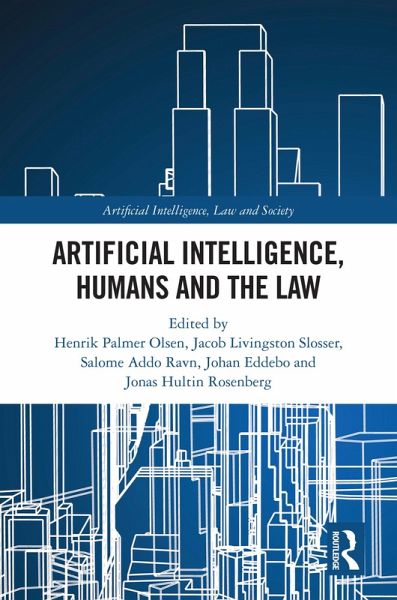
This book takes up the contentious issue of artificial intelligence (AI), and more specifically the evolving nature of AI-mindedness, as a legal entity in society. With the increasing potential of AI suggested by the recent surge in creative and administrative tools and large language models, there is a growing concern about the ethical and legal implications of incorporating AI into society. As these systems become even more powerful and their ability to mimic human output grows, the question of whether and how to attribute mental states to AI, even in its most nascent form, has become a pressing concern. It is, for example, unclear what kind of mind AI might be capable of and therefore what the proper legal analogy might be for how we attribute reasoning capability, intent, responsibility, liability, agency, and so on, to it. This book contributes to this new and important area by bringing together front-line research from diverse fields on the topic of understanding 'AI-mindedness', and how it - and our relationship to it - might be regulated. Through a collection of chapters, written by experts from law, public administration, tort, psychoanalysis, philosophy, linguistics, computer science, and political theory, this volume offers an insightful examination of current research, theoretical frameworks, and practical applications that are shaping the AI-human relationship. This book will be of considerable interest to scholars and researchers working in legal theory, socio-legal studies, law and technology, and science and technology studies.
Dieser Download kann aus rechtlichen Gründen nur mit Rechnungsadresse in A, B, BG, CY, CZ, D, DK, EW, E, FIN, F, GR, HR, H, IRL, I, LT, L, LR, M, NL, PL, P, R, S, SLO, SK ausgeliefert werden.