104,95 €
inkl. MwSt.
Sofort per Download lieferbar
52 °P sammeln

Andere Kunden interessierten sich auch für
") The US-China-Russia Triangle (eBook, PDF)96,95 €
The US-China-Russia Triangle (eBook, PDF)96,95 €") Lobbying and Foreign Interests in Chinese Politics (eBook, PDF)72,95 €
Lobbying and Foreign Interests in Chinese Politics (eBook, PDF)72,95 €") The China-Russia Relationship (eBook, PDF)48,95 €
The China-Russia Relationship (eBook, PDF)48,95 €") China and Russia after the Ukrainian War (eBook, PDF)60,95 €
China and Russia after the Ukrainian War (eBook, PDF)60,95 €") Rebalancing Asia (eBook, PDF)128,95 €
Rebalancing Asia (eBook, PDF)128,95 €") Changing US Foreign Policy toward India (eBook, PDF)72,95 €
Changing US Foreign Policy toward India (eBook, PDF)72,95 € (eBook, PDF)") A History of China-U.S. Relations (1911-1949) (eBook, PDF)72,95 €
A History of China-U.S. Relations (1911-1949) (eBook, PDF)72,95 €
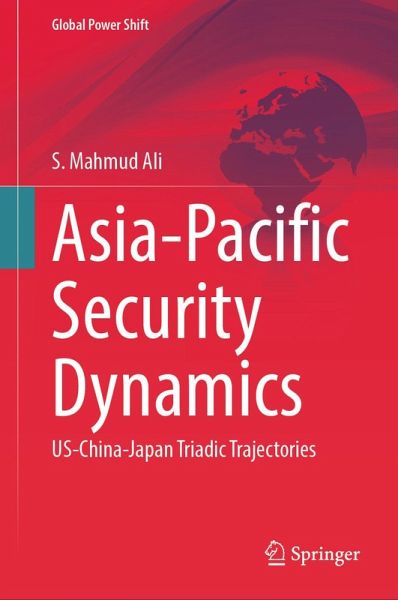
This book examines the causes and consequences of the dramatic shift in Japanese national security perspectives and mutually exclusive policies toward China and the USA. It sheds new light on the changing trajectories of triadic dynamics shaping U.S.-China-Japan strategic insecurity, their historical roots, its implications for trans-Pacific peace and stability, and their potential influence on emerging regional and systemic security architectures. Against the backdrop of U.S.-proclaimed "great power competition" with China as the defining feature and organizing principle of the U.S.-led coalition's strategic and geopolitical responses to China's "national rejuvenation," with primacy's "displacement anxiety" triggering a "systemic transitional fluidity," the book examines the origins and outcomes of Sino-Japanese insecurity, its polarizing effects on U.S.-China and U.S.-Japan relations, and the wider systemic resonances and dissonances as the post-Cold War unipolar systemic structure gives way to an uncertain, ambiguous, and imprecise successor regime. Finally, historical lessons drawn from primary documents are used to illuminate the prospects for triangular relations in shaping the Asia-Pacific security ecology over the medium term.
Dieser Download kann aus rechtlichen Gründen nur mit Rechnungsadresse in A, B, BG, CY, CZ, D, DK, EW, E, FIN, F, GR, HR, H, IRL, I, LT, L, LR, M, NL, PL, P, R, S, SLO, SK ausgeliefert werden.