60,95 €
60,95 €
inkl. MwSt.
Sofort per Download lieferbar

30 °P sammeln
60,95 €
Als Download kaufen
60,95 €
inkl. MwSt.
Sofort per Download lieferbar
30 °P sammeln
Jetzt verschenken
Alle Infos zum eBook verschenken
60,95 €
inkl. MwSt.
Sofort per Download lieferbar
Alle Infos zum eBook verschenken
30 °P sammeln

Andere Kunden interessierten sich auch für
") Building Resilience (eBook, PDF)32,95 €
Building Resilience (eBook, PDF)32,95 €") Tropical Rainforest Responses to Climatic Change (eBook, PDF)128,95 €
Tropical Rainforest Responses to Climatic Change (eBook, PDF)128,95 €") Forest Hydrology and Biogeochemistry (eBook, PDF)232,95 €
Forest Hydrology and Biogeochemistry (eBook, PDF)232,95 €") The Geobiology and Ecology of Metasequoia (eBook, PDF)112,95 €
The Geobiology and Ecology of Metasequoia (eBook, PDF)112,95 €") Atlas of Macroscopic Wood Identification (eBook, PDF)167,95 €
Atlas of Macroscopic Wood Identification (eBook, PDF)167,95 €") Fertility of Soils (eBook, PDF)72,95 €
Fertility of Soils (eBook, PDF)72,95 €") Over-Exploitation of Forests (eBook, PDF)40,95 €
Over-Exploitation of Forests (eBook, PDF)40,95 €
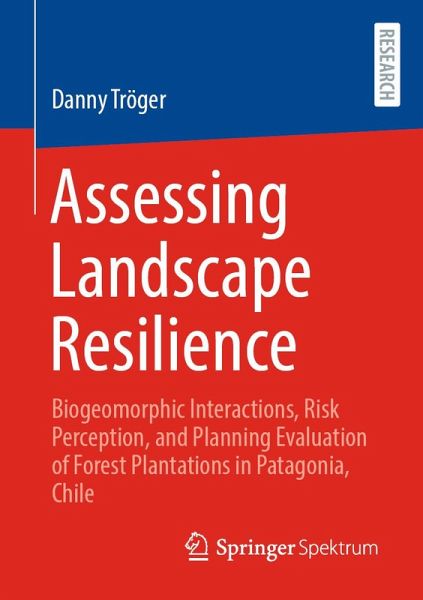
This book examines the extent to which exotic pine plantations are a suitable strategy for maintaining the essential functions, structures, processes and identity of the Patagonian landscape over time. To this end, it integrates three empirical studies with inter- and transdisciplinary approaches under the theoretical framework of landscape resilience.
The first study analyses the biogeomorphic interactions of different land uses and their relevance for soil conservation and landslide mitigation. The second study examines perceptions of natural hazards and focuses on networks of human and non-human actors that maintain landscape resilience. The results of these two studies are incorporated into the planning evaluation of land zoning and alternative strategies are developed, inspired by normative polycentric governance.
It is concluded that Pinus plantations partially fulfil their ecological objectives of erosion control and landslide mitigation. However, their performance lags behind that of secondary forests with native species and they create new risks such as reduced biodiversity, increased risk of wildfires and conflicts with local identity. The book concludes with new research questions of trans-regional importance.
The first study analyses the biogeomorphic interactions of different land uses and their relevance for soil conservation and landslide mitigation. The second study examines perceptions of natural hazards and focuses on networks of human and non-human actors that maintain landscape resilience. The results of these two studies are incorporated into the planning evaluation of land zoning and alternative strategies are developed, inspired by normative polycentric governance.
It is concluded that Pinus plantations partially fulfil their ecological objectives of erosion control and landslide mitigation. However, their performance lags behind that of secondary forests with native species and they create new risks such as reduced biodiversity, increased risk of wildfires and conflicts with local identity. The book concludes with new research questions of trans-regional importance.
Dieser Download kann aus rechtlichen Gründen nur mit Rechnungsadresse in A, B, BG, CY, CZ, D, DK, EW, E, FIN, F, GR, HR, H, IRL, I, LT, L, LR, M, NL, PL, P, R, S, SLO, SK ausgeliefert werden.