Sie sind bereits eingeloggt. Klicken Sie auf 2. tolino select Abo, um fortzufahren.
Bitte loggen Sie sich zunächst in Ihr Kundenkonto ein oder registrieren Sie sich bei bücher.de, um das eBook-Abo tolino select nutzen zu können.
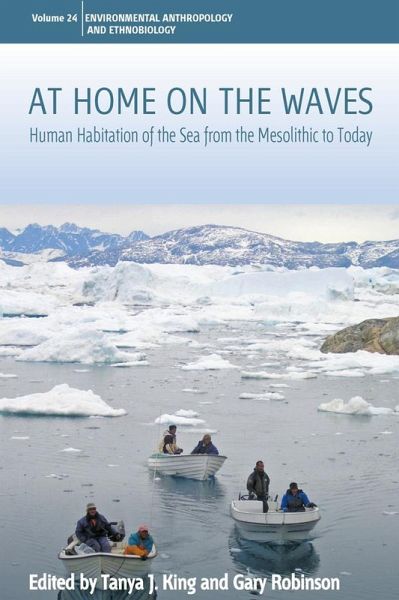
Contemporary public discourses about the ocean are routinely characterized by scientific and environmentalist narratives that imagine and idealize marine spaces in which humans are absent. In contrast, this collection explores the variety of ways in which people have long made themselves at home at sea, and continue to live intimately with it. In doing so, it brings together both ethnographic and archaeological research - much of it with an explicit Ingoldian approach - on a wide range of geographical areas and historical periods.
Contemporary public discourses about the ocean are routinely characterized by scientific and environmentalist narratives that imagine and idealize marine spaces in which humans are absent. In contrast, this collection explores the variety of ways in which people have long made themselves at home at sea, and continue to live intimately with it. In doing so, it brings together both ethnographic and archaeological research - much of it with an explicit Ingoldian approach - on a wide range of geographical areas and historical periods.
Dieser Download kann aus rechtlichen Gründen nur mit Rechnungsadresse in A, D ausgeliefert werden.
Die Herstellerinformationen sind derzeit nicht verfügbar.
Autorenporträt
Gary Robinson is a senior lecturer in archaeology at Bangor University, North Wales. His main research interest is the prehistoric archaeology of maritime and coastal communities in western Britain and Ireland.
Inhaltsangabe
List of Illustrations List of Tables Foreword Bonnie McCay Acknowledgments Introduction: At Sea in the Twenty-First Century Tanya J. King and Gary Robinson Chapter 1. Moving Beyond the "Scape" to Being in the (Watery) World, Wherever Hannah Cobb and Jesse Ransley Chapter 2. Working Grounds, Producing Places, and Becoming at Home at Sea Penny McCall Howard Chapter 3. Reexamination Brazilian Mounds: Changed Views of Coastal Societies Daniela Klokler and MaDu Gaspar Chapter 4. Seamless Archaeology: The Evolving Use of Archaeology in the Study of Seascapes Caroline Wickham-Jones Chapter 5. Moving Along: Wayfinding, Following, and Nonverbal Communication across the Frozen Seascape of East Greenland Sophie Cäcilie Elixhauser Chapter 6. Drawing Gestures: Body Movement in Perceiving and Communicating Submerged Landscapes Cristián Simonetti Chapter 7. Exploration of a Buried Seascape: The Cultural Maritime Landscapes of Tremadoc Bay Gary Robinson Chapter 8. Fish Traps of the Crocodile Islands: Windows on Another World Bentley James Chapter 9. A Community-Based Approach to Documenting and Interpreting the Cultural Seascapes of the Recherche Archipelago, Western Australia David Guilfoyle, Ross Anderson, Ron "Doc" Reynolds, and Tom Kimber Chapter 10. Recognized Seaworthy: Resistance and Transformation among Icelandic Fisherwomen Margaret Willson and Helga Tryggvadóttir Chapter 11. "It Is Windier Nowadays": Coastal Livelihoods and Seascape-Making in Qeqertarsuaq, West Greenland Pelle Tejsner Chapter 12. Home-Making on Land and Sea in the Archipelagic Philippines Olivia Swift Chapter 13. Fishing for Food and Fun: How Fishing Practices Mediate Physical and Discursive Relationships with the Sea in Carteret County, North Carolina, US Noëlle Boucquey and Lisa Campbell Chapter 14. Sea Nomads: Sama-Bajau Mobility, Livelihoods, and Marine Conservation in Southeast Asia Natasha Stacey and Edward H. Allison Chapter 15. Formal and Informal Territoriality in Ocean Management Tanya J. King Afterword: At Home on the Waves? A Concluding Comment Tim Ingold Glossary Index
List of Illustrations List of Tables Foreword Bonnie McCay Acknowledgments Introduction: At Sea in the Twenty-First Century Tanya J. King and Gary Robinson Chapter 1. Moving Beyond the "Scape" to Being in the (Watery) World, Wherever Hannah Cobb and Jesse Ransley Chapter 2. Working Grounds, Producing Places, and Becoming at Home at Sea Penny McCall Howard Chapter 3. Reexamination Brazilian Mounds: Changed Views of Coastal Societies Daniela Klokler and MaDu Gaspar Chapter 4. Seamless Archaeology: The Evolving Use of Archaeology in the Study of Seascapes Caroline Wickham-Jones Chapter 5. Moving Along: Wayfinding, Following, and Nonverbal Communication across the Frozen Seascape of East Greenland Sophie Cäcilie Elixhauser Chapter 6. Drawing Gestures: Body Movement in Perceiving and Communicating Submerged Landscapes Cristián Simonetti Chapter 7. Exploration of a Buried Seascape: The Cultural Maritime Landscapes of Tremadoc Bay Gary Robinson Chapter 8. Fish Traps of the Crocodile Islands: Windows on Another World Bentley James Chapter 9. A Community-Based Approach to Documenting and Interpreting the Cultural Seascapes of the Recherche Archipelago, Western Australia David Guilfoyle, Ross Anderson, Ron "Doc" Reynolds, and Tom Kimber Chapter 10. Recognized Seaworthy: Resistance and Transformation among Icelandic Fisherwomen Margaret Willson and Helga Tryggvadóttir Chapter 11. "It Is Windier Nowadays": Coastal Livelihoods and Seascape-Making in Qeqertarsuaq, West Greenland Pelle Tejsner Chapter 12. Home-Making on Land and Sea in the Archipelagic Philippines Olivia Swift Chapter 13. Fishing for Food and Fun: How Fishing Practices Mediate Physical and Discursive Relationships with the Sea in Carteret County, North Carolina, US Noëlle Boucquey and Lisa Campbell Chapter 14. Sea Nomads: Sama-Bajau Mobility, Livelihoods, and Marine Conservation in Southeast Asia Natasha Stacey and Edward H. Allison Chapter 15. Formal and Informal Territoriality in Ocean Management Tanya J. King Afterword: At Home on the Waves? A Concluding Comment Tim Ingold Glossary Index
Es gelten unsere Allgemeinen Geschäftsbedingungen: www.buecher.de/agb
Impressum
www.buecher.de ist ein Internetauftritt der buecher.de internetstores GmbH
Geschäftsführung: Monica Sawhney | Roland Kölbl | Günter Hilger
Sitz der Gesellschaft: Batheyer Straße 115 - 117, 58099 Hagen
Postanschrift: Bürgermeister-Wegele-Str. 12, 86167 Augsburg
Amtsgericht Hagen HRB 13257
Steuernummer: 321/5800/1497
USt-IdNr: DE450055826