8,99 €
inkl. MwSt.
Sofort per Download lieferbar
0 °P sammeln

Andere Kunden interessierten sich auch für
") The Cristero War (eBook, ePUB)2,99 €
The Cristero War (eBook, ePUB)2,99 €") The Mythology and Religion of Ancient Mesoamerica (eBook, ePUB)4,99 €
The Mythology and Religion of Ancient Mesoamerica (eBook, ePUB)4,99 €") The Caste War of Yucatán (eBook, ePUB)3,99 €
The Caste War of Yucatán (eBook, ePUB)3,99 €") American Hero-Myths (eBook, ePUB)3,99 €
American Hero-Myths (eBook, ePUB)3,99 €") The Mythology and Religion of the Aztec (eBook, ePUB)299,00 €
The Mythology and Religion of the Aztec (eBook, ePUB)299,00 €") Atlantis; The Cypriot empire (eBook, ePUB)3,99 €
Atlantis; The Cypriot empire (eBook, ePUB)3,99 €") The Changing World History (eBook, ePUB)1,75 €
The Changing World History (eBook, ePUB)1,75 €



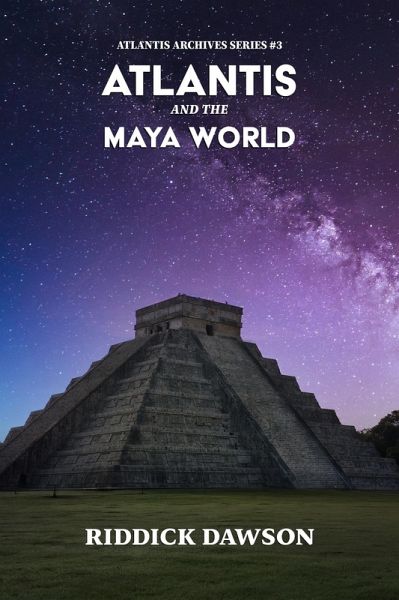
Across millennia, the name Atlantis has echoed through human imagination - a vanished civilization of divine wisdom and cataclysmic ruin. But what if its memory survived not in Greek philosophy, but in the sacred texts and temples of the ancient Maya?
In Atlantis and the Maya, the reader embarks on a sweeping journey across oceans, centuries, and civilizations. From Plato's dialogues to the Popol Vuh, from the stone cities of Tikal, Palenque, Copán, and Chichén Itzá to the flood myths of Mesoamerica, this book explores one of the most enduring mysteries of all time: the possibility that two great civilizations - separated by an ocean - shared a common cosmic memory of creation, destruction, and rebirth.
Drawing on archaeology, mythology, and the visionary writings of Brasseur de Bourbourg, Ignatius Donnelly, and modern scholarship, this work examines how the legend of Atlantis became entwined with the rise of the New World's greatest civilization. It traces the parallel philosophies of the Greeks and the Maya - both warning of hubris, imbalance, and the fall of empires - and asks why, even in an age of satellites and seafloor maps, the myth of a sunken world still resonates so deeply.
Blending history with symbolism, Atlantis and the Maya reveals that the lost continent is not merely a place to be found beneath the sea, but a mirror of humanity's own forgotten origins. It is an exploration of memory, morality, and the eternal cycles that shape both myth and civilization - a bridge between Plato's philosopher-kings and the Maya priest-astronomers who watched the stars and remembered the floods of creation.
In Atlantis and the Maya, the reader embarks on a sweeping journey across oceans, centuries, and civilizations. From Plato's dialogues to the Popol Vuh, from the stone cities of Tikal, Palenque, Copán, and Chichén Itzá to the flood myths of Mesoamerica, this book explores one of the most enduring mysteries of all time: the possibility that two great civilizations - separated by an ocean - shared a common cosmic memory of creation, destruction, and rebirth.
Drawing on archaeology, mythology, and the visionary writings of Brasseur de Bourbourg, Ignatius Donnelly, and modern scholarship, this work examines how the legend of Atlantis became entwined with the rise of the New World's greatest civilization. It traces the parallel philosophies of the Greeks and the Maya - both warning of hubris, imbalance, and the fall of empires - and asks why, even in an age of satellites and seafloor maps, the myth of a sunken world still resonates so deeply.
Blending history with symbolism, Atlantis and the Maya reveals that the lost continent is not merely a place to be found beneath the sea, but a mirror of humanity's own forgotten origins. It is an exploration of memory, morality, and the eternal cycles that shape both myth and civilization - a bridge between Plato's philosopher-kings and the Maya priest-astronomers who watched the stars and remembered the floods of creation.
Dieser Download kann aus rechtlichen Gründen nur mit Rechnungsadresse in A, B, CY, CZ, D, DK, EW, E, FIN, F, GR, H, IRL, I, LT, L, LR, M, NL, PL, P, R, S, SLO, SK ausgeliefert werden.