31,95 €
inkl. MwSt.
Sofort per Download lieferbar
16 °P sammeln

Andere Kunden interessierten sich auch für
") Tempting Fate (eBook, ePUB)0,00 €
Tempting Fate (eBook, ePUB)0,00 €") Iran's Foreign Policy (eBook, ePUB)40,95 €
Iran's Foreign Policy (eBook, ePUB)40,95 €") Dangers of Deterrence (eBook, ePUB)32,95 €
Dangers of Deterrence (eBook, ePUB)32,95 €") Deterrence in the 1980s (eBook, ePUB)32,95 €
Deterrence in the 1980s (eBook, ePUB)32,95 €") International Atomic Policy During a Decade (eBook, ePUB)32,95 €
International Atomic Policy During a Decade (eBook, ePUB)32,95 €") Ethics and Nuclear Deterrence (eBook, ePUB)32,95 €
Ethics and Nuclear Deterrence (eBook, ePUB)32,95 €") Nuclear Reactions (eBook, ePUB)0,00 €
Nuclear Reactions (eBook, ePUB)0,00 €
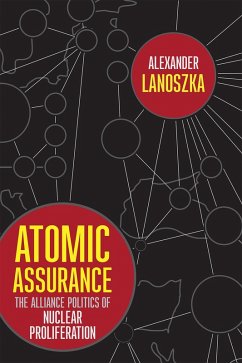
Do alliances curb efforts by states to develop nuclear weapons? Atomic Assurance looks at what makes alliances sufficiently credible to prevent nuclear proliferation; how alliances can break down and so encourage nuclear proliferation; and whether security guarantors like the United States can use alliance ties to end the nuclear efforts of their allies.
Alexander Lanoszka finds that military alliances are less useful in preventing allies from acquiring nuclear weapons than conventional wisdom suggests. Through intensive case studies of West Germany, Japan, and South Korea, as well as a series of smaller cases on Great Britain, France, Norway, Australia, and Taiwan, Atomic Assurance shows that it is easier to prevent an ally from initiating a nuclear program than to stop an ally that has already started one; in-theater conventional forces are crucial in making American nuclear guarantees credible; the American coercion of allies who started, or were tempted to start, a nuclear weapons program has played less of a role in forestalling nuclear proliferation than analysts have assumed; and the economic or technological reliance of a security-dependent ally on the United States works better to reverse or to halt that ally's nuclear bid than anything else.
Crossing diplomatic history, international relations, foreign policy, grand strategy, and nuclear strategy, Lanoszka's book reworks our understanding of the power and importance of alliances in stopping nuclear proliferation.
Alexander Lanoszka finds that military alliances are less useful in preventing allies from acquiring nuclear weapons than conventional wisdom suggests. Through intensive case studies of West Germany, Japan, and South Korea, as well as a series of smaller cases on Great Britain, France, Norway, Australia, and Taiwan, Atomic Assurance shows that it is easier to prevent an ally from initiating a nuclear program than to stop an ally that has already started one; in-theater conventional forces are crucial in making American nuclear guarantees credible; the American coercion of allies who started, or were tempted to start, a nuclear weapons program has played less of a role in forestalling nuclear proliferation than analysts have assumed; and the economic or technological reliance of a security-dependent ally on the United States works better to reverse or to halt that ally's nuclear bid than anything else.
Crossing diplomatic history, international relations, foreign policy, grand strategy, and nuclear strategy, Lanoszka's book reworks our understanding of the power and importance of alliances in stopping nuclear proliferation.
Dieser Download kann aus rechtlichen Gründen nur mit Rechnungsadresse in A, D ausgeliefert werden.