174,95 €
174,95 €
inkl. MwSt.
Sofort per Download lieferbar

87 °P sammeln
174,95 €
Als Download kaufen
174,95 €
inkl. MwSt.
Sofort per Download lieferbar
87 °P sammeln
Jetzt verschenken
Alle Infos zum eBook verschenken
174,95 €
inkl. MwSt.
Sofort per Download lieferbar
Alle Infos zum eBook verschenken
87 °P sammeln

Andere Kunden interessierten sich auch für
") Les agrégats (eBook, PDF)112,95 €
Les agrégats (eBook, PDF)112,95 €") Nanocomposites (eBook, PDF)160,95 €
Nanocomposites (eBook, PDF)160,95 €") Bioactive Glasses (eBook, PDF)186,95 €
Bioactive Glasses (eBook, PDF)186,95 €") Lupeol (eBook, PDF)52,95 €
Lupeol (eBook, PDF)52,95 €") Polymer Nanofibers (eBook, PDF)166,95 €
Polymer Nanofibers (eBook, PDF)166,95 €") Nanomaterials in Joining (eBook, PDF)132,95 €
Nanomaterials in Joining (eBook, PDF)132,95 €") Nanomaterials for Water Remediation (eBook, PDF)129,95 €
Nanomaterials for Water Remediation (eBook, PDF)129,95 €

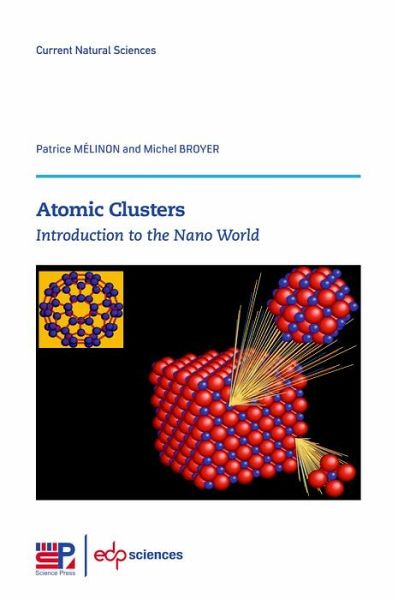
The spectacular development of nanotechnologies over the last twenty years has introduced all kinds of nano-objects or nanoparticles into everyday life. The remarkable properties of these nano-materials explain why they are used as much in cosmetics and lubricants as in most high-tech components.
The aim of this book is to describe the basic principles governing nanoscience, and nanophysics in particular. The authors show how the physics and chemistry of atoms influence the properties of nano-objects. They also describe how the properties of macroscopic materials are modified when their size decreases.
This first volume is devoted to aggregates or nanoparticles in the ground state. It shows how binding energy and symetry properties govern the arrangement of atoms according to their electronic structure. It also explains the influence of metal bond complexity on the properties of transition metal nanoparticles. Applications are given for insulator-metal transition, magnetism and catalysis.
A second volume will describe the influence of the temperature, the excited states of aggregates and their optical properties. The authors come from different backgrounds, Michel Broyer from atomic and molecular physics and Patrice Mélinon from condensed matter. They were both pioneers in aggregate and work at Lyon I University.
Dieser Download kann aus rechtlichen Gründen nur mit Rechnungsadresse in A, B, BG, CY, CZ, D, DK, EW, E, FIN, F, GR, HR, H, IRL, I, LT, L, LR, M, NL, PL, P, R, S, SLO, SK ausgeliefert werden.