32,95 €
32,95 €
inkl. MwSt.
Sofort per Download lieferbar

16 °P sammeln
32,95 €
Als Download kaufen
32,95 €
inkl. MwSt.
Sofort per Download lieferbar
16 °P sammeln
Jetzt verschenken
Alle Infos zum eBook verschenken
32,95 €
inkl. MwSt.
Sofort per Download lieferbar
Alle Infos zum eBook verschenken
16 °P sammeln

Explores how early modern writers used poetry to fight food insecurity
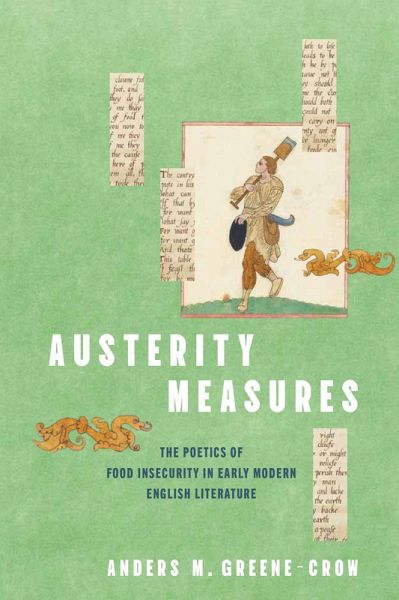
Austerity Measures explores how early modern writers used poetic form as a tool to fight extreme food insecurity. Authors such as Thomas Tusser, George Herbert, Robert Herrick, Anne Bradstreet, and Thomas Tryon witnessed the privatization of public farmland, rising food prices amidst uncontrolled inflation, mass starvation in nascent North American colonies, and the racist violence of the Caribbean plantation slavery system. Anders M. Greene-Crow shows how these authors experimented with literary form in an effort to change readers' beliefs and behaviors with regard to food ethics.
By examining this history, Greene-Crow sheds new light on both modern-day food ethics and activism's place in literary writing. This book traces how authors' solutions to food insecurity turned away from structural models of communal care and toward the now-dominant consumer-capitalist model championing individual dietary choice. Simultaneously, he reveals why literary criticism began to discount literature's power as a tool for social change. The New Critical school, whose close reading methodology dominates literary analysis, arose out of Southern Agrarianism, a movement that sought to return the South to antebellum structures of racial hierarchy and labor exploitation that took shape in the early modern period. These intersectional labor politics underlie close reading, continuing to limit critics' understanding of how literary form produces social change, and reinforcing the scarcity culture of literature departments today.
By recovering poetry's role as a force for affecting readers' relationship to one of their most basic needs-the need to eat-Austerity Measures develops an alternative methodology that takes writers' material conditions into account in analyzing form.
Austerity Measures explores how early modern writers used poetic form as a tool to fight extreme food insecurity. Authors such as Thomas Tusser, George Herbert, Robert Herrick, Anne Bradstreet, and Thomas Tryon witnessed the privatization of public farmland, rising food prices amidst uncontrolled inflation, mass starvation in nascent North American colonies, and the racist violence of the Caribbean plantation slavery system. Anders M. Greene-Crow shows how these authors experimented with literary form in an effort to change readers' beliefs and behaviors with regard to food ethics.
By examining this history, Greene-Crow sheds new light on both modern-day food ethics and activism's place in literary writing. This book traces how authors' solutions to food insecurity turned away from structural models of communal care and toward the now-dominant consumer-capitalist model championing individual dietary choice. Simultaneously, he reveals why literary criticism began to discount literature's power as a tool for social change. The New Critical school, whose close reading methodology dominates literary analysis, arose out of Southern Agrarianism, a movement that sought to return the South to antebellum structures of racial hierarchy and labor exploitation that took shape in the early modern period. These intersectional labor politics underlie close reading, continuing to limit critics' understanding of how literary form produces social change, and reinforcing the scarcity culture of literature departments today.
By recovering poetry's role as a force for affecting readers' relationship to one of their most basic needs-the need to eat-Austerity Measures develops an alternative methodology that takes writers' material conditions into account in analyzing form.
Dieser Download kann aus rechtlichen Gründen nur mit Rechnungsadresse in A, D ausgeliefert werden.