29,95 €
29,95 €
inkl. MwSt.
Sofort per Download lieferbar

15 °P sammeln
29,95 €
Als Download kaufen
29,95 €
inkl. MwSt.
Sofort per Download lieferbar
15 °P sammeln
Jetzt verschenken
Alle Infos zum eBook verschenken
29,95 €
inkl. MwSt.
Sofort per Download lieferbar
Alle Infos zum eBook verschenken
15 °P sammeln

Andere Kunden interessierten sich auch für
") Autism and Inclusive Education (eBook, ePUB)29,95 €
Autism and Inclusive Education (eBook, ePUB)29,95 €") Research Approaches to Supporting Students on the Autism Spectrum in Inclusive Schools (eBook, PDF)36,95 €
Research Approaches to Supporting Students on the Autism Spectrum in Inclusive Schools (eBook, PDF)36,95 €") Supporting Neurodivergent Children and Families (eBook, PDF)31,95 €
Supporting Neurodivergent Children and Families (eBook, PDF)31,95 €") Talkabout Theory of Mind (eBook, PDF)44,95 €
Talkabout Theory of Mind (eBook, PDF)44,95 €") Good Autism Practice for Teachers (eBook, PDF)19,95 €
Good Autism Practice for Teachers (eBook, PDF)19,95 € Guidebook and Training Website (eBook, PDF)") Developmental Play Assessment for Practitioners (DPA-P) Guidebook and Training Website (eBook, PDF)216,95 €
Developmental Play Assessment for Practitioners (DPA-P) Guidebook and Training Website (eBook, PDF)216,95 €") Working with Child and Adolescent Mental Health: The Central Role of Language and Communication (eBook, PDF)36,95 €
Working with Child and Adolescent Mental Health: The Central Role of Language and Communication (eBook, PDF)36,95 €

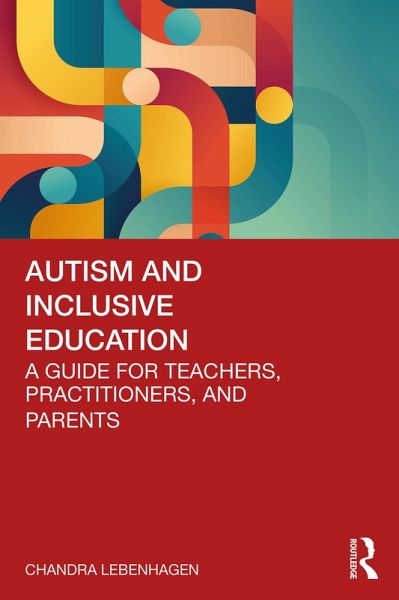
This handbook provides educators and school practitioners with a practical resource to successfully support speaking and non-speaking autistic students in K-12 school settings.
Each chapter discusses an approach founded on current research on the self-reported school priorities of autistic students, which historically have been overlooked in research and education. Incorporating the views and experiences of autistic students promotes the use of human-rights-centered pedagogies and ensures that evidence-based practices are both ethical and effective in supporting the learning and well-being success of autistic students. The informative content challenges assumptions of normative ability and highlights opportunities where evidence-based practices to support autistic students can be used alongside inclusive best practices to improve the educational experiences of all students.
This handbook's flexible and easy-to-use design can be used in its entirety or as a reference tool for school practitioners, teachers, and parents.
Each chapter discusses an approach founded on current research on the self-reported school priorities of autistic students, which historically have been overlooked in research and education. Incorporating the views and experiences of autistic students promotes the use of human-rights-centered pedagogies and ensures that evidence-based practices are both ethical and effective in supporting the learning and well-being success of autistic students. The informative content challenges assumptions of normative ability and highlights opportunities where evidence-based practices to support autistic students can be used alongside inclusive best practices to improve the educational experiences of all students.
This handbook's flexible and easy-to-use design can be used in its entirety or as a reference tool for school practitioners, teachers, and parents.
Dieser Download kann aus rechtlichen Gründen nur mit Rechnungsadresse in A, B, BG, CY, CZ, D, DK, EW, E, FIN, F, GR, HR, H, IRL, I, LT, L, LR, M, NL, PL, P, R, S, SLO, SK ausgeliefert werden.
"As a parent of two school-aged autistic children and as a researcher focusing on technologies to enable better inclusion of autistic students, I cannot overstate the importance of this book for parents, teachers, and school administrators. Autistic students find it extremely challenging to access age-appropriate education due to incorrect and outdated assumptions about their abilities. They are often judged by how they present externally ("behaviours"), and these snap, ableist judgements often lead to adverse outcomes such as placement in segregated classrooms and the accompanying loss of meaningful instruction, autonomy, purpose, community, and connectedness. While Equity, Diversity, Inclusion, and Accessibility (EDIA) initiatives have ramped up in large organizations such as school boards and have (rightfully) benefitted several marginalized groups, the autistic student community continues to be sidelined and left in the dark. This book presents a practical, step-by-step guide steeped in research and the lived experiences of autistic students to address this problem. It details concrete alternatives to current behaviourist approaches and illustrates how the voices of autistic students can be channelled to build a truly inclusive and meaningful educational environment for them. In summary, this book is a timely tool for anyone who is interested in systematically implementing practices that transform educational outcomes for autistic students, thereby allowing this community to flourish and thrive."
Diwaker Krishnamurthy, PhD., Professor, Schulich School of Engineering
"This book results from a brave and relentless effort to transform autistic students' lives. Each chapter describes critical aspects of the complex circumstances that impact autistic students and their families. The book starts with a critical historical review of various theories, approaches, and interventions for autistic people. This attention to history and context makes this book an excellent reference for everyone interested in understanding the social and political dimensions that shape interpretations and decisions around treatments for neurodevelopmental conditions beyond autism. The reader will also find in this book the valuable voice of an author who brings to the narrative her extensive experience as a learning specialist greatly committed to improving the experience of neurodiverse learners. This book is an outstanding contribution to educational research and practice that aims to foster inclusive and respectful environments for neurodiverse communities."
Gabriela Alonso Yáñez, PhD., Associate Professor, Werklund School of Education
Diwaker Krishnamurthy, PhD., Professor, Schulich School of Engineering
"This book results from a brave and relentless effort to transform autistic students' lives. Each chapter describes critical aspects of the complex circumstances that impact autistic students and their families. The book starts with a critical historical review of various theories, approaches, and interventions for autistic people. This attention to history and context makes this book an excellent reference for everyone interested in understanding the social and political dimensions that shape interpretations and decisions around treatments for neurodevelopmental conditions beyond autism. The reader will also find in this book the valuable voice of an author who brings to the narrative her extensive experience as a learning specialist greatly committed to improving the experience of neurodiverse learners. This book is an outstanding contribution to educational research and practice that aims to foster inclusive and respectful environments for neurodiverse communities."
Gabriela Alonso Yáñez, PhD., Associate Professor, Werklund School of Education