37,95 €
37,95 €
inkl. MwSt.
Sofort per Download lieferbar

19 °P sammeln
37,95 €
Als Download kaufen
37,95 €
inkl. MwSt.
Sofort per Download lieferbar
19 °P sammeln
Jetzt verschenken
Alle Infos zum eBook verschenken
37,95 €
inkl. MwSt.
Sofort per Download lieferbar
Alle Infos zum eBook verschenken
19 °P sammeln

Andere Kunden interessierten sich auch für
") Automating Translation (eBook, ePUB)37,95 €
Automating Translation (eBook, ePUB)37,95 €") De-mystifying Translation (eBook, PDF)0,00 €
De-mystifying Translation (eBook, PDF)0,00 €") The Routledge Handbook of Translation and Memory (eBook, PDF)44,95 €
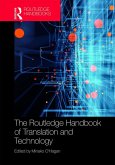
The Routledge Handbook of Translation and Memory (eBook, PDF)44,95 €") The Routledge Handbook of Translation and Technology (eBook, PDF)44,95 €
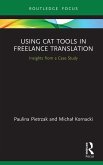
The Routledge Handbook of Translation and Technology (eBook, PDF)44,95 €") Using CAT Tools in Freelance Translation (eBook, PDF)22,95 €
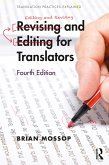
Using CAT Tools in Freelance Translation (eBook, PDF)22,95 €") Revising and Editing for Translators (eBook, PDF)38,95 €
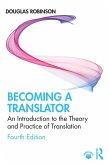
Revising and Editing for Translators (eBook, PDF)38,95 €") Becoming a Translator (eBook, PDF)38,95 €
Becoming a Translator (eBook, PDF)38,95 €
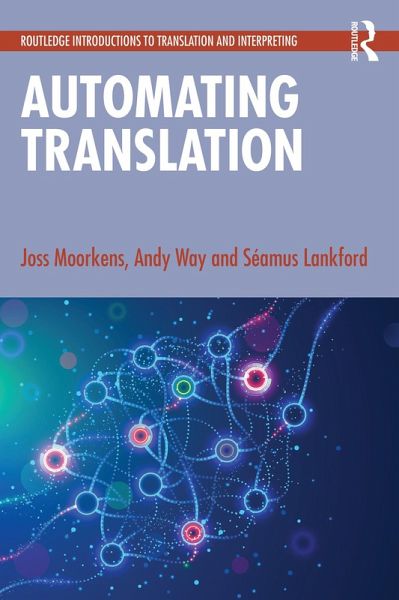
Translation technology is essential for translation students, practising translators, and those working as part of the language services industry, but looming above others are the tools for automating translation: machine translation and, more recently, generative AI based on large language models (LLMs).
This book, authored by leading experts, demystifies machine translation, explaining its origins, its training data, how neural machine translation and LLMs work, how to measure their quality, how translators interact with contemporary systems for automating translation, and how readers can build their own machine translation or LLM. In later chapters, the scope of the book expands to look more broadly at translation automation in audiovisual translation and localisation. Importantly, the book also examines the sociotechnical context, focusing on ethics and sustainability. Enhanced with activities, further reading and resource links, including online support material on the Routledge Translation studies portal, this is an essential textbook for students of translation studies, trainee and practising translators, and users of MT and multilingual LLMs.
Additional resources are available on the Routledge Translation Studies Portal.
This book, authored by leading experts, demystifies machine translation, explaining its origins, its training data, how neural machine translation and LLMs work, how to measure their quality, how translators interact with contemporary systems for automating translation, and how readers can build their own machine translation or LLM. In later chapters, the scope of the book expands to look more broadly at translation automation in audiovisual translation and localisation. Importantly, the book also examines the sociotechnical context, focusing on ethics and sustainability. Enhanced with activities, further reading and resource links, including online support material on the Routledge Translation studies portal, this is an essential textbook for students of translation studies, trainee and practising translators, and users of MT and multilingual LLMs.
Additional resources are available on the Routledge Translation Studies Portal.
Dieser Download kann aus rechtlichen Gründen nur mit Rechnungsadresse in A, B, BG, CY, CZ, D, DK, EW, E, FIN, F, GR, HR, H, IRL, I, LT, L, LR, M, NL, PL, P, R, S, SLO, SK ausgeliefert werden.
This is an indispensable textbook for any translation students and professionals working in the translation industry who want to learn about the recent developments in the field of machine translation. Written in a clear and engaging style, it accommodates readers of all levels, benefiting from the authors' extensive experience in the field. Its comprehensive scope and insightful perspective make this book an invaluable resource for anyone who wants to learn about the modern machine translation approaches. Readers without a computational background but who want to learn more about how machine translation works will appreciate the technical details provided in text boxes and extra reading materials. I will definitely recommend this book to my students.
- Professor Constantin Orasan, University of Surrey
Tailored for translation students and language professionals, this textbook offers a comprehensive and accessible exploration of all aspects of machine translation. From data and the inner workings of MT to evaluation and the customisation of your own LLM, every topic is covered. With its clear explanations, valuable pointers to open-source tools and recommended additional readings, this book empowers readers to engage in informed discussions about the appropriate use of MT.
- Professor Lieve Macken, Ghent University, Belgium
Automating Translation is a valuable and forward-looking academic work that offers a systematic, innovative, and practical exploration of translation technology. The book constructs a comprehensive knowledge framework that spans from the historical evolution and theoretical foundations of machine translation to its core technologies, real-world applications, evaluation methods, and broader sociotechnical implications.
-Journal Across Languages and Culture
- Professor Constantin Orasan, University of Surrey
Tailored for translation students and language professionals, this textbook offers a comprehensive and accessible exploration of all aspects of machine translation. From data and the inner workings of MT to evaluation and the customisation of your own LLM, every topic is covered. With its clear explanations, valuable pointers to open-source tools and recommended additional readings, this book empowers readers to engage in informed discussions about the appropriate use of MT.
- Professor Lieve Macken, Ghent University, Belgium
Automating Translation is a valuable and forward-looking academic work that offers a systematic, innovative, and practical exploration of translation technology. The book constructs a comprehensive knowledge framework that spans from the historical evolution and theoretical foundations of machine translation to its core technologies, real-world applications, evaluation methods, and broader sociotechnical implications.
-Journal Across Languages and Culture