3,49 €
3,49 €
inkl. MwSt.
Sofort per Download lieferbar

0 °P sammeln
3,49 €
Als Download kaufen
3,49 €
inkl. MwSt.
Sofort per Download lieferbar
0 °P sammeln
Jetzt verschenken
Alle Infos zum eBook verschenken
3,49 €
inkl. MwSt.
Sofort per Download lieferbar
Alle Infos zum eBook verschenken
0 °P sammeln

Andere Kunden interessierten sich auch für
") Meddling in the Ballot Box (eBook, ePUB)13,95 €
Meddling in the Ballot Box (eBook, ePUB)13,95 €") Thinking Outside the Ballot Box (eBook, ePUB)2,99 €
Thinking Outside the Ballot Box (eBook, ePUB)2,99 €") Dismantling the Iraqi Nuclear Programme (eBook, ePUB)42,95 €
Dismantling the Iraqi Nuclear Programme (eBook, ePUB)42,95 €") Stories From the Ballot Box (eBook, ePUB)14,95 €
Stories From the Ballot Box (eBook, ePUB)14,95 €") Ambush Tales of the Ballot (eBook, ePUB)5,99 €
Ambush Tales of the Ballot (eBook, ePUB)5,99 €") Political Parties, Business Groups, and Corruption in Developing Countries (eBook, ePUB)13,95 €
Political Parties, Business Groups, and Corruption in Developing Countries (eBook, ePUB)13,95 €") The 103rd Ballot (eBook, ePUB)18,18 €
The 103rd Ballot (eBook, ePUB)18,18 €






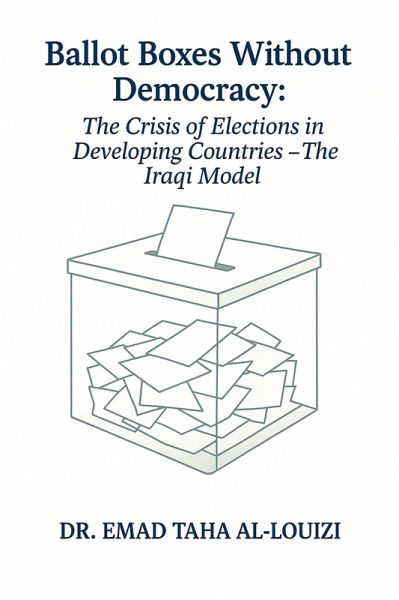
Ballot Boxes Without Democracy: The Crisis of Elections in Developing Countries - The Iraqi Model
In many developing countries, elections are celebrated as the cornerstone of democracy. Yet behind the colorful banners and crowded ballot boxes lies a harsher reality: elections often fail to produce competent leadership or genuine reform. Instead, they become instruments for recycling the same elites, manipulated by money, tribal loyalties, narrow interests, and political bargains.
This book offers a critical exploration of why democratic elections in fragile states often lead to disappointing outcomes. Using Iraq as a central case study, it exposes how post-2003 elections, despite high expectations, were marred by corruption, sectarianism, vote-buying, and predetermined results. The study highlights how power and resources are distributed through patronage networks rather than merit, leaving citizens disillusioned and excluded.
Written in a clear and compelling style, the book goes beyond Iraq to shed light on broader challenges faced across the Global South. It is a resource for scholars, students, policymakers, and all readers interested in understanding why democracy, as practiced in developing contexts, often fails to deliver its promises.
A thought-provoking analysis that asks: Can ballot boxes alone bring true democracy, or is a deeper transformation required?
In many developing countries, elections are celebrated as the cornerstone of democracy. Yet behind the colorful banners and crowded ballot boxes lies a harsher reality: elections often fail to produce competent leadership or genuine reform. Instead, they become instruments for recycling the same elites, manipulated by money, tribal loyalties, narrow interests, and political bargains.
This book offers a critical exploration of why democratic elections in fragile states often lead to disappointing outcomes. Using Iraq as a central case study, it exposes how post-2003 elections, despite high expectations, were marred by corruption, sectarianism, vote-buying, and predetermined results. The study highlights how power and resources are distributed through patronage networks rather than merit, leaving citizens disillusioned and excluded.
Written in a clear and compelling style, the book goes beyond Iraq to shed light on broader challenges faced across the Global South. It is a resource for scholars, students, policymakers, and all readers interested in understanding why democracy, as practiced in developing contexts, often fails to deliver its promises.
A thought-provoking analysis that asks: Can ballot boxes alone bring true democracy, or is a deeper transformation required?
Dieser Download kann aus rechtlichen Gründen nur mit Rechnungsadresse in A, B, CY, CZ, D, DK, EW, E, FIN, F, GR, H, IRL, I, LT, L, LR, M, NL, PL, P, R, S, SLO, SK ausgeliefert werden.