4,49 €
4,49 €
inkl. MwSt.
Sofort per Download lieferbar

0 °P sammeln
4,49 €
Als Download kaufen
4,49 €
inkl. MwSt.
Sofort per Download lieferbar
0 °P sammeln
Jetzt verschenken
Alle Infos zum eBook verschenken
4,49 €
inkl. MwSt.
Sofort per Download lieferbar
Alle Infos zum eBook verschenken
0 °P sammeln

Andere Kunden interessierten sich auch für
") Robert the Bruce's Rivals (eBook, ePUB)24,00 €
Robert the Bruce's Rivals (eBook, ePUB)24,00 € (eBook, ePUB)") Revival: England Before the Norman Conquest (1910) (eBook, ePUB)88,95 €
Revival: England Before the Norman Conquest (1910) (eBook, ePUB)88,95 €") Noblewomen, aristocracy and power in the twelfth-century Anglo-Norman realm (eBook, ePUB)0,00 €
Noblewomen, aristocracy and power in the twelfth-century Anglo-Norman realm (eBook, ePUB)0,00 €") Helith - An Anglo-Saxon Pagan Deity (eBook, ePUB)0,00 €
Helith - An Anglo-Saxon Pagan Deity (eBook, ePUB)0,00 €") A Matter of Honour (eBook, ePUB)2,99 €
A Matter of Honour (eBook, ePUB)2,99 €") A short history of the Norman Conquest of England (eBook, ePUB)1,49 €
A short history of the Norman Conquest of England (eBook, ePUB)1,49 €") A short history of the Norman Conquest of England (eBook, ePUB)0,99 €
A short history of the Norman Conquest of England (eBook, ePUB)0,99 €
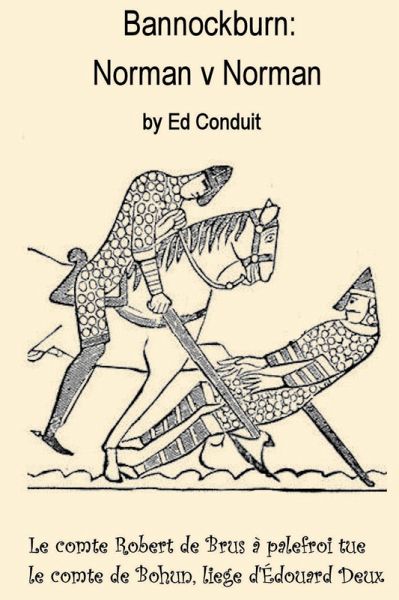
"Bannockburn: Norman v Norman" opens with the famous scene of de Bohun on his destrier charging de Brus on his palfrey, and asks this question: why do they both have French names and use Norman cavalry terms? Section one examines five factors in nationhood: a common enemy; language; religion; economy; and geography. These factors are then examined in the unmet national aspirations of diverse peoples including Georgians, Tamils, Kurds, and ISIL. The Scots language is the main distinguishing feature north and south of 55 degrees. Religion, economy, geography and common enemy have played little part.
Section two locates the Scots language in Indo-European context. It came from Anglo-Saxon, but via Northumbrian rather than Mercian as standard English did. Scots has kept features such as the "ch" sound and the "-na" ending that disappeared from Mercian, while Burns' poetry contains many words that are closer to German or Frisian than standard English - "dicht", "slicht" and "reekin". Scots borrowed a little from Gaelic, but also from the Welsh spoken around Glasgow. Language follows genetics to some extent. The genetic map of the British Isles shows distinct gene pools in Orkney, Moray, or Cumbria, while the East and South of England show one large Anglo-Saxon heritage. The Scottish lowlands are quite diverse genetically.
Section three considers the "Norman conquest of Scotland" after 1124. The two leaders at the Battle of Bannockburn were both Normans aristocrats - Édouard II de Carnarvon who spoke no English and Robert de Brus, Comte de Carrick, who chose Latin when he wrote to Édouard with his claim of kingship. Where were "the English"? There had been genocide of the English after 1066 and the Saxon aristocracy were entirely dispossessed. Troops on de Brus' side included some Saxons - "Sassenachs" from a Gaelic standpoint who were descendants of English refugees from Norman ethnic cleansing. Sassenachs would have called the Welsh speakers "Wallis" - the Saxon word for "Welshie". Was William Wallace actually fighting for a revival of Cumbric Strathclyde? When the linguistic evidence is considered, Scotland might be considered like Normandy, England, Sicily and the Canary Islands: another successful land grab by a group of Norman aristocrats.
Section two locates the Scots language in Indo-European context. It came from Anglo-Saxon, but via Northumbrian rather than Mercian as standard English did. Scots has kept features such as the "ch" sound and the "-na" ending that disappeared from Mercian, while Burns' poetry contains many words that are closer to German or Frisian than standard English - "dicht", "slicht" and "reekin". Scots borrowed a little from Gaelic, but also from the Welsh spoken around Glasgow. Language follows genetics to some extent. The genetic map of the British Isles shows distinct gene pools in Orkney, Moray, or Cumbria, while the East and South of England show one large Anglo-Saxon heritage. The Scottish lowlands are quite diverse genetically.
Section three considers the "Norman conquest of Scotland" after 1124. The two leaders at the Battle of Bannockburn were both Normans aristocrats - Édouard II de Carnarvon who spoke no English and Robert de Brus, Comte de Carrick, who chose Latin when he wrote to Édouard with his claim of kingship. Where were "the English"? There had been genocide of the English after 1066 and the Saxon aristocracy were entirely dispossessed. Troops on de Brus' side included some Saxons - "Sassenachs" from a Gaelic standpoint who were descendants of English refugees from Norman ethnic cleansing. Sassenachs would have called the Welsh speakers "Wallis" - the Saxon word for "Welshie". Was William Wallace actually fighting for a revival of Cumbric Strathclyde? When the linguistic evidence is considered, Scotland might be considered like Normandy, England, Sicily and the Canary Islands: another successful land grab by a group of Norman aristocrats.
Dieser Download kann aus rechtlichen Gründen nur mit Rechnungsadresse in A, B, CY, CZ, D, DK, EW, E, FIN, F, GR, H, IRL, I, LT, L, LR, M, NL, PL, P, R, S, SLO, SK ausgeliefert werden.