Sie sind bereits eingeloggt. Klicken Sie auf 2. tolino select Abo, um fortzufahren.
Bitte loggen Sie sich zunächst in Ihr Kundenkonto ein oder registrieren Sie sich bei bücher.de, um das eBook-Abo tolino select nutzen zu können.
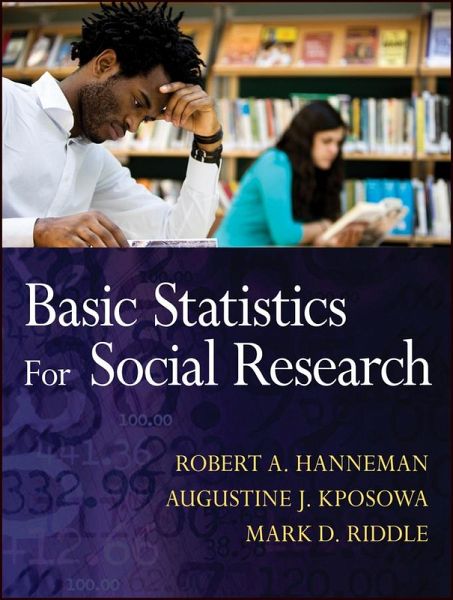
A core statistics text that emphasizes logical inquiry, not math Basic Statistics for Social Research teaches core general statistical concepts and methods that all social science majors must master to understand (and do) social research. Its use of mathematics and theory are deliberately limited, as the authors focus on the use of concepts and tools of statistics in the analysis of social science data, rather than on the mathematical and computational aspects. Research questions and applications are taken from a wide variety of subfields in sociology, and each chapter is organized around one…mehr
A core statistics text that emphasizes logical inquiry, not math Basic Statistics for Social Research teaches core general statistical concepts and methods that all social science majors must master to understand (and do) social research. Its use of mathematics and theory are deliberately limited, as the authors focus on the use of concepts and tools of statistics in the analysis of social science data, rather than on the mathematical and computational aspects. Research questions and applications are taken from a wide variety of subfields in sociology, and each chapter is organized around one or more general ideas that are explained at its beginning and then applied in increasing detail in the body of the text. Each chapter contains instructive features to aid students in understanding and mastering the various statistical approaches presented in the book, including: * Learning objectives * Check quizzes after many sections and an answer key at the end of the chapter * Summary * Key terms * End-of-chapter exercises * SPSS exercises (in select chapters) Ancillary materials for both the student and the instructor are available and include a test bank for instructors and downloadable video tutorials for students.
Dieser Download kann aus rechtlichen Gründen nur mit Rechnungsadresse in D ausgeliefert werden.
Die Herstellerinformationen sind derzeit nicht verfügbar.
Autorenporträt
ROBERT A. HANNEMAN is a professor of sociology at the University of California, Riverside.
AUGUSTINE J. KPOSOWA is a professor of sociology at the University of California, Riverside.
MARK D. RIDDLE is the Director of Institutional Research at Antioch University Los Angeles.
Inhaltsangabe
Tables and Figures ix Preface xv About the Authors xix Part I Univariate Description 1 Chapter 1 Using Statistics 3 Why Study Statistics? 4 Tasks for Statistics: Describing, Inferring, Testing, Predicting 4 Statistics in the Research Process 9 Basic Elements of Research: Units of Analysis and Variables 14 Chapter 2 Displaying One Distribution 25 Summarizing Variation in One Variable 26 Frequency Distributions for Nominal Variables 26 Frequency Distributions for Ordinal Variables 32 Frequency Distributions for Interval/Ratio Variables 38 Summarizing Data Using Excel 43 Chapter 3 Central Tendency 81 The Basic Idea of Central Tendency 82 The Mode 83 The Median 88 The Mean 95 Chapter 4 Dispersion 113 The Basic Idea of Dispersion 114 Dispersion of Categorical Data 115 Dispersion of Interval/Ratio Data 121 Chapter 5 Describing the Shape of a Distribution 149 The Basic Ideas of Distributional Shape 150 The Shape of Nominal and Ordinal Distributions 152 Unimodality 158 Skewness 163 Kurtosis 169 Some Common Distributional Shapes 175 Chapter 6 The Normal Distribution 187 Introduction to the Normal Distribution 188 Properties of Normal Distributions 189 The Standard Normal, or Z, Distribution 192 Working with Standard Normal (Z) Scores 194 Finding Areas "Under the Curve" 197 Part II Inference and Hypothesis Testing 209 Chapter 7 Basic Ideas of Statistical Inference 211 Introduction to Statistical Inference 212 Sampling Concepts 214 Central Tendency Estimates 219 Assessing Confidence in Point Estimates 229 Chapter 8 Hypothesis Testing for One Sample 247 Hypothesis Testing 248 The Testing Process 250 Tests about One Mean 258 Tests about One Proportion 267 Chapter 9 Hypothesis Testing for Two Samples 279 Comparing Two Groups 280 Comparing Two Groups' Means 280 Comparing Two Groups' Proportions 289 Non independent Samples 296 Using Excel for Two-Sample Tests 301 Interpreting Group Differences 302 Chapter 10 Multiple Sample Tests of Proportions: Chi-Squared 313 Comparing Proportions across Several Groups 314 Testing for Multiple Group Differences 315 Describing Group Differences 327 Chapter 11 Multiple Sample Tests for Means: One-Way ANOVA 337 Comparing Several Group Means with Analysis of Variance 338 Analyzing Variance and the F-Test 339 Analyzing Variance 342 The F-Test 350 Comparing Means 356 Part III Association and Prediction 369 Chapter 12 Association with Categorical Variables 371 The Concept of Statistical Association 372 Association with Nominal Variables 375 Association with Ordinal Variables 391 Chapter 13 Association of Interval/Ratio Variables 425 Visualizing Interval/Ratio Association 426 Significance Testing for Interval/Ratio Association 434 Chapter 14 Regression Analysis 453 Predicting Outcomes with Regression 454 Simple Linear Regression 454 Applying Simple Regression Analysis 465 Multiple Regression 469 Applying Multiple Regression 474 Chapter 15 Logistic Regression Analysis 489 Predicting with Nonlinear Relationships 490 Logistic Regression 492 The Logistic Regression Model 492 Interpreting Effects in Logistic Regression 493 Estimating Logistic Regression Models with Maximum Likelihood 495 Applying Logistic Regression 496 Assessing Partial Effects 498 Extending Logistic Regression 499 Appendix Chi-Squared Distribution: Critical Values for Commonly Used Alpha=0.05 and Alpha=0.01 505 F-Distribution: Critical Values for Commonly Used Alpha=0.05 and Alpha=0.01 507 Standard Normal Scores (Z-Scores), and Cumulative Probabilities (Proportion of Cases Having Scores below Z) 511 Student's t-Distribution: Critical Values for Commonly Used Alpha Levels 517 Index 519
Tables and Figures ix Preface xv About the Authors xix Part I Univariate Description 1 Chapter 1 Using Statistics 3 Why Study Statistics? 4 Tasks for Statistics: Describing, Inferring, Testing, Predicting 4 Statistics in the Research Process 9 Basic Elements of Research: Units of Analysis and Variables 14 Chapter 2 Displaying One Distribution 25 Summarizing Variation in One Variable 26 Frequency Distributions for Nominal Variables 26 Frequency Distributions for Ordinal Variables 32 Frequency Distributions for Interval/Ratio Variables 38 Summarizing Data Using Excel 43 Chapter 3 Central Tendency 81 The Basic Idea of Central Tendency 82 The Mode 83 The Median 88 The Mean 95 Chapter 4 Dispersion 113 The Basic Idea of Dispersion 114 Dispersion of Categorical Data 115 Dispersion of Interval/Ratio Data 121 Chapter 5 Describing the Shape of a Distribution 149 The Basic Ideas of Distributional Shape 150 The Shape of Nominal and Ordinal Distributions 152 Unimodality 158 Skewness 163 Kurtosis 169 Some Common Distributional Shapes 175 Chapter 6 The Normal Distribution 187 Introduction to the Normal Distribution 188 Properties of Normal Distributions 189 The Standard Normal, or Z, Distribution 192 Working with Standard Normal (Z) Scores 194 Finding Areas "Under the Curve" 197 Part II Inference and Hypothesis Testing 209 Chapter 7 Basic Ideas of Statistical Inference 211 Introduction to Statistical Inference 212 Sampling Concepts 214 Central Tendency Estimates 219 Assessing Confidence in Point Estimates 229 Chapter 8 Hypothesis Testing for One Sample 247 Hypothesis Testing 248 The Testing Process 250 Tests about One Mean 258 Tests about One Proportion 267 Chapter 9 Hypothesis Testing for Two Samples 279 Comparing Two Groups 280 Comparing Two Groups' Means 280 Comparing Two Groups' Proportions 289 Non independent Samples 296 Using Excel for Two-Sample Tests 301 Interpreting Group Differences 302 Chapter 10 Multiple Sample Tests of Proportions: Chi-Squared 313 Comparing Proportions across Several Groups 314 Testing for Multiple Group Differences 315 Describing Group Differences 327 Chapter 11 Multiple Sample Tests for Means: One-Way ANOVA 337 Comparing Several Group Means with Analysis of Variance 338 Analyzing Variance and the F-Test 339 Analyzing Variance 342 The F-Test 350 Comparing Means 356 Part III Association and Prediction 369 Chapter 12 Association with Categorical Variables 371 The Concept of Statistical Association 372 Association with Nominal Variables 375 Association with Ordinal Variables 391 Chapter 13 Association of Interval/Ratio Variables 425 Visualizing Interval/Ratio Association 426 Significance Testing for Interval/Ratio Association 434 Chapter 14 Regression Analysis 453 Predicting Outcomes with Regression 454 Simple Linear Regression 454 Applying Simple Regression Analysis 465 Multiple Regression 469 Applying Multiple Regression 474 Chapter 15 Logistic Regression Analysis 489 Predicting with Nonlinear Relationships 490 Logistic Regression 492 The Logistic Regression Model 492 Interpreting Effects in Logistic Regression 493 Estimating Logistic Regression Models with Maximum Likelihood 495 Applying Logistic Regression 496 Assessing Partial Effects 498 Extending Logistic Regression 499 Appendix Chi-Squared Distribution: Critical Values for Commonly Used Alpha=0.05 and Alpha=0.01 505 F-Distribution: Critical Values for Commonly Used Alpha=0.05 and Alpha=0.01 507 Standard Normal Scores (Z-Scores), and Cumulative Probabilities (Proportion of Cases Having Scores below Z) 511 Student's t-Distribution: Critical Values for Commonly Used Alpha Levels 517 Index 519
Es gelten unsere Allgemeinen Geschäftsbedingungen: www.buecher.de/agb
Impressum
www.buecher.de ist ein Internetauftritt der buecher.de internetstores GmbH
Geschäftsführung: Monica Sawhney | Roland Kölbl | Günter Hilger
Sitz der Gesellschaft: Batheyer Straße 115 - 117, 58099 Hagen
Postanschrift: Bürgermeister-Wegele-Str. 12, 86167 Augsburg
Amtsgericht Hagen HRB 13257
Steuernummer: 321/5800/1497
USt-IdNr: DE450055826