Sie sind bereits eingeloggt. Klicken Sie auf 2. tolino select Abo, um fortzufahren.
Bitte loggen Sie sich zunächst in Ihr Kundenkonto ein oder registrieren Sie sich bei bücher.de, um das eBook-Abo tolino select nutzen zu können.
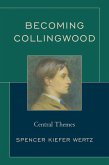
How did Collingwood become Collingwood? It is by thinking through the nature of persons, art, play, history, archaeology, anthropology, ideas, perceptions, consciousness, logic of question and answer, realism, race, and understanding David Hume. Collingwood had skirmishes with Margaret Hattersley Bulley (on art), Jean-Antheme Brillat-Savarin (on taste; on food), George Herbert Mead (on history), and others along the way. These became chapters in this book, and you can follow along on this journey.
Die Herstellerinformationen sind derzeit nicht verfügbar.
Autorenporträt
Spencer Kiefer Wertz is an emeritus professor of philosophy at Texas Christian University in Fort Worth.
Inhaltsangabe
Abbreviations Acknowledgments Introduction Chapter 1: The Nature of Persons Chapter 2: A Theory of Practice in Art Chapter 3: Margaret Hattersley Bulley, Understanding Art, and the Case for Examples Chapter 4: Artists as Persons Chapter 5: The Capriciousness of Play Chapter 6: A Logic of Question and Answer Chapter 7: Understanding David Hume Chapter 8: Theoretical Topics in History Chapter 9: Eating and Dining: An Anthropological Perspective Chapter 10: Food and the Association of Perceptions Chapter 11: The Evidential Value of Testimony Chapter 12: On Certainty in History Chapter 13: Conceptual Change and Incapsulation Chapter 14: Mead's Experimental and Pragmatic Philosophy of History Chapter 15: Realism and Its Demise Chapter 16: The Nature of Consciousness Chapter 17: Racial Considerations Conclusion Bibliography Index About the Author
Es gelten unsere Allgemeinen Geschäftsbedingungen: www.buecher.de/agb
Impressum
www.buecher.de ist ein Internetauftritt der buecher.de internetstores GmbH
Geschäftsführung: Monica Sawhney | Roland Kölbl | Günter Hilger
Sitz der Gesellschaft: Batheyer Straße 115 - 117, 58099 Hagen
Postanschrift: Bürgermeister-Wegele-Str. 12, 86167 Augsburg
Amtsgericht Hagen HRB 13257
Steuernummer: 321/5800/1497
USt-IdNr: DE450055826