Sie sind bereits eingeloggt. Klicken Sie auf 2. tolino select Abo, um fortzufahren.
Bitte loggen Sie sich zunächst in Ihr Kundenkonto ein oder registrieren Sie sich bei bücher.de, um das eBook-Abo tolino select nutzen zu können.
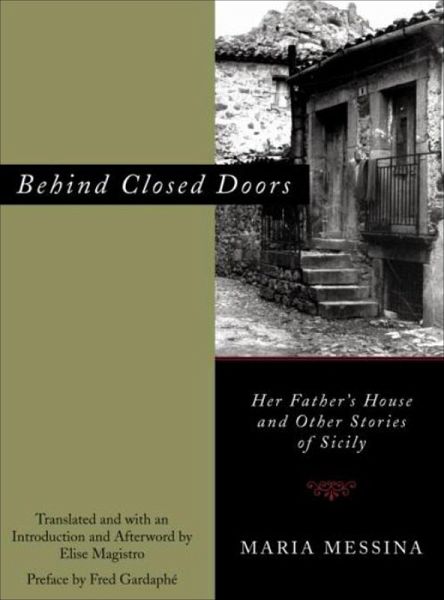
Ten stories of impoverished Sicilian women in the early 20th century-"honed, polished, devastatingly direct... verismo at its unsentimental best" ( Kirkus Reviews). The Sicilian writer Maria Messina's captivating and brutal stories of the women of her home island are presented in a "lyrical and immediate" English translation by Elise Magistro ( Publishers Weekly). Messina, who died in 1944, was the foremost female practitioner of verismo-the Italian literary realism pioneered by fellow Sicilian Giovanni Verga. Published between 1908 and 1928, Messina's fiction represents the massive Sicilian…mehr
Ten stories of impoverished Sicilian women in the early 20th century-"honed, polished, devastatingly direct... verismo at its unsentimental best" ( Kirkus Reviews). The Sicilian writer Maria Messina's captivating and brutal stories of the women of her home island are presented in a "lyrical and immediate" English translation by Elise Magistro ( Publishers Weekly). Messina, who died in 1944, was the foremost female practitioner of verismo-the Italian literary realism pioneered by fellow Sicilian Giovanni Verga. Published between 1908 and 1928, Messina's fiction represents the massive Sicilian immigration to America occurring at that time. The individuals in these stories are caught between the traditions they respect and a desire to move beyond them. Women are shuttered in their houses, virtual servants to their families, left behind while working men immigrate to the United States in fortune-seeking droves. A cultural album that captures the lives of peasant, working-class, and middle-class women, "Messina's words will leave their mark. Their power makes them impossible to forget" ( The Philadelphia Inquirer) .
Die Herstellerinformationen sind derzeit nicht verfügbar.
Autorenporträt
Maria Messina (1887-1944) was born in Palermo, Sicily. Messina taught herself to read and write, and eventually began a correspondence with Italian realist Giovanni Verga. She wrote novels, short stories, and children's tales, and later won the Medal of Gold for her story "America". During the 1920s, Messina was diagnosed with multiple sclerosis, which she died of. Elise Magistro holds a Doctorate in Italian from U.C.L.A. She has written and lectured on Italian women writers, the Sicilian literary tradition and the Italian American emigrant experience between 1880 and 1920. Her publications include critical essays on Sicilian writer Maria Messina and Sardinian Nobel Prize author, Grazia Deledda. Professor Magistro currently teaches at Scripps College. Gardaphé is now at the John D. Calandra Italian American Institute of Queens College. He is Associate Editor of Fra Noi, editor of the Series in Italian American Studies at SUNY Press, and co-founding co-editor of Voices in Italian Americana. He is current President of MELUS and author of Italian Signs, American Streets: The Evolution of Italian Narrative. Elise Magistro holds a Doctorate in Italian from U.C.L.A. She has written and lectured on Italian women writers, the Sicilian literary tradition and the Italian American emigrant experience between 1880 and 1920. Her publications include critical essays on Sicilian writer Maria Messina and Sardinian Nobel Prize author, Grazia Deledda. Professor Magistro currently teaches at Scripps College.
Es gelten unsere Allgemeinen Geschäftsbedingungen: www.buecher.de/agb
Impressum
www.buecher.de ist ein Internetauftritt der buecher.de internetstores GmbH
Geschäftsführung: Monica Sawhney | Roland Kölbl | Günter Hilger
Sitz der Gesellschaft: Batheyer Straße 115 - 117, 58099 Hagen
Postanschrift: Bürgermeister-Wegele-Str. 12, 86167 Augsburg
Amtsgericht Hagen HRB 13257
Steuernummer: 321/5800/1497
USt-IdNr: DE450055826