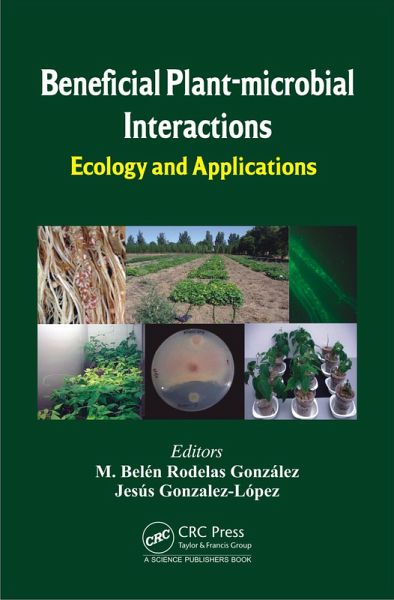
Beneficial Plant-microbial Interactions (eBook, PDF)
Ecology and Applications
Redaktion: González, M. Belén Rodelas; Gonzalez-Lopez, Jesús
186,95 €
186,95 €
inkl. MwSt.
Sofort per Download lieferbar

93 °P sammeln
186,95 €
Als Download kaufen
186,95 €
inkl. MwSt.
Sofort per Download lieferbar
93 °P sammeln
Jetzt verschenken
Alle Infos zum eBook verschenken
186,95 €
inkl. MwSt.
Sofort per Download lieferbar
Alle Infos zum eBook verschenken
93 °P sammeln
Beneficial Plant-microbial Interactions (eBook, PDF)
Ecology and Applications
Redaktion: González, M. Belén Rodelas; Gonzalez-Lopez, Jesús
- Format: PDF
- Merkliste
- Auf die Merkliste
- Bewerten Bewerten
- Teilen
- Produkt teilen
- Produkterinnerung
- Produkterinnerung

Bitte loggen Sie sich zunächst in Ihr Kundenkonto ein oder registrieren Sie sich bei
bücher.de, um das eBook-Abo tolino select nutzen zu können.
Hier können Sie sich einloggen
Sie sind bereits eingeloggt. Klicken Sie auf 2. tolino select Abo, um fortzufahren.

Bitte loggen Sie sich zunächst in Ihr Kundenkonto ein oder registrieren Sie sich bei bücher.de, um das eBook-Abo tolino select nutzen zu können.
Beneficial Plant-microbial Interactions: Ecology and Applications provides insight into the mechanisms underlying the interactions of plants and microbes, the ecological relevance and roles of these symbioses, the adaptive mechanisms of plant-associated microorganisms to abiotic stress and their contribution to plant stress tolerance, and the poten
- Geräte: PC
- mit Kopierschutz
- eBook Hilfe
- Größe: 7.69MB
Andere Kunden interessierten sich auch für
Plant-Microbial Interactions and Smart Agricultural Biotechnology (eBook, PDF)45,95 €
Suresh G. BorkarLaboratory Techniques in Plant Bacteriology (eBook, PDF)47,95 €
P. VidhyasekaranFungal Pathogenesis in Plants and Crops (eBook, PDF)236,95 €
Microbial Endophytes (eBook, PDF)61,95 €
Microbial Ecology in Sustainable Agroecosystems (eBook, PDF)52,95 €
Biological Nitrogen Fixation and Beneficial Plant-Microbe Interaction (eBook, PDF)160,95 €
Fungi (eBook, PDF)47,95 €-
-
-
Beneficial Plant-microbial Interactions: Ecology and Applications provides insight into the mechanisms underlying the interactions of plants and microbes, the ecological relevance and roles of these symbioses, the adaptive mechanisms of plant-associated microorganisms to abiotic stress and their contribution to plant stress tolerance, and the poten
Dieser Download kann aus rechtlichen Gründen nur mit Rechnungsadresse in A, B, BG, CY, CZ, D, DK, EW, E, FIN, F, GR, HR, H, IRL, I, LT, L, LR, M, NL, PL, P, R, S, SLO, SK ausgeliefert werden.
Produktdetails
- Produktdetails
- Verlag: Taylor & Francis eBooks
- Seitenzahl: 468
- Erscheinungstermin: 19. April 2016
- Englisch
- ISBN-13: 9781466587182
- Artikelnr.: 40068930
- Verlag: Taylor & Francis eBooks
- Seitenzahl: 468
- Erscheinungstermin: 19. April 2016
- Englisch
- ISBN-13: 9781466587182
- Artikelnr.: 40068930
- Herstellerkennzeichnung Die Herstellerinformationen sind derzeit nicht verfügbar.
M. Belén Rodelas González Department of Microbiology Faculty of Pharmacy; Jesús González-López Department of Microbiology Faculty of Pharmacy, both University of Granada, Spain.
Preface 1. Nitrogen Fixing Endosymbiotic Bacteria: Old Chaps and New
Findings 2. Biodiversity of Slow-Growing Rhizobia: The Genus Bradyrhizobium
3. Importance of Motile and Biofilm Lifestyles of Rhizobia for the
Establishment of Symbiosis with Legumes 4. Nod Factor Production and
Abiotic Stress in Rhizobium 5. Strategies of Salt Tolerance in the
Rhizobia-Legume Symbiosis 6. Mineral Nutrition in the Legume-Rhizobia
Nitrogen Fixing Symbiosis 7. Metal Transport in the Rhizobium-Legume
Symbiosis 8. Ecology of Denitrification in Soils and Plant-Associated
Bacteria 9. Bacterial Protein Secretion Systems: Implications in Beneficial
Associations with Plants 10. Nodular Endophytes: An Untapped Diversity 11.
Azospirillum-Plant Interaction: from Root Colonization to Plant Growth
Promotion 12. Biocontrol of Fungal Root Pathogens by Fluorescent
Pseudomonas 13. Inoculants based in Autochthonous Microorganisms, a
Strategy to Optimize Agronomic Performance of Biofertilizers 14.
Engineering the Rhizosphere of Legumes for Improved Bioremediation 15.
Arbuscular Mycorrhizas and their Significance in Promoting Soil-Plant
System Sustainability against Environmental Stresses 16. Can Arbuscular
Mycorrhizal Fungi (AMF) be Effective Tools for Improving the Nutritional
Quality of Crops? Findings from a Worldwide Consumed Vegetable: Lettuce;
17. Ectomycorrhizal Plants: Methods, Applications and Certification 18.
Metagenomics of Plant-Microorganism Interaction: Source of Novel
Recombinant Genes for Biotechnological Applications
Findings 2. Biodiversity of Slow-Growing Rhizobia: The Genus Bradyrhizobium
3. Importance of Motile and Biofilm Lifestyles of Rhizobia for the
Establishment of Symbiosis with Legumes 4. Nod Factor Production and
Abiotic Stress in Rhizobium 5. Strategies of Salt Tolerance in the
Rhizobia-Legume Symbiosis 6. Mineral Nutrition in the Legume-Rhizobia
Nitrogen Fixing Symbiosis 7. Metal Transport in the Rhizobium-Legume
Symbiosis 8. Ecology of Denitrification in Soils and Plant-Associated
Bacteria 9. Bacterial Protein Secretion Systems: Implications in Beneficial
Associations with Plants 10. Nodular Endophytes: An Untapped Diversity 11.
Azospirillum-Plant Interaction: from Root Colonization to Plant Growth
Promotion 12. Biocontrol of Fungal Root Pathogens by Fluorescent
Pseudomonas 13. Inoculants based in Autochthonous Microorganisms, a
Strategy to Optimize Agronomic Performance of Biofertilizers 14.
Engineering the Rhizosphere of Legumes for Improved Bioremediation 15.
Arbuscular Mycorrhizas and their Significance in Promoting Soil-Plant
System Sustainability against Environmental Stresses 16. Can Arbuscular
Mycorrhizal Fungi (AMF) be Effective Tools for Improving the Nutritional
Quality of Crops? Findings from a Worldwide Consumed Vegetable: Lettuce;
17. Ectomycorrhizal Plants: Methods, Applications and Certification 18.
Metagenomics of Plant-Microorganism Interaction: Source of Novel
Recombinant Genes for Biotechnological Applications
Preface 1. Nitrogen Fixing Endosymbiotic Bacteria: Old Chaps and New
Findings 2. Biodiversity of Slow-Growing Rhizobia: The Genus Bradyrhizobium
3. Importance of Motile and Biofilm Lifestyles of Rhizobia for the
Establishment of Symbiosis with Legumes 4. Nod Factor Production and
Abiotic Stress in Rhizobium 5. Strategies of Salt Tolerance in the
Rhizobia-Legume Symbiosis 6. Mineral Nutrition in the Legume-Rhizobia
Nitrogen Fixing Symbiosis 7. Metal Transport in the Rhizobium-Legume
Symbiosis 8. Ecology of Denitrification in Soils and Plant-Associated
Bacteria 9. Bacterial Protein Secretion Systems: Implications in Beneficial
Associations with Plants 10. Nodular Endophytes: An Untapped Diversity 11.
Azospirillum-Plant Interaction: from Root Colonization to Plant Growth
Promotion 12. Biocontrol of Fungal Root Pathogens by Fluorescent
Pseudomonas 13. Inoculants based in Autochthonous Microorganisms, a
Strategy to Optimize Agronomic Performance of Biofertilizers 14.
Engineering the Rhizosphere of Legumes for Improved Bioremediation 15.
Arbuscular Mycorrhizas and their Significance in Promoting Soil-Plant
System Sustainability against Environmental Stresses 16. Can Arbuscular
Mycorrhizal Fungi (AMF) be Effective Tools for Improving the Nutritional
Quality of Crops? Findings from a Worldwide Consumed Vegetable: Lettuce;
17. Ectomycorrhizal Plants: Methods, Applications and Certification 18.
Metagenomics of Plant-Microorganism Interaction: Source of Novel
Recombinant Genes for Biotechnological Applications
Findings 2. Biodiversity of Slow-Growing Rhizobia: The Genus Bradyrhizobium
3. Importance of Motile and Biofilm Lifestyles of Rhizobia for the
Establishment of Symbiosis with Legumes 4. Nod Factor Production and
Abiotic Stress in Rhizobium 5. Strategies of Salt Tolerance in the
Rhizobia-Legume Symbiosis 6. Mineral Nutrition in the Legume-Rhizobia
Nitrogen Fixing Symbiosis 7. Metal Transport in the Rhizobium-Legume
Symbiosis 8. Ecology of Denitrification in Soils and Plant-Associated
Bacteria 9. Bacterial Protein Secretion Systems: Implications in Beneficial
Associations with Plants 10. Nodular Endophytes: An Untapped Diversity 11.
Azospirillum-Plant Interaction: from Root Colonization to Plant Growth
Promotion 12. Biocontrol of Fungal Root Pathogens by Fluorescent
Pseudomonas 13. Inoculants based in Autochthonous Microorganisms, a
Strategy to Optimize Agronomic Performance of Biofertilizers 14.
Engineering the Rhizosphere of Legumes for Improved Bioremediation 15.
Arbuscular Mycorrhizas and their Significance in Promoting Soil-Plant
System Sustainability against Environmental Stresses 16. Can Arbuscular
Mycorrhizal Fungi (AMF) be Effective Tools for Improving the Nutritional
Quality of Crops? Findings from a Worldwide Consumed Vegetable: Lettuce;
17. Ectomycorrhizal Plants: Methods, Applications and Certification 18.
Metagenomics of Plant-Microorganism Interaction: Source of Novel
Recombinant Genes for Biotechnological Applications