52,95 €
inkl. MwSt.
Sofort per Download lieferbar
26 °P sammeln

Andere Kunden interessierten sich auch für
") Barriers and Accident Prevention (eBook, ePUB)57,95 €
Barriers and Accident Prevention (eBook, ePUB)57,95 €") Attitude or Latitude? (eBook, ePUB)52,95 €
Attitude or Latitude? (eBook, ePUB)52,95 €") Incident Command: Tales from the Hot Seat (eBook, ePUB)52,95 €
Incident Command: Tales from the Hot Seat (eBook, ePUB)52,95 €") How Safe is Safe Enough? (eBook, ePUB)59,95 €
How Safe is Safe Enough? (eBook, ePUB)59,95 €") Innovation and Consolidation in Aviation (eBook, ePUB)51,95 €
Innovation and Consolidation in Aviation (eBook, ePUB)51,95 €") Contemporary Issues in Human Factors and Aviation Safety (eBook, ePUB)52,95 €
Contemporary Issues in Human Factors and Aviation Safety (eBook, ePUB)52,95 €") Human Factors for Pilots (eBook, ePUB)42,95 €
Human Factors for Pilots (eBook, ePUB)42,95 €





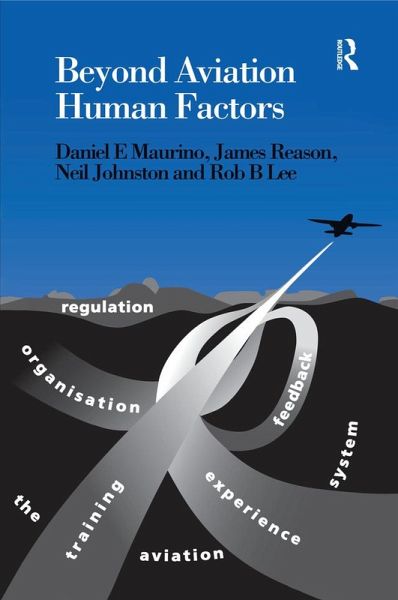
The authors believe that a systematic organizational approach to aviation safety must replace the piecemeal approaches largely favoured in the past, but this change needs to be preceded by information to explain why a new approach is necessary. Accident records show a flattening of the safety curve since the early Seventies: instead of new kinds of accident, similar safety deficiencies have become recurrent features in accident reports. This suggests the need to review traditional accident prevention strategies, focused almost exclusively on the action or inaction's of front-line operational personnel. The organizational model proposed by the authors is one alternative means to pursue safety and prevention strategies in contemporary aviation; it is also applicable to other production systems. The model argues for a broadened approach, which considers the influence of all organizations (the blunt end) involved in aviation operations, in addition to individual human performance (the sharp end). If the concepts of systems safety and organizational accidents are to be advanced, aviation management at all levels must be aware of them. This book is intended to provide a bridge from the academic knowledge gained from research, to the needs of practitioners in aviation. It comprises six chapters: the fundamentals, background and justification for an organizational accident causation model to the flight deck, maintenance and air traffic control environments. The last chapter suggest different ways to apply the model as a prevention tool which furthermore enhances organizational effectiveness. The value of the organizational framework pioneered by Professor Reason in analyzing safety in high-technology production systems is felt by his co-authors to have an enduring role to play, both now and in coming decades. Applied now in this book, it has been adopted by ICAO, IFATCA, IMO, the US National Transportation Safety Board, the Transportation Safety B
Dieser Download kann aus rechtlichen Gründen nur mit Rechnungsadresse in A, B, BG, CY, CZ, D, DK, EW, E, FIN, F, GR, HR, H, IRL, I, LT, L, LR, M, NL, PL, P, R, S, SLO, SK ausgeliefert werden.