Sie sind bereits eingeloggt. Klicken Sie auf 2. tolino select Abo, um fortzufahren.
Bitte loggen Sie sich zunächst in Ihr Kundenkonto ein oder registrieren Sie sich bei bücher.de, um das eBook-Abo tolino select nutzen zu können.
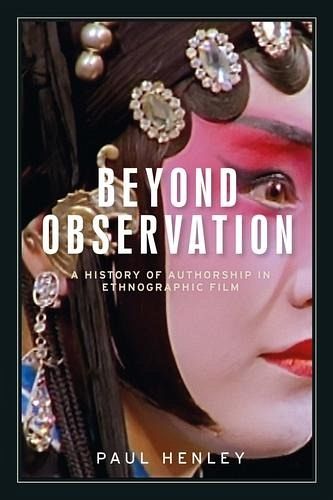
A history of ethnographic film from the birth of cinema in 1895 until 2015 that analyses a large number of films made in a broad range of styles, on a broad range of topics and in many different parts of the world. For the period before the Second World War, it considers films made in reportage, exotic melodrama and travelogue genres as well as more conventionally ethnographic films made for academic and state-funded purposes. It then describes how after the war, ethnographic film-makers developed various different modes of authorship inspired by the ideas of Jean Rouch, Robert Gardner and…mehr
A history of ethnographic film from the birth of cinema in 1895 until 2015 that analyses a large number of films made in a broad range of styles, on a broad range of topics and in many different parts of the world. For the period before the Second World War, it considers films made in reportage, exotic melodrama and travelogue genres as well as more conventionally ethnographic films made for academic and state-funded purposes. It then describes how after the war, ethnographic film-makers developed various different modes of authorship inspired by the ideas of Jean Rouch, Robert Gardner and Colin Young. It also considers films made from the 1970s by the indigenous subjects themselves as well as those made for British television up until the 1990s. In the final part, it examines various possible models for the future of ethnographic film.
Dieser Download kann aus rechtlichen Gründen nur mit Rechnungsadresse in A, D ausgeliefert werden.
Die Herstellerinformationen sind derzeit nicht verfügbar.
Autorenporträt
Paul Henley is Professorial Research Fellow at the Granada Centre for Visual Anthropology at the University of Manchester and an ethnographic film-maker. He was previously the founding director of the Granada Centre, 1987-2014
Inhaltsangabe
Introduction: Authorship, Praxis, Observation, Ethnography Part I: Histories: Ethnographic film in the twentieth century Introduction 1 The long prehistory of ethnographic film 2 Expeditions, melodrama and the birth of ethnofiction 3 The invisible Author: films of re-enactment in the postwar period 4 Records, not movies: the early films of John Marshall and Timothy Asch 5 Reflexivity and participation: the films of David and Judith MacDougall in Africa and Australia 6 Entangled voices: the complexities of collaborative authorship 7 The subject as Author: indigenous media and the Video nas Aldeias project Part II: Authors: Three key figures Introduction 8 Jean Rouch: sharing anthropology 9 Robert Gardner: beyond the burden of the real 10 Colin Young: the principles of Observational Cinema Part III: Television as meta-author: Ethnographic film in Britain Introduction 11 Ways of doing ethnographic film on British television 12 Beyond the 'disappearing world' - and back again 13 The decline of ethnographic film on British television Part IV: Beyond observation: Ethnographic film in the twenty-first century Introduction 14 The evolution of Observational Cinema: recent films of David and Judith MacDougall 15 Negative capability and the flux of life: films of the Sensory Ethnography Lab 16 Participatory perspectives An epilogue: Return to Kiriwina: the ethnographic film-maker as Author Appendix: British Television Documentaries produced in collaboration with Ethnographic Researchers Textual references Film references
Es gelten unsere Allgemeinen Geschäftsbedingungen: www.buecher.de/agb
Impressum
www.buecher.de ist ein Internetauftritt der buecher.de internetstores GmbH
Geschäftsführung: Monica Sawhney | Roland Kölbl | Günter Hilger
Sitz der Gesellschaft: Batheyer Straße 115 - 117, 58099 Hagen
Postanschrift: Bürgermeister-Wegele-Str. 12, 86167 Augsburg
Amtsgericht Hagen HRB 13257
Steuernummer: 321/5800/1497
USt-IdNr: DE450055826