45,95 €
inkl. MwSt.
Sofort per Download lieferbar
23 °P sammeln

Andere Kunden interessierten sich auch für
") Dance Research Methodologies (eBook, ePUB)35,95 €
Dance Research Methodologies (eBook, ePUB)35,95 €") LO: TECH: POP: CULT (eBook, ePUB)48,95 €
LO: TECH: POP: CULT (eBook, ePUB)48,95 €") Corporealities (eBook, ePUB)45,95 €
Corporealities (eBook, ePUB)45,95 €") Urban Sensographies (eBook, ePUB)41,95 €
Urban Sensographies (eBook, ePUB)41,95 €") Toward a Just Pedagogy of Performance (eBook, ePUB)41,95 €
Toward a Just Pedagogy of Performance (eBook, ePUB)41,95 €") Chinese Theatre: An Illustrated History Through Nuoxi and Mulianxi (eBook, ePUB)41,95 €
Chinese Theatre: An Illustrated History Through Nuoxi and Mulianxi (eBook, ePUB)41,95 €") Further Steps 2 (eBook, ePUB)22,95 €
Further Steps 2 (eBook, ePUB)22,95 €





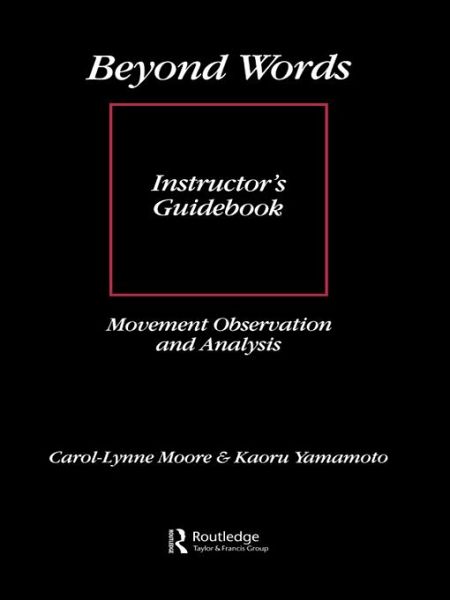
This guidebook is designed to facilitate the use of "Beyond Words" materials. By drawing on their own teaching experiences, the authors offer suggestions for attaining teaching/learning goals, and for overcoming difficulties in using the movement observation and analysis programme. Many of the creative adaptations described come from individuals at different institutions who tested "Beyond Words" while it was being developed. It is not intended, therefore, as a prescriptive document, but rather as a guide which provides many alternative ways of utilizing "Beyond Words", and which leaves the rest to the instructor.
Dieser Download kann aus rechtlichen Gründen nur mit Rechnungsadresse in A, B, BG, CY, CZ, D, DK, EW, E, FIN, F, GR, HR, H, IRL, I, LT, L, LR, M, NL, PL, P, R, S, SLO, SK ausgeliefert werden.
'A clearly presented and richly referenced synthesis of theories from anthropology, psychology, and neuropsychology supports their approach to movement analysis. This analysis also considers biological, socio-cultural, individual, and situational influences on human action. The text and accompanying videotape include thought-provoking theoretical discussions, challenging exercises in assessing one's own prejudices and preferences of perception, guidelines for designing observation tasks, and an introductory training in movement observation.' - Carlotta J. Willis, University of Massachusetts, Amherst, USA