63,95 €
63,95 €
inkl. MwSt.
Sofort per Download lieferbar

32 °P sammeln
63,95 €
Als Download kaufen
63,95 €
inkl. MwSt.
Sofort per Download lieferbar
32 °P sammeln
Jetzt verschenken
Alle Infos zum eBook verschenken
63,95 €
inkl. MwSt.
Sofort per Download lieferbar
Alle Infos zum eBook verschenken
32 °P sammeln

Andere Kunden interessierten sich auch für
") BioProducts (eBook, ePUB)73,95 €
BioProducts (eBook, ePUB)73,95 €") Green Chemistry and Technology (eBook, ePUB)118,95 €
Green Chemistry and Technology (eBook, ePUB)118,95 €") Sustainable Bio-Based Composites (eBook, ePUB)111,95 €
Sustainable Bio-Based Composites (eBook, ePUB)111,95 €") Green Chemistry in Industry (eBook, ePUB)125,95 €
Green Chemistry in Industry (eBook, ePUB)125,95 €") Sustainable Manufacturing Processes (eBook, ePUB)31,95 €
Sustainable Manufacturing Processes (eBook, ePUB)31,95 €") Green Chemistry in Government and Industry (eBook, ePUB)122,95 €
Green Chemistry in Government and Industry (eBook, ePUB)122,95 €") Microalgae-Based Systems (eBook, ePUB)118,95 €
Microalgae-Based Systems (eBook, ePUB)118,95 €

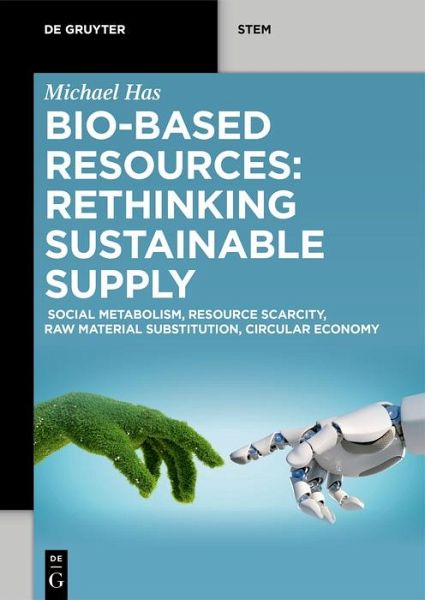
Global shortages of fossil, mineral, and agricultural resources, coupled with passed global boundaries, climate changes and rising public debt, represent a systemic risk that threatens economic and social stability. This text examines the interconnectedness of raw material supply, state budgets, and societal resilience through the lens of social metabolism, which sees natural resources as essential "food" for the economy. As resource scarcity reduces economic output and tax revenues, states increasingly rely on debt, risking insolvency if resource-based growth falters. Biogenic resources are often seen as a potential solution-especially in fuels, materials, and biogenic energy-but these compete with food production and rely on fragile agricultural systems already impacted by climate change, erosion, and biodiversity loss. Although some bio-based materials show promise (e.g., hemp in construction or algae fuels), their market share is low but may grow. Moreover, rebound effects may lead to overexploitation rather than sustainable substitution. The analysis concludes that while bio-based resources offer partial relief, they cannot replace systemic changes in consumption, land use, and economic expectations.
ctations.
ctations.
Dieser Download kann aus rechtlichen Gründen nur mit Rechnungsadresse in A, B, BG, CY, CZ, D, DK, EW, E, FIN, F, GR, HR, H, IRL, I, LT, L, LR, M, NL, PL, P, R, S, SLO, SK ausgeliefert werden.