201,95 €
inkl. MwSt.
Erscheint vor. 05.02.26
101 °P sammeln

Andere Kunden interessierten sich auch für
") Bioactive Compounds in Edible Flowers (eBook, ePUB)201,95 €
Bioactive Compounds in Edible Flowers (eBook, ePUB)201,95 €") Advances in Pest Management in Commercial Flowers (eBook, PDF)137,95 €
Advances in Pest Management in Commercial Flowers (eBook, PDF)137,95 €") Exploring Herbal Synergies for Optimal Human Health (eBook, PDF)201,95 €
Exploring Herbal Synergies for Optimal Human Health (eBook, PDF)201,95 €") Biotechnology of Bioactive Compounds (eBook, PDF)210,99 €
Biotechnology of Bioactive Compounds (eBook, PDF)210,99 €") Bioactive Compounds from Natural Sources (eBook, PDF)47,95 €
Bioactive Compounds from Natural Sources (eBook, PDF)47,95 €") Postharvest Handling and Diseases of Horticultural Produce (eBook, PDF)201,95 €
Postharvest Handling and Diseases of Horticultural Produce (eBook, PDF)201,95 €") Bioactive Compounds in Agricultural Soils (eBook, PDF)112,95 €
Bioactive Compounds in Agricultural Soils (eBook, PDF)112,95 €
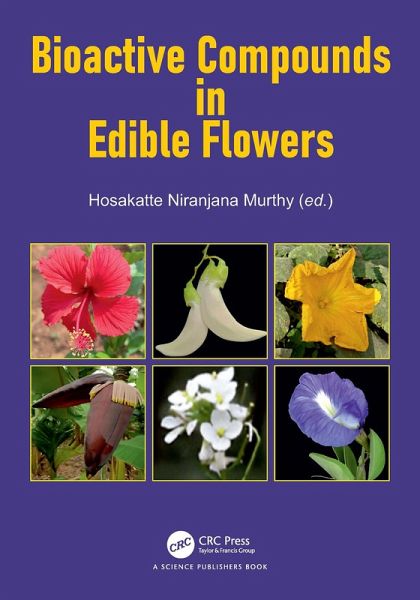
Many societies have found various utilities of edible flowers. They give a more ornamental look, enhances the taste, and also enhances its nutritional value. Numerous studies conducted recently have shown that edible flowers are also rich in nutrients such as carbohydrates, proteins, fats, fibre, vitamins, minerals. These flowers also contain a variety of phytochemicals, including phenolics, flavonoids, carotenoids, terpenoids, alkaloids, and other compounds that have been shown to increase biological activities, such as antioxidant, antimicrobial and antidiabetic, anticancer, cardioprotective, hepatoprotective, and neuroprotective qualities. Edible flowers have now found their way into a number of industries, including as cosmeceuticals, functional foods, and nutraceuticals.
The book provides information on the nutritional value, phytochemical makeup, and bioactivity of both wild and cultivated flowers. It also describes edible flowers in depth to make them better-known to consumers and the food business. Each chapter discusses the possible toxicological effects of floral components.
The book provides information on the nutritional value, phytochemical makeup, and bioactivity of both wild and cultivated flowers. It also describes edible flowers in depth to make them better-known to consumers and the food business. Each chapter discusses the possible toxicological effects of floral components.
Dieser Download kann aus rechtlichen Gründen nur mit Rechnungsadresse in A, B, BG, CY, CZ, D, DK, EW, E, FIN, F, GR, HR, H, IRL, I, LT, L, LR, M, NL, PL, P, R, S, SLO, SK ausgeliefert werden.