
43,95 €
inkl. MwSt.
Sofort per Download lieferbar
22 °P sammeln

Andere Kunden interessierten sich auch für
") Biological Systematics (eBook, ePUB)43,95 €
Biological Systematics (eBook, ePUB)43,95 €") The Species Problem (eBook, PDF)52,95 €
The Species Problem (eBook, PDF)52,95 €") Taxonomic Nomenclature (eBook, PDF)45,95 €
Taxonomic Nomenclature (eBook, PDF)45,95 €") The Ecphoras (eBook, PDF)162,95 €
The Ecphoras (eBook, PDF)162,95 €") Plant Systematics (eBook, PDF)52,95 €
Plant Systematics (eBook, PDF)52,95 €") The New Taxonomy (eBook, PDF)52,95 €
The New Taxonomy (eBook, PDF)52,95 €") Plant Pathology Concepts and Laboratory Exercises (eBook, PDF)143,95 €
Plant Pathology Concepts and Laboratory Exercises (eBook, PDF)143,95 €
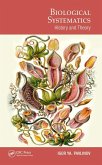




This volume reviews the historical roots and theoretical foundations of biological systematics in an approachable text. The author outlines the structure and main tasks of systematics. Conceptual history is characterized as a succession of scientific revolutions. The philosophical foundations of systematic research are briefly reviewed as well as the structure and content of taxonomic theories. Most important research programs in systematics are outlined. The book includes analysis of the principal problematic issues as "scientific puzzles" in systematics. This volume is intended for professional taxonomists, biologists of various specialties, students, as well as all those interested in the history and theory of biology and natural sciences.
Key Features
Related Titles
de Queiroz, K. et al., eds. Phylonyms: A Companion to the PhyloCode (ISBN 978-1-1383-3293-5)
Sigwart, J. D. What Species Mean: A User's Guide to the Units of Biodiversity (ISBN 978-1-4987-9937-9)
Rieppel, O. Phylogenetic Systematics: Haeckel to Hennig (ISBN 978-1-4987-5488-0)
Wilkins, J. S. Species: The Evolution of the Idea, 2nd ed. (ISBN 978-1-1380-5574-2)
Key Features
- Considers the conceptual history of systematics as the framework of evolutionary epistemology
- Builds a hierarchically organized quasi-axiomatic system of taxonomic theory
- Contends that more reductionist taxonomic concepts are less objective
- Supports taxonomic pluralism by non-classic philosophy of science as a normal condition of systematics
- Documents that "taxonomic puzzles" result from conflict between monistic and pluralistic attitudes
Related Titles
de Queiroz, K. et al., eds. Phylonyms: A Companion to the PhyloCode (ISBN 978-1-1383-3293-5)
Sigwart, J. D. What Species Mean: A User's Guide to the Units of Biodiversity (ISBN 978-1-4987-9937-9)
Rieppel, O. Phylogenetic Systematics: Haeckel to Hennig (ISBN 978-1-4987-5488-0)
Wilkins, J. S. Species: The Evolution of the Idea, 2nd ed. (ISBN 978-1-1380-5574-2)
Dieser Download kann aus rechtlichen Gründen nur mit Rechnungsadresse in A, B, BG, CY, CZ, D, DK, EW, E, FIN, F, GR, HR, H, IRL, I, LT, L, LR, M, NL, PL, P, R, S, SLO, SK ausgeliefert werden.