Sie sind bereits eingeloggt. Klicken Sie auf 2. tolino select Abo, um fortzufahren.
Bitte loggen Sie sich zunächst in Ihr Kundenkonto ein oder registrieren Sie sich bei bücher.de, um das eBook-Abo tolino select nutzen zu können.
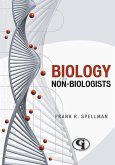
The list keeps growing! The latest in Government Institutes' "non-specialist" series, Biology for Nonbiologists continues the tradition established by Toxicology for Non-Toxicologists and Chemistry for Nonchemists, by providing environmental and occupational-safety-and-health practitioners and students with a comprehensive overview of the principles and concepts of modern biology. Covering everything from basic chemistry principles and the consequences of biology's interaction with the environment to basic biological principles and applications, this convenient handbook provides a quick course…mehr
The list keeps growing! The latest in Government Institutes' "non-specialist" series, Biology for Nonbiologists continues the tradition established by Toxicology for Non-Toxicologists and Chemistry for Nonchemists, by providing environmental and occupational-safety-and-health practitioners and students with a comprehensive overview of the principles and concepts of modern biology. Covering everything from basic chemistry principles and the consequences of biology's interaction with the environment to basic biological principles and applications, this convenient handbook provides a quick course on the science of biology. You'll gain an understanding of and skill in biological principles and learn key biology concepts, concerns, and practices without spending weeks in a classroom. Biology for Nonbiologists focuses on three areas: environmental biology and ecology as they apply to environmental regulatory compliance programs, human biology, and community and ecosystem dynamics. However, it also covers all major biological themes, including the cellular basis for life, the interactions of organisms, and the evolutionary process of all beings. The author explains scientific concepts with little reference to mathematics and physical science and little technical language, making the text easier to understand and more engaging for non-science readers. To further demystify the science, Spellman also lists and defines essential biology terms and terms not often used in the environmental and safety fields. Special study aids, including end-of-chapter reviews and checkmarks that highlight important points, enhance learning and allow readers to evaluate their understanding of the concepts presented.
Die Herstellerinformationen sind derzeit nicht verfügbar.
Autorenporträt
Frank R. Spellman, PhD, is a retired assistant professor of environmental health at Old Dominion University, Norfolk, Virginia, and the author of more than 136 books covering topics ranging from concentrated animal feeding operations (CAFOs) to all areas of environmental science and occupational health. Many of his texts are readily available online, and several have been adopted for classroom use at major universities throughout the United States, Canada, Europe, and Russia; two have been translated into Spanish for South American markets. Dr. Spellman has been cited in more than 550 publications. He serves as a professional expert witness for three law groups and as an incident/accident investigator for the U.S. Department of Justice and a northern Virginia law firm. In addition, he consults on homeland security vulnerability assessments for critical infrastructures including water/wastewater facilities nationwide and conducts pre-Occupational Safety and Health Administration (OSHA)/Environmental Protection Agency EPA audits throughout the country. Dr. Spellman lectures on sewage treatment, water treatment, and homeland security and lectures and safety topics throughout the country and teaches water/wastewater operator short courses at Virginia Tech (Blacksburg, Virginia). He surveyed the drinking water ancient distribution system at Machu Picchu and studied Darwin's Finches in the Galapagos Islands. In addition, he studied water pollution in Coco, Ecuador. He holds a BA, in public administration, a BS in business management, an MBA, and an MS and PhD in environmental engineering.
Inhaltsangabe
Part I 1 General Biological Principles Chapter 1 2 Introduction Chapter 2 3 Chemistry Chapter 3 4 Cells: The Fundamental Units of Life Chapter 4 5 Energy Chapter 5 6 Cell Cycle & Genetics Chapter 6 7 Biological Diversity Part II 8 Human Biology Chapter 7 9 Tissues, Organs, and Organ Systems Chapter 8 10 Integumentary System Chapter 9 11 Circulatory System Chapter 10 12 Lymphatic System Chapter 11 13 Digestive System Chapter 12 14 Nervous System Chapter 13 15 Endocrine System Chapter 14 16 Reproductive System Chapter 15 17 Musculoskeletal System Chapter 16 18 Respiratory System Chapter 17 19 Urinary System Chapter 18 20 Theories of Human Evolution Part III 21 Introduction to Ecology Chapter 19 22 Introduction to Ecology
Part I 1 General Biological Principles Chapter 1 2 Introduction Chapter 2 3 Chemistry Chapter 3 4 Cells: The Fundamental Units of Life Chapter 4 5 Energy Chapter 5 6 Cell Cycle & Genetics Chapter 6 7 Biological Diversity Part II 8 Human Biology Chapter 7 9 Tissues, Organs, and Organ Systems Chapter 8 10 Integumentary System Chapter 9 11 Circulatory System Chapter 10 12 Lymphatic System Chapter 11 13 Digestive System Chapter 12 14 Nervous System Chapter 13 15 Endocrine System Chapter 14 16 Reproductive System Chapter 15 17 Musculoskeletal System Chapter 16 18 Respiratory System Chapter 17 19 Urinary System Chapter 18 20 Theories of Human Evolution Part III 21 Introduction to Ecology Chapter 19 22 Introduction to Ecology
Es gelten unsere Allgemeinen Geschäftsbedingungen: www.buecher.de/agb
Impressum
www.buecher.de ist ein Internetauftritt der buecher.de internetstores GmbH
Geschäftsführung: Monica Sawhney | Roland Kölbl | Günter Hilger
Sitz der Gesellschaft: Batheyer Straße 115 - 117, 58099 Hagen
Postanschrift: Bürgermeister-Wegele-Str. 12, 86167 Augsburg
Amtsgericht Hagen HRB 13257
Steuernummer: 321/5800/1497
USt-IdNr: DE450055826