62,95 €
inkl. MwSt.
Sofort per Download lieferbar
31 °P sammeln

Andere Kunden interessierten sich auch für
") Biotransformations in Organic Chemistry (eBook, PDF)48,95 €
Biotransformations in Organic Chemistry (eBook, PDF)48,95 €") Biotransformations in Organic Chemistry (eBook, PDF)80,95 €
Biotransformations in Organic Chemistry (eBook, PDF)80,95 €") Biotransformations in Organic Chemistry (eBook, PDF)64,95 €
Biotransformations in Organic Chemistry (eBook, PDF)64,95 €") Biotransformations in Organic Chemistry (eBook, PDF)62,95 €
Biotransformations in Organic Chemistry (eBook, PDF)62,95 €") Biotransformations in Organic Chemistry (eBook, PDF)26,95 €
Biotransformations in Organic Chemistry (eBook, PDF)26,95 €") Biotransformations in Organic Chemistry - A Textbook (eBook, PDF)62,95 €
Biotransformations in Organic Chemistry - A Textbook (eBook, PDF)62,95 €") Modern Biocatalysis (eBook, PDF)183,99 €
Modern Biocatalysis (eBook, PDF)183,99 €
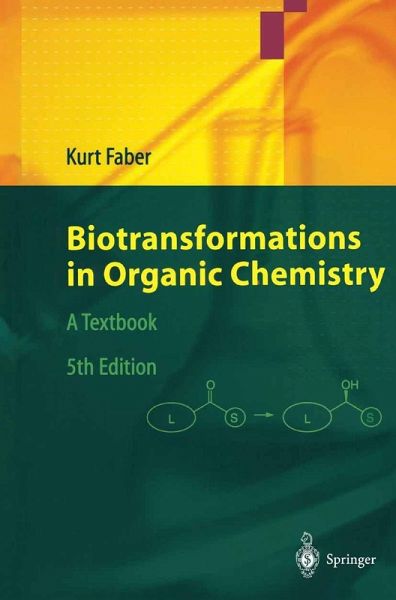
Biocatalysts, employed either as isolated enzymes or whole microbial cells, offer a remarkable arsenal of highly selective transformations for state-of-the-art synthetic organic chemistry. This well-established text and reference provides a basis for courses in modern organic chemistry and a condensed introduction to the field. After a basic introduction, the principles of stereoselective transformations, kinetics and enzyme properties, and the different types of reactions are explained. Special techniques, such as the use of enzymes in organic solvents, immobilization techniques and the use of modified enzymes, are also treated. This new edition features an improved didactic style and includes new developments, such as dynamic resolution, stereo-inversion and enantio-convergent processes.
Dieser Download kann aus rechtlichen Gründen nur mit Rechnungsadresse in A, B, BG, CY, CZ, D, DK, EW, E, FIN, F, GR, HR, H, IRL, I, LT, L, LR, M, NL, PL, P, R, S, SLO, SK ausgeliefert werden.