38,95 €
38,95 €
inkl. MwSt.
Sofort per Download lieferbar

19 °P sammeln
38,95 €
Als Download kaufen
38,95 €
inkl. MwSt.
Sofort per Download lieferbar
19 °P sammeln
Jetzt verschenken
Alle Infos zum eBook verschenken
38,95 €
inkl. MwSt.
Sofort per Download lieferbar
Alle Infos zum eBook verschenken
19 °P sammeln

Andere Kunden interessierten sich auch für
") Blade Runner (eBook, PDF)38,95 €
Blade Runner (eBook, PDF)38,95 €") Memento (eBook, ePUB)27,95 €
Memento (eBook, ePUB)27,95 €") Eternal Sunshine of the Spotless Mind (eBook, ePUB)39,95 €
Eternal Sunshine of the Spotless Mind (eBook, ePUB)39,95 €") Talk to Her (eBook, ePUB)29,95 €
Talk to Her (eBook, ePUB)29,95 €") Film, Philosophy, and Reality (eBook, ePUB)38,95 €
Film, Philosophy, and Reality (eBook, ePUB)38,95 €") Film and Ethics (eBook, ePUB)38,95 €
Film and Ethics (eBook, ePUB)38,95 €") Screening Characters (eBook, ePUB)42,95 €
Screening Characters (eBook, ePUB)42,95 €






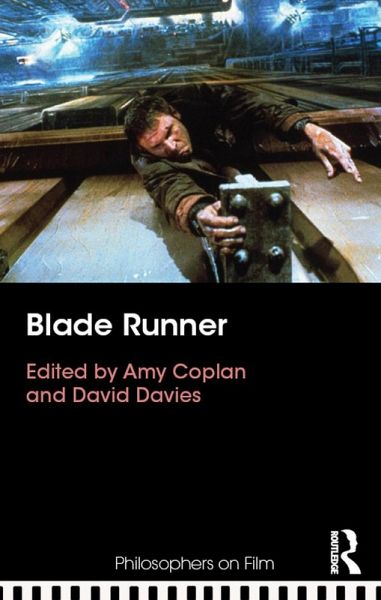
Ridley Scott's Blade Runner is widely regarded as a "masterpiece of modern cinema" and is regularly ranked as one of the great films of all time. Set in a dystopian future where the line between human beings and 'replicants' is blurred, the film raises a host of philosophical questions about what it is to be human, the possibility of moral agency and freedom in 'created' life forms, and the capacity of cinema to make a genuine contribution to our engagement with these kinds of questions.
This volume of specially commissioned chapters systematically explores and addresses these issues from a philosophical point of view. Beginning with a helpful introduction, the seven chapters examine the following questions:
This volume of specially commissioned chapters systematically explores and addresses these issues from a philosophical point of view. Beginning with a helpful introduction, the seven chapters examine the following questions:
- How is the theme of death explored in Blade Runner and with what implications for our understanding of the human condition?
- What can we learn about the relationship between emotion and reason from the depiction of the 'replicants' in Blade Runner?
- How are memory, empathy, and moral agency related in Blade Runner?
- How does the style and 'mood' of Blade Runner bear upon its thematic and philosophical significance?
- Is Blade Runner a meditation on the nature of film itself?
Including a brief biography of the director and a detailed list of references to other writings on the film, Blade Runner is essential reading for students - indeed anyone - interested in philosophy and film studies.
Contributors: Colin Allen, Peter Atterton, Amy Coplan, David Davies, Berys Gaut, Stephen Mulhall, C. D. C. Reeve.
Dieser Download kann aus rechtlichen Gründen nur mit Rechnungsadresse in A, B, BG, CY, CZ, D, DK, EW, E, FIN, F, GR, HR, H, IRL, I, LT, L, LR, M, NL, PL, P, R, S, SLO, SK ausgeliefert werden.