52,95 €
inkl. MwSt.
Sofort per Download lieferbar
26 °P sammeln

Andere Kunden interessierten sich auch für
") Community-Making in Early Stuart Theatres (eBook, PDF)46,95 €
Community-Making in Early Stuart Theatres (eBook, PDF)46,95 €") Old Age, Masculinity, and Early Modern Drama (eBook, PDF)52,95 €
Old Age, Masculinity, and Early Modern Drama (eBook, PDF)52,95 €") Pastoral Drama in Early Modern Italy (eBook, PDF)42,95 €
Pastoral Drama in Early Modern Italy (eBook, PDF)42,95 €") Transnational Exchange in Early Modern Theater (eBook, PDF)52,95 €
Transnational Exchange in Early Modern Theater (eBook, PDF)52,95 €") Anti-Black Racism in Early Modern English Drama (eBook, PDF)46,95 €
Anti-Black Racism in Early Modern English Drama (eBook, PDF)46,95 €") Modern Verse Drama (eBook, PDF)33,95 €
Modern Verse Drama (eBook, PDF)33,95 €") The Art of Picturing in Early Modern English Literature (eBook, PDF)42,95 €
The Art of Picturing in Early Modern English Literature (eBook, PDF)42,95 €
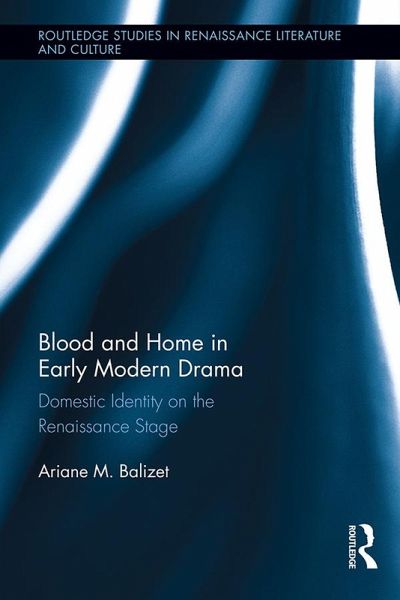
In this volume, the author argues that blood was, crucially, a means by which dramatists negotiated shifting contours of domesticity in 16th and 17th century England. Early modern English drama vividly addressed contemporary debates over an expanding idea of "the domestic," which encompassed the domus as well as sex, parenthood, household order, the relationship between home and state, and the connections between family honor and national identity. The author contends that the domestic ideology expressed by theatrical depictions of marriage and household order is one built on the simultaneous familiarity and violence inherent to blood.
The theatrical relation between blood and home is far more intricate than the idealized language of the familial bloodline; the home was itself a bloody place, with domestic bloodstains signifying a range of experiences including religious worship, sex, murder, birth, healing, and holy justice. Focusing on four bleeding figures-the Bleeding Bride, Bleeding Husband, Bleeding Child, and Bleeding Patient-the author argues that the household blood of the early modern stage not only expressed the violence and conflict occasioned by domestic ideology, but also established the home as a site that alternately reified and challenged patriarchal authority.
The theatrical relation between blood and home is far more intricate than the idealized language of the familial bloodline; the home was itself a bloody place, with domestic bloodstains signifying a range of experiences including religious worship, sex, murder, birth, healing, and holy justice. Focusing on four bleeding figures-the Bleeding Bride, Bleeding Husband, Bleeding Child, and Bleeding Patient-the author argues that the household blood of the early modern stage not only expressed the violence and conflict occasioned by domestic ideology, but also established the home as a site that alternately reified and challenged patriarchal authority.
Dieser Download kann aus rechtlichen Gründen nur mit Rechnungsadresse in A, B, BG, CY, CZ, D, DK, EW, E, FIN, F, GR, HR, H, IRL, I, LT, L, LR, M, NL, PL, P, R, S, SLO, SK ausgeliefert werden.