104,95 €
104,95 €
inkl. MwSt.
Sofort per Download lieferbar

52 °P sammeln
104,95 €
Als Download kaufen
104,95 €
inkl. MwSt.
Sofort per Download lieferbar
52 °P sammeln
Jetzt verschenken
Alle Infos zum eBook verschenken
104,95 €
inkl. MwSt.
Sofort per Download lieferbar
Alle Infos zum eBook verschenken
52 °P sammeln

Andere Kunden interessierten sich auch für
") The In-Between Spaces of Asylum and Migration (eBook, PDF)40,95 €
The In-Between Spaces of Asylum and Migration (eBook, PDF)40,95 €") Refugee Protection and Civil Society in Europe (eBook, PDF)68,95 €
Refugee Protection and Civil Society in Europe (eBook, PDF)68,95 €") Border Lampedusa (eBook, PDF)72,95 €
Border Lampedusa (eBook, PDF)72,95 €") Border Regimes, Racialisation Processes and Resistance in Germany (eBook, PDF)72,95 €
Border Regimes, Racialisation Processes and Resistance in Germany (eBook, PDF)72,95 €") Ethnic Diversity and Public Policy (eBook, PDF)72,95 €
Ethnic Diversity and Public Policy (eBook, PDF)72,95 €") Cosmopolitanism, Migration and Universal Human Rights (eBook, PDF)96,95 €
Cosmopolitanism, Migration and Universal Human Rights (eBook, PDF)96,95 €") The UNHCR and Disaster Displacement in the 21st Century (eBook, PDF)40,95 €
The UNHCR and Disaster Displacement in the 21st Century (eBook, PDF)40,95 €





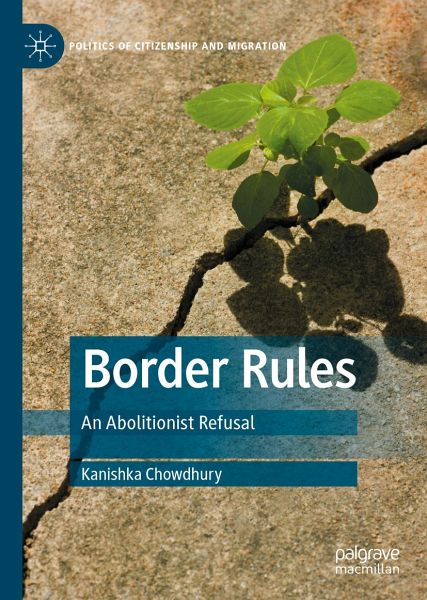
This book examines both border policies and oppositional narratives of "the border," 2011-2021, demonstrating that the term designates not merely a line of territorial control but also a set of social relations shaped by persistent, racially differentiated colonial structures and, more recently, by neoliberal modes of accumulation. These relations are shown to determine access to wealth and/or resources and to enable the management of labor, the extraction of surplus, and the accumulation of capital. Discussion in the book is informed by the history of these policies and by the critical literature on borders. Various cultural texts focusing on two border zones-the US-Mexico and the EU-Southern Mediterranean-are analyzed: specifically, two novels, two films, and two murals examined in conjunction with amusic video. A path to a borderless future is suggested: an abolitionist refusal of border rules with an insistence on the necessity of abolition.
Dieser Download kann aus rechtlichen Gründen nur mit Rechnungsadresse in A, B, BG, CY, CZ, D, DK, EW, E, FIN, F, GR, HR, H, IRL, I, LT, L, LR, M, NL, PL, P, R, S, SLO, SK ausgeliefert werden.