11,74 €
inkl. MwSt.
Sofort per Download lieferbar
0 °P sammeln

Andere Kunden interessierten sich auch für
") FIGHTING INFLAMMATION NATURALLY (eBook, ePUB)4,99 €
FIGHTING INFLAMMATION NATURALLY (eBook, ePUB)4,99 €") Breast Cancer (eBook, ePUB)3,99 €
Breast Cancer (eBook, ePUB)3,99 €") The Breast Health Cookbook (eBook, ePUB)7,99 €
The Breast Health Cookbook (eBook, ePUB)7,99 €") Natural Healing from the Kitchen & Garden (eBook, ePUB)3,49 €
Natural Healing from the Kitchen & Garden (eBook, ePUB)3,49 €") Iron: Essential Element of Life (eBook, ePUB)2,99 €
Iron: Essential Element of Life (eBook, ePUB)2,99 €") Pegan Diet Cookbook:Easy Recipes that Focus on Plants Combining the Paleo and Vegan Diets for Your Best Lifelong Health. (eBook, ePUB)5,99 €
Pegan Diet Cookbook:Easy Recipes that Focus on Plants Combining the Paleo and Vegan Diets for Your Best Lifelong Health. (eBook, ePUB)5,99 €") A Complete Guide to Becoming a Vegetarian (eBook, ePUB)3,99 €
A Complete Guide to Becoming a Vegetarian (eBook, ePUB)3,99 €

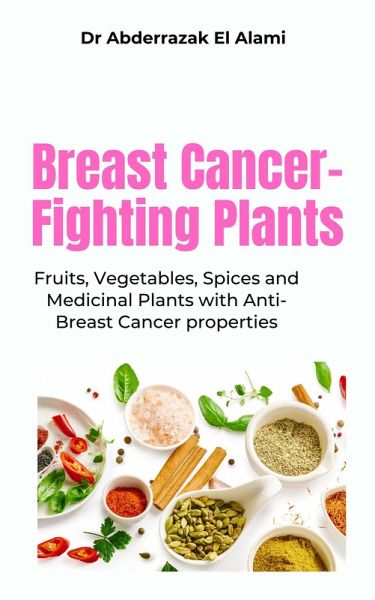
Dedicating just a little time to reading this book could help save millions of women worldwide from the devastating impact of breast cancer. This book offers a comprehensive guide to breast cancer, covering its causes, stages, risk factors, signs and symptoms, diagnostic methods, conventional treatments, and the challenges of treatment resistance. At the same time, it explores an often-overlooked dimension of prevention and support: the role of nutrition and medicinal plants. Drawing on more than 322 scientific references, this work presents a carefully selected set of dietary and medicinal plants-fruits, vegetables, spices, and North African herbal remedies-whose bioactive compounds have shown promising anti-breast cancer activities. From turmeric, garlic, green tea, and pomegranate to cruciferous vegetables, flaxseed, fenugreek, and rosemary, each plant is described with its active molecules, mechanisms of action, and therapeutic potential. This book follows an approach that is both scientific and deeply human. It goes beyond simply presenting information on medicinal plants, emerging instead from a personal journey marked by the pain of seeing loved ones affected by breast cancer. This intimate experience became the starting point for patient, rigorous, and passionate research, driven by a desire to contribute, even modestly, to the fight against one of the most feared diseases of our time. Over the years, I have closely followed scientific advances in cancer prevention and treatment, particularly complementary strategies based on nutrition and medicinal plants. Once considered merely traditional, these disciplines now receive growing attention in international medical research. It is increasingly recognized that certain foods, spices, and plants contain bioactive compounds capable of influencing the processes of carcinogenesis: inhibiting cell proliferation, triggering apoptosis, reducing inflammation, and protecting against oxidative stress. The aim of this book is not to replace conventional medical treatments but to highlight a complementary strategy: simple practices rooted in diet and the responsible use of plants that can support health and enhance well-being. Prevention should be understood not as a single action but as a lifestyle, nourished by a better understanding of the natural resources available to us.
Dieser Download kann aus rechtlichen Gründen nur mit Rechnungsadresse in A, B, BG, CY, CZ, D, DK, EW, E, FIN, F, GR, HR, H, IRL, I, LT, L, LR, M, NL, PL, P, R, S, SLO, SK ausgeliefert werden.