Sie sind bereits eingeloggt. Klicken Sie auf 2. tolino select Abo, um fortzufahren.
Bitte loggen Sie sich zunächst in Ihr Kundenkonto ein oder registrieren Sie sich bei bücher.de, um das eBook-Abo tolino select nutzen zu können.
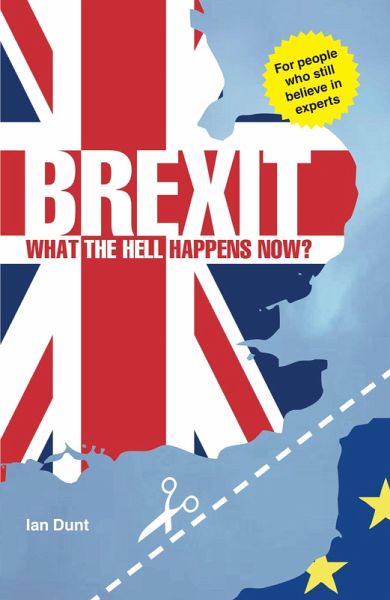
''Admirably brief and necessarily brutal... Highly recommended.'' - NICK COHEN, THE SPECTATOR''Compact and easily digestible. I''d encourage anyone who is confused, fascinated or frustrated by Brexit to read this book - you''ll be far wiser by the end of it.'' - CAROLINE LUCAS MP''I would strongly recommend Ian Dunt''s excellent guide. Dunt has taken the extraordinary step of asking a set of experts what they think. I learnt a lot.'' - PHILIP COLLINS, PROSPECTBritain''s departure from the European Union is riddled with myth and misinformation - yet the risks are very real. Brexit could…mehr
''Admirably brief and necessarily brutal... Highly recommended.'' - NICK COHEN, THE SPECTATOR''Compact and easily digestible. I''d encourage anyone who is confused, fascinated or frustrated by Brexit to read this book - you''ll be far wiser by the end of it.'' - CAROLINE LUCAS MP''I would strongly recommend Ian Dunt''s excellent guide. Dunt has taken the extraordinary step of asking a set of experts what they think. I learnt a lot.'' - PHILIP COLLINS, PROSPECTBritain''s departure from the European Union is riddled with myth and misinformation - yet the risks are very real. Brexit could diminish the UK''s power, throw its legal system into turmoil, and lower the standard of living of 65m citizens.In this revised bestseller, Ian Dunt explains why leaving the world''s largest trading bloc will leave Britain poorer and key industries like finance and pharma struggling to operate. He argues that Brexit is unlikely to cause a big economic implosion, but will instead act like a slow puncture in the UK''s national prosperity and global influence.Based on extensive interviews with trade and legal experts, Brexit: What the Hell Happens Now? is a searching exploration of Brexit shorn of the wishful thinking of its supporters in the British media and Parliament.ABOUT THE AUTHORIan Dunt is a columnist for the I newspaper and appears as a pundit on BBC TV, Sky News and Al-Jazeera.With Dorian Lynskey, he presents the Origin Story podcast and is a regular contributor to the Oh God, What Now? podcast. His most recent book, How To Be A Liberal (Canbury, 2020), is an epic history of the spread of the ideas underpinning personal freedom. EXTRACTWhat is the European project?Britain has always been deeply ignorant of the motivation behind the European project. The most common British response to European politicians is indifference, followed by frustration, followed by mockery. But without understanding Europe, you can''t effectively negotiate with Europe.Ultimately, the European Union arose out of the ashes of the Second World War. In 1951, to prevent future disputes over resources, six nations agreed to trade freely in steel and coal. In 1957, the nations of the Coal and Steel Community (France, West Germany, Italy, Holland, Belgium and Luxembourg) signed the Treaty of Rome, founding the European Economic Community, which created a bigger common market and a customs union. Over time this common market attracted more nations and became the European Union.For years Britain stood outside this club. In 1951, Prime Minister Clement Attlee declined an invitation to join the Coal and Steel Community, dismissing it as ''six nations, four of whom we had to rescue from the other two.'' Britain also spurned the European Economic Community in 1958. While the European states looked to each other for peace and prosperity, the UK, with its still large empire and its special relationship with the United States, gazed overseas. Britain and the Continent were divided not just by geography, but by conflict. A great deal of the British psyche derives from the fact that we have not been invaded for centuries. We went through incredible suffering during the world wars, but it fell from the sky. It did not march down the streets in jackboots. On the mainland, that trauma was and is personal: the social memory of a neighbour''s betrayal, death camps, and tyranny. The EU is considered a barrier to conflict and carries an emotional weight we struggle to understand. Our MPs underestimate the resolve of Europe to preserve political unity.Extracted from Brexit: What the Hell Happens Now? by Ian Dunt (Canbury Press)
Dieser Download kann aus rechtlichen Gründen nur mit Rechnungsadresse in A, B, BG, CY, CZ, D, DK, EW, E, FIN, F, GR, HR, H, IRL, I, LT, L, LR, M, NL, PL, P, R, S, SLO, SK ausgeliefert werden.
Die Herstellerinformationen sind derzeit nicht verfügbar.
Autorenporträt
I don't criticise Brexit because I am passionately in love with Europe. I am actually very wary of it. I criticise Brexit because I find the EU vastly superior to the moral and strategic inadequacy of British reactionaries. The choice between EU membership and Ukip's Britain is like a choice between a rainy day by the seaside or a hot date with Freddy Krueger. It's not a difficult decision to make.
If you asked me to outline my ideal outcome right now, I would want Britain in the outer band of a Europe of concentric circles - whether that is outside the EU in Efta or inside the EU in some sort of associate membership. That seems to me the best solution for Britain's arm-length emotional relationship with the continent but also the best for Europe. Macron and Merkel are consolidating the eurozone. That decision makes sense now, but if it turned out to be a disaster, they'd do well to have the insurance policy of a looser political arrangement to fall back on.
My euroscepticism is based on an instinctive concern about centralised power. This demands that wherever possible you try to localise decision-making, so that those who are impacted on by a power have a hand in formulating it. I still think that is a decent principle upon which to think about constitutional issues.
But there's another principle that I hold dear: freedom of movement. I do not accept that the state has the right to tell people where they are allowed to travel or live.
Free movement in Europe is a first step towards abolishing borders altogether. In, say, fifty years, or a hundred, it is not so hard to imagine great regional trading blocks covering each continent, with free movement within them. Eventually these great blocks could introduce free movement between them and the first steps towards a border-free world would have been taken.
Inhaltsangabe
MICHAEL GOVE QUOTE. 'I think the people in this country have had enough of experts from organisations with acronyms, saying they know what’s best and getting it consistently wrong.’ Michael Gove, Brexit campaigner, Sky News, 3 June 2016, when told the US, China, India, IMF, CBI etc opposed Brexit INTRODUCTION. Imagines the disruption to trade if Britain left the European Union without a deal and was forced to fall back on World Trade Organisation rules, leading to Customs and country of origin checks on British goods entering the Continent. Food starts to rot WHAT WAS THAT? Ian Dunt was laying out Britain's worst-case scenario – a chaotic heard Brexit. But there are alternatives. 'Based on extensive research and discussions with leading experts in politics, the law, markets and Europe, it maps the road ahead, with its multiple hazards and dangers' WHAT DID WE VOTE FOR? On 23 June 2016, voters in the UK were asked: ‘Should the United Kingdom remain a member of the European Union or leave the European Union.’ The results were: Remain 16,141,241 (48.1%), Leave 17,410,742 (51.9%). Voters could not specify which version of Brexit they wanted WHAT IS ARTICLE 50? Theresa May triggered Article 50 – the European Union rule that must be invoked by any country wishing to leave – on 29 March 2017. Unlike pretty much any other European law ever written, Article 50 is very short. And nightmarish for the UK WHAT IS THE EUROPEAN PROJECT? Britain has always been deeply ignorant of the motivation behind the European project, tracing the Coal and Steel Community (France, West Germany, Italy, Holland, Belgium and Luxembourg), European Economic Community which made a bigger common market, and European Union WHAT IS THE SINGLE MARKET? The single market had been the dream of European planners from the outset. It would not just get rid of tariffs like an ordinary free trade agreement, it would create four fundamental freedoms: • Goods • Capital • Services • People. Europe's people and firms would merge WHAT ARE THE POLITICS OF THE EUROPEAN UNION? Successive waves of enlargements have increased the EU. Chart of EU members in 2016, relative to the size of the economy. In the 1990s, the EU constructed the Eurozone, a monetary union of 19 member states using the euro. Illustration of EU members and Eurozone WHAT ABOUT FREEDOM OF MOVEMENT? Boris Johnson joked that he was ‘pro having my cake and pro eating it.’ The 27 remaining European leaders have stressed that access to the single market ‘requires acceptance of all four freedoms’, but there may still be some wriggle room. WHAT ABOUT THE ECONOMY? Britain faced a full range of options for withdrawal from the European Union, including staying in the customs union and/or staying in the single market. The EU has a full range of menu options for the single market. Norway and Switzerland are members in different ways NORWAY. When EFTA states Norway, Lichtenstein and Iceland joined the single market they became members of a wider European Economic Area (EEA), securing an arm’s length relationship with Brussels while enjoying the benefits of free trade SWITZERLAND. In 1992, Swiss voters rejected the idea of joining the other EU objectors in the European Economic Area. Instead, the Swiss eventually agreed on a series of bilateral treaties with the EU in return for access to the single market. It is a messy fudge TURKEY. Britain could leave the single market and stay in the customs union. A customs union is only about the taxation of goods. It allows goods to be moved between its members without paying tariffs and has one common tariff arrangement for goods coming from outside. CANADA. Leaving the single market and customs union means that the closest economic relationship the UK and Europe can expect to have is a free trade deal, like the one between the EU and Canada. One would allow Britain to trade with the EU while reducing tariffs and country-of-origin checks THE WORLD TRADE ORGANIZATION. Brexit supporters have long claimed that the WTO is a safety net for the UK once it finally leaves Europe. They portray the WTO as a virile, regulation-free wonderland just waiting for Britain to take its place as one of the world’s leading trading nations. It is not. HOW CAN WE KEEP THE UK TOGETHER? Most of Britain’s difficulties are based on its desire to maintain the financial benefits of the EU while extracting itself from sharing any sovereignty. But there is an aspect to the British dilemma outside that trade-off: keeping the United Kingdom together SCOTLAND. Most Scots voted to stay in the European Union, but that does not mean that Brexit will lead to a surge in support for Scottish independence. The British single market is worth four times as much to Scotland in terms of jobs and trade than the EU single market IRELAND. The problems in Scotland look like pleasantries next to those in Ireland. At stake is nothing less than a reversal of two decades of careful progress since the Troubles. And yet government ministers have seemed largely uninterested in the impact of Brexit across the Irish Sea WHAT ARE WE GOING TO DO? Brexit cannot satisfy the dreams, but we can ask the following questions: what do the leading Brexiters want, how talented are they, what tools do they have at their disposal and in which context do they operate? The answer to those questions grounds our expectations WHAT DO THE BREXIT MINISTERS WANT? Since the Brexit referendum and the June 2017 general election British politics has been volatile and unpredictable, so it’s impossible to know if the Brexit ministers in place (Boris Johnson, David Davis, Liam Fox) will be in place for long HOW TALENTED ARE THEY? Both Liam Fox and David Davis often seemed unable to grasp the rudiments of the European Union and international trade. In July 2016, Dr Fox told The Sunday Times that ‘about a dozen free trade deals outside the EU’ would be ‘ready for when we leave’ WHAT TOOLS DO THEY HAVE? The reliance of European businesses on the UK has prompted some people to suggest ‘they need us more than we need them’. As with all alluring nonsense, it is based on a grain of truth. But the Brexiters have drastically underestimated the lopsidedness of the relationship WHAT IS THE CONTEXT? Ministers are operating in a complicated and restrictive environment. They are being forced into an impossible timetable by an overmighty negotiating partner while trying to establish a society-wide regulatory framework and facing a volatile Parliament with no majority THE ECONOMY. After the referendum vote, the pound fell to a 31-year low on currency markets. While there have been occasional bounces, the trend has been downwards and there is no sign of sterling reaching its pre-referendum level. The confidence of foreign investors in Britain's economy is waning THE CITY OF LONDON. Britain’s financial services will weaken as banks move part of their operations and staff to EU jurisdictions in Ireland or mainland Europe. This will not be a rout, but a small and steady leak. The City of London will survive Brexit IMMIGRATION. Immigration to the UK fell after the referendum vote and continued to do so thereafter. Although most members of the public don’t know it due to decades of tabloid misinformation, this will lower the standard of living. The reason is that immigration is good for the economy THE PARLIAMENTARY BATTLE. Whoever occupies Downing Street will have a difficult time trying to pass the legislation needed to deliver Brexit unless they have a large working majority. As things stand, there is no support in the Commons for any position, whether hard Brexit, soft Brexit or Remain MAKING A NEW COUNTRY. Britain’s membership of the European Union will also kill off lots of other laws important to everyday life. Britain’s membership of the EU is a legal agreement, enshrined in domestic law by the European Communities Act 1972 THE TIME PROBLEM. Two years might just have been enough to complete the administrative element of Article 50. It is not enough to recreate the EU’s regulatory infrastructure or to negotiate, agree and ratify a good trade deal. Anyone trying to finish these tasks competently probably needs 10 years WHAT HAPPENS AFTER BREXIT? Exiting the European Union is so complicated it would be impossible to achieve without statutory instruments. But it is also incredibly dangerous. Ministers suddenly have the power to tinker with nearly half a century of law and industrial standards POSTSCRIPT. There is a need for patience and good sense... Absolute sovereignty is a fantasy. The only absolute sovereignty available in the world is North Korea’s model of total isolation. Outside of that, we must make compromises in order to cooperate with other countries for our mutual advantage LIST OF EXPERTS. Including James Chalmers, Larry Elliott, Sir Lawrence Freedman, Carl Gardner, Holger Hestermeyer, Markus W. Gehring, Dominic Grieve, Sir Paul Jenkins, Sabine Jenni, Steve Keen, Guy Lougher, Anand Menon, Giles Merritt, Laurent Pech, Steve Peers, Gavin Phillipson, Keith Rockwell ACKNOWLEDGEMENTS. I thank Martin Hickman, my publisher... who came to me after my first post-referendum blog, Everything You Need To Know About Theresa May’s Brexit Nightmare In Five Minutes, despite the fact that it didn’t tell the reader everything they needed and couldn't be read in 5 minutes REFERENCES. Full list of references and sources for important facts about Britain's withdrawal from the European Union
MICHAEL GOVE QUOTE. 'I think the people in this country have had enough of experts from organisations with acronyms, saying they know what’s best and getting it consistently wrong.’ Michael Gove, Brexit campaigner, Sky News, 3 June 2016, when told the US, China, India, IMF, CBI etc opposed Brexit INTRODUCTION. Imagines the disruption to trade if Britain left the European Union without a deal and was forced to fall back on World Trade Organisation rules, leading to Customs and country of origin checks on British goods entering the Continent. Food starts to rot WHAT WAS THAT? Ian Dunt was laying out Britain's worst-case scenario – a chaotic heard Brexit. But there are alternatives. 'Based on extensive research and discussions with leading experts in politics, the law, markets and Europe, it maps the road ahead, with its multiple hazards and dangers' WHAT DID WE VOTE FOR? On 23 June 2016, voters in the UK were asked: ‘Should the United Kingdom remain a member of the European Union or leave the European Union.’ The results were: Remain 16,141,241 (48.1%), Leave 17,410,742 (51.9%). Voters could not specify which version of Brexit they wanted WHAT IS ARTICLE 50? Theresa May triggered Article 50 – the European Union rule that must be invoked by any country wishing to leave – on 29 March 2017. Unlike pretty much any other European law ever written, Article 50 is very short. And nightmarish for the UK WHAT IS THE EUROPEAN PROJECT? Britain has always been deeply ignorant of the motivation behind the European project, tracing the Coal and Steel Community (France, West Germany, Italy, Holland, Belgium and Luxembourg), European Economic Community which made a bigger common market, and European Union WHAT IS THE SINGLE MARKET? The single market had been the dream of European planners from the outset. It would not just get rid of tariffs like an ordinary free trade agreement, it would create four fundamental freedoms: • Goods • Capital • Services • People. Europe's people and firms would merge WHAT ARE THE POLITICS OF THE EUROPEAN UNION? Successive waves of enlargements have increased the EU. Chart of EU members in 2016, relative to the size of the economy. In the 1990s, the EU constructed the Eurozone, a monetary union of 19 member states using the euro. Illustration of EU members and Eurozone WHAT ABOUT FREEDOM OF MOVEMENT? Boris Johnson joked that he was ‘pro having my cake and pro eating it.’ The 27 remaining European leaders have stressed that access to the single market ‘requires acceptance of all four freedoms’, but there may still be some wriggle room. WHAT ABOUT THE ECONOMY? Britain faced a full range of options for withdrawal from the European Union, including staying in the customs union and/or staying in the single market. The EU has a full range of menu options for the single market. Norway and Switzerland are members in different ways NORWAY. When EFTA states Norway, Lichtenstein and Iceland joined the single market they became members of a wider European Economic Area (EEA), securing an arm’s length relationship with Brussels while enjoying the benefits of free trade SWITZERLAND. In 1992, Swiss voters rejected the idea of joining the other EU objectors in the European Economic Area. Instead, the Swiss eventually agreed on a series of bilateral treaties with the EU in return for access to the single market. It is a messy fudge TURKEY. Britain could leave the single market and stay in the customs union. A customs union is only about the taxation of goods. It allows goods to be moved between its members without paying tariffs and has one common tariff arrangement for goods coming from outside. CANADA. Leaving the single market and customs union means that the closest economic relationship the UK and Europe can expect to have is a free trade deal, like the one between the EU and Canada. One would allow Britain to trade with the EU while reducing tariffs and country-of-origin checks THE WORLD TRADE ORGANIZATION. Brexit supporters have long claimed that the WTO is a safety net for the UK once it finally leaves Europe. They portray the WTO as a virile, regulation-free wonderland just waiting for Britain to take its place as one of the world’s leading trading nations. It is not. HOW CAN WE KEEP THE UK TOGETHER? Most of Britain’s difficulties are based on its desire to maintain the financial benefits of the EU while extracting itself from sharing any sovereignty. But there is an aspect to the British dilemma outside that trade-off: keeping the United Kingdom together SCOTLAND. Most Scots voted to stay in the European Union, but that does not mean that Brexit will lead to a surge in support for Scottish independence. The British single market is worth four times as much to Scotland in terms of jobs and trade than the EU single market IRELAND. The problems in Scotland look like pleasantries next to those in Ireland. At stake is nothing less than a reversal of two decades of careful progress since the Troubles. And yet government ministers have seemed largely uninterested in the impact of Brexit across the Irish Sea WHAT ARE WE GOING TO DO? Brexit cannot satisfy the dreams, but we can ask the following questions: what do the leading Brexiters want, how talented are they, what tools do they have at their disposal and in which context do they operate? The answer to those questions grounds our expectations WHAT DO THE BREXIT MINISTERS WANT? Since the Brexit referendum and the June 2017 general election British politics has been volatile and unpredictable, so it’s impossible to know if the Brexit ministers in place (Boris Johnson, David Davis, Liam Fox) will be in place for long HOW TALENTED ARE THEY? Both Liam Fox and David Davis often seemed unable to grasp the rudiments of the European Union and international trade. In July 2016, Dr Fox told The Sunday Times that ‘about a dozen free trade deals outside the EU’ would be ‘ready for when we leave’ WHAT TOOLS DO THEY HAVE? The reliance of European businesses on the UK has prompted some people to suggest ‘they need us more than we need them’. As with all alluring nonsense, it is based on a grain of truth. But the Brexiters have drastically underestimated the lopsidedness of the relationship WHAT IS THE CONTEXT? Ministers are operating in a complicated and restrictive environment. They are being forced into an impossible timetable by an overmighty negotiating partner while trying to establish a society-wide regulatory framework and facing a volatile Parliament with no majority THE ECONOMY. After the referendum vote, the pound fell to a 31-year low on currency markets. While there have been occasional bounces, the trend has been downwards and there is no sign of sterling reaching its pre-referendum level. The confidence of foreign investors in Britain's economy is waning THE CITY OF LONDON. Britain’s financial services will weaken as banks move part of their operations and staff to EU jurisdictions in Ireland or mainland Europe. This will not be a rout, but a small and steady leak. The City of London will survive Brexit IMMIGRATION. Immigration to the UK fell after the referendum vote and continued to do so thereafter. Although most members of the public don’t know it due to decades of tabloid misinformation, this will lower the standard of living. The reason is that immigration is good for the economy THE PARLIAMENTARY BATTLE. Whoever occupies Downing Street will have a difficult time trying to pass the legislation needed to deliver Brexit unless they have a large working majority. As things stand, there is no support in the Commons for any position, whether hard Brexit, soft Brexit or Remain MAKING A NEW COUNTRY. Britain’s membership of the European Union will also kill off lots of other laws important to everyday life. Britain’s membership of the EU is a legal agreement, enshrined in domestic law by the European Communities Act 1972 THE TIME PROBLEM. Two years might just have been enough to complete the administrative element of Article 50. It is not enough to recreate the EU’s regulatory infrastructure or to negotiate, agree and ratify a good trade deal. Anyone trying to finish these tasks competently probably needs 10 years WHAT HAPPENS AFTER BREXIT? Exiting the European Union is so complicated it would be impossible to achieve without statutory instruments. But it is also incredibly dangerous. Ministers suddenly have the power to tinker with nearly half a century of law and industrial standards POSTSCRIPT. There is a need for patience and good sense... Absolute sovereignty is a fantasy. The only absolute sovereignty available in the world is North Korea’s model of total isolation. Outside of that, we must make compromises in order to cooperate with other countries for our mutual advantage LIST OF EXPERTS. Including James Chalmers, Larry Elliott, Sir Lawrence Freedman, Carl Gardner, Holger Hestermeyer, Markus W. Gehring, Dominic Grieve, Sir Paul Jenkins, Sabine Jenni, Steve Keen, Guy Lougher, Anand Menon, Giles Merritt, Laurent Pech, Steve Peers, Gavin Phillipson, Keith Rockwell ACKNOWLEDGEMENTS. I thank Martin Hickman, my publisher... who came to me after my first post-referendum blog, Everything You Need To Know About Theresa May’s Brexit Nightmare In Five Minutes, despite the fact that it didn’t tell the reader everything they needed and couldn't be read in 5 minutes REFERENCES. Full list of references and sources for important facts about Britain's withdrawal from the European Union
Es gelten unsere Allgemeinen Geschäftsbedingungen: www.buecher.de/agb
Impressum
www.buecher.de ist ein Internetauftritt der buecher.de internetstores GmbH
Geschäftsführung: Monica Sawhney | Roland Kölbl | Günter Hilger
Sitz der Gesellschaft: Batheyer Straße 115 - 117, 58099 Hagen
Postanschrift: Bürgermeister-Wegele-Str. 12, 86167 Augsburg
Amtsgericht Hagen HRB 13257
Steuernummer: 321/5800/1497
USt-IdNr: DE450055826