
9,95 €
inkl. MwSt.
Sofort per Download lieferbar
5 °P sammeln

Andere Kunden interessierten sich auch für
") British Destroyers 1939-45 (eBook, ePUB)9,95 €
British Destroyers 1939-45 (eBook, ePUB)9,95 € (eBook, PDF)") US Standard-type Battleships 1941-45 (2) (eBook, PDF)9,95 €
US Standard-type Battleships 1941-45 (2) (eBook, PDF)9,95 €") US Navy Escort Carriers 1942-45 (eBook, PDF)9,95 €
US Navy Escort Carriers 1942-45 (eBook, PDF)9,95 €") Mapping Naval Warfare (eBook, PDF)16,95 €
Mapping Naval Warfare (eBook, PDF)16,95 €") Austro-Hungarian Cruisers and Destroyers 1914-18 (eBook, PDF)9,95 €
Austro-Hungarian Cruisers and Destroyers 1914-18 (eBook, PDF)9,95 € (eBook, PDF)") US Standard-type Battleships 1941-45 (1) (eBook, PDF)9,95 €
US Standard-type Battleships 1941-45 (1) (eBook, PDF)9,95 €") Chinese Soldier vs Japanese Soldier (eBook, PDF)12,95 €
Chinese Soldier vs Japanese Soldier (eBook, PDF)12,95 €
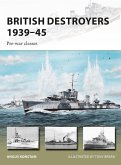

The Royal Navy entered World War II with a large but eclectic fleet of destroyers.
Some of these were veterans of World War I, fit only for escort duties. Most though, had been built during the inter-war period, and were regarded as both reliable and versatile. Danger though lurked across the seas as new destroyers being built in Germany, Italy and Japan were larger and better armoured. So, until the new, larger Tribal-class destroyers could enter service, these vessels would have to hold the line. Used mainly to hunt submarines, protect convoys from aerial attack, and take out other destroyers, these ships served across the globe during the war.
This fully illustrated study is the first in a two-part series on the real workhorses of the wartime Royal Navy, focusing on how these ageing ships took on the formidable navies of the Axis powers.
Some of these were veterans of World War I, fit only for escort duties. Most though, had been built during the inter-war period, and were regarded as both reliable and versatile. Danger though lurked across the seas as new destroyers being built in Germany, Italy and Japan were larger and better armoured. So, until the new, larger Tribal-class destroyers could enter service, these vessels would have to hold the line. Used mainly to hunt submarines, protect convoys from aerial attack, and take out other destroyers, these ships served across the globe during the war.
This fully illustrated study is the first in a two-part series on the real workhorses of the wartime Royal Navy, focusing on how these ageing ships took on the formidable navies of the Axis powers.