0,91 €
0,91 €
inkl. MwSt.
Sofort per Download lieferbar

0 °P sammeln
0,91 €
Als Download kaufen
0,91 €
inkl. MwSt.
Sofort per Download lieferbar
0 °P sammeln
Jetzt verschenken
Alle Infos zum eBook verschenken
0,91 €
inkl. MwSt.
Sofort per Download lieferbar
Alle Infos zum eBook verschenken
0 °P sammeln

Andere Kunden interessierten sich auch für



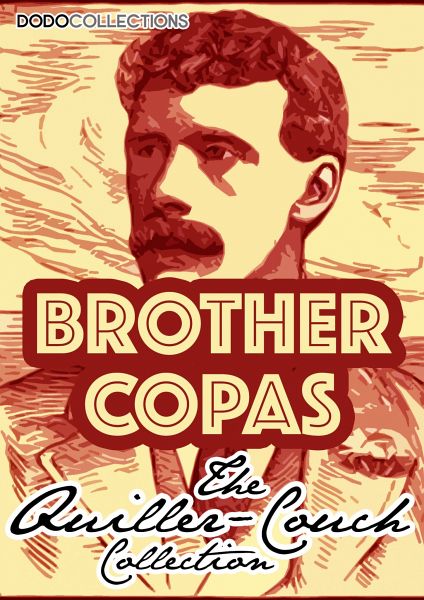
Dodo Collections brings you another classic from Arthur Quiller-Couch, 'Brother Copas.'
To those who are acquainted with the literary standing of "Q" the lightness and slightness of his novels always come as a surprise. They have, however, a distinctive touch of learning here and there and a fair and elegant style. The setting in the present case is easily identified as the Hospital of St. Cross at Winchester, although Sir Quiller-Couch confusingly calls his town Merchester suggesting Melchester, the name given by Mr. Hardy to the cathedral town of Salisbury. The dissensions and difficulties in this community of noble poverty, the great unsettled question of high church or low church, and the final solution by means of that charity which covers a multitude of sins is the theme of rother Copas. There is a delightful Swinburnian translation of a late Latin poem-the sort of thing that Sir Quiller-Couch does con amore. There is a town pageant which brings peace after dissension and there is a perfectly unreal and perfectly impossible but equally charming American child. But, on the whole, there is enough background and enough setting, enough learning, and enough ease of writing to make the whole book very readable and pleasant for an idle half-hour. If this is the only way in which Sir Quiller-Couch can earn the liberty to do his literary studies we pardon his novels.
Quiller-Couch was a noted literary critic, publishing editions of some of Shakespeare's plays (in the New Shakespeare, published by Cambridge University Press, with Dover Wilson) and several critical works, including Studies in Literature (1918) and On the Art of Reading (1920). He edited a successor to his verse anthology: Oxford Book of English Prose, which was published in 1923. He left his autobiography, Memories and Opinions, unfinished; it was nevertheless published in 1945.
Dieser Download kann aus rechtlichen Gründen nur mit Rechnungsadresse in A, B, BG, CY, CZ, D, DK, EW, E, FIN, F, GR, H, IRL, I, LT, L, LR, M, NL, PL, P, R, S, SLO, SK ausgeliefert werden.