Sie sind bereits eingeloggt. Klicken Sie auf 2. tolino select Abo, um fortzufahren.
Bitte loggen Sie sich zunächst in Ihr Kundenkonto ein oder registrieren Sie sich bei bücher.de, um das eBook-Abo tolino select nutzen zu können.
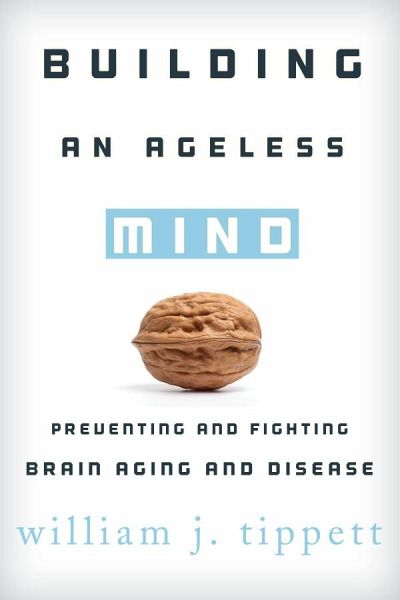
By the year 2000 half of the people in the United States were over the age of 50. By 2030, 70 million elderly will account for 20% of the U.S. population. The percentage of the population with Alzheimer's disease is significantly on the rise and by 2025 there will be a 45% increase in developed countries and a 215% increase in developing countries. Aging populations face many other issues involving cognitive decline. Building an Ageless Mind offers practical solutions, including specific directives to assist individuals in changing the course of cognitive decline as a result of aging and…mehr
By the year 2000 half of the people in the United States were over the age of 50. By 2030, 70 million elderly will account for 20% of the U.S. population. The percentage of the population with Alzheimer's disease is significantly on the rise and by 2025 there will be a 45% increase in developed countries and a 215% increase in developing countries. Aging populations face many other issues involving cognitive decline. Building an Ageless Mind offers practical solutions, including specific directives to assist individuals in changing the course of cognitive decline as a result of aging and disease. The brain, our ability to think, and our self-concept are so very important to individual lives, and the desire to maintain robust cognitive function is the ultimate goal for anyone concerned about the aging mind. Here, Dr. William J. Tippett helps readers understand the basics of how the brain works, and explains why engaging in certain exercises may be helpful. He gives people the tools to maintain, combat, and understand good brain health. He also examines one of the most profound brain aging related illnesses of our time, Alzheimer's disease, and provides detailed information on how this disease affects the individual, as well as ways to protect against it and to alter its course even if it's been diagnosed. Lifestyle strategies to promote brain health are also offered throughout. Readers will be fascinated by the way the brain functions and ages, and the many methods available to everyone to maintain better brain health as they age.
Die Herstellerinformationen sind derzeit nicht verfügbar.
Autorenporträt
William J. Tippett, Ph.D., is an Assistant Professor at the University of Northern British Columbia where he is the Principal Investigator, Founder and Director of the Brain Research Unit and is also an Associate Member of the Centre for Stroke Recovery with his affiliation held at Sunnybrook Health Sciences Centre, Toronto, ON. He is an active researcher and is currently examining how cognitive stimulation programs can alter and change the course of an illness for individual's experiencing dementia related disturbances and stroke related injury. He is an active speaker, who has presented at the Society for Neuroscience conference, the British Columbia's AnnualPsychogeriatric Conference, and at Alzheimer's Association International Conference.
Inhaltsangabe
Introduction Section #1- Cognitive Stimulation 1: The Brain Age 2: What does the front of my brain do and why is it important as I age? 3: Where it all comes together: The Parietal Lobe. 4: Reasons why to not forget the Temporal Lobe and how we see the Occipital lobe. 5: What is Cognitive Reserve and how important is it in maintaining a healthy brain? Section #2-Aging and Disease 6: Alzheimer's disease (AD)- What is it? How is it diagnosed? How does it progress? 7: Can cognitive Training affect the course of Aging and Alzheimer's disease? 8: Chapter 8: Cognitive enhancements-Are there medications available that can affect my cognitive performance? What is the role of this type of medication in AD? 9: What is Mild Cognitive Impairment (MCI)? If I have MCI will I get AD? 10: How do I know if my brain is aging normally? Section #3-Healthy Living as we Age 11: Exercise & Diet: Can exercise really help my brain as I age? How much is enough? Is there really such a thing as brain food? 12: Head and Heart the connection we should never forget. Section# 4- The Futuristic Brain 13: Neuroplasticity and what we should demand from our Brain
Introduction Section #1- Cognitive Stimulation 1: The Brain Age 2: What does the front of my brain do and why is it important as I age? 3: Where it all comes together: The Parietal Lobe. 4: Reasons why to not forget the Temporal Lobe and how we see the Occipital lobe. 5: What is Cognitive Reserve and how important is it in maintaining a healthy brain? Section #2-Aging and Disease 6: Alzheimer's disease (AD)- What is it? How is it diagnosed? How does it progress? 7: Can cognitive Training affect the course of Aging and Alzheimer's disease? 8: Chapter 8: Cognitive enhancements-Are there medications available that can affect my cognitive performance? What is the role of this type of medication in AD? 9: What is Mild Cognitive Impairment (MCI)? If I have MCI will I get AD? 10: How do I know if my brain is aging normally? Section #3-Healthy Living as we Age 11: Exercise & Diet: Can exercise really help my brain as I age? How much is enough? Is there really such a thing as brain food? 12: Head and Heart the connection we should never forget. Section# 4- The Futuristic Brain 13: Neuroplasticity and what we should demand from our Brain
Es gelten unsere Allgemeinen Geschäftsbedingungen: www.buecher.de/agb
Impressum
www.buecher.de ist ein Internetauftritt der buecher.de internetstores GmbH
Geschäftsführung: Monica Sawhney | Roland Kölbl | Günter Hilger
Sitz der Gesellschaft: Batheyer Straße 115 - 117, 58099 Hagen
Postanschrift: Bürgermeister-Wegele-Str. 12, 86167 Augsburg
Amtsgericht Hagen HRB 13257
Steuernummer: 321/5800/1497
USt-IdNr: DE450055826