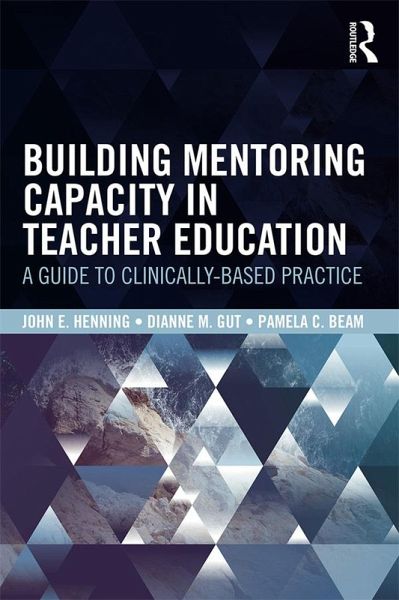
Building Mentoring Capacity in Teacher Education (eBook, PDF)
A Guide to Clinically-Based Practice
Alle Infos zum eBook verschenken
Building Mentoring Capacity in Teacher Education (eBook, PDF)
A Guide to Clinically-Based Practice
- Format: PDF
- Merkliste
- Auf die Merkliste
- Bewerten Bewerten
- Teilen
- Produkt teilen
- Produkterinnerung
- Produkterinnerung

Hier können Sie sich einloggen

Bitte loggen Sie sich zunächst in Ihr Kundenkonto ein oder registrieren Sie sich bei bücher.de, um das eBook-Abo tolino select nutzen zu können.
This book is an instructional guide for designing and implementing mentoring programs that support clinically-based teacher education. Veteran teacher educators John E. Henning, Dianne M. Gut, and Pam C. Beam outline a developmental approach for supporting mentees as they grow in their careers from teacher candidates to early-career teachers and teacher leaders. Mentors will learn how professional development occurs and how to create the conditions to foster and accelerate it. In Part I, chapters outline key components of the mentoring process, including strategies for engaging, coaching,…mehr
- Geräte: PC
- mit Kopierschutz
- eBook Hilfe
- Größe: 0.95MB
Building Teacher Capacity in English Language Teaching in Vietnam (eBook, PDF)39,95 €
Teacher Learning That Matters (eBook, PDF)54,95 €
Teacher Well-Being in English Language Teaching (eBook, PDF)39,95 €
The Reform of Teacher Education in the Post-Soviet Space (eBook, PDF)41,95 €
Teacher Education through Active Engagement (eBook, PDF)49,95 €
Teacher Education in Russia (eBook, PDF)39,95 €
Au Yi-ManSocial Capacity Building through Applied Theatre (eBook, PDF)31,95 €-
-
-
Dieser Download kann aus rechtlichen Gründen nur mit Rechnungsadresse in A, B, BG, CY, CZ, D, DK, EW, E, FIN, F, GR, HR, H, IRL, I, LT, L, LR, M, NL, PL, P, R, S, SLO, SK ausgeliefert werden.
- Produktdetails
- Verlag: Taylor & Francis eBooks
- Seitenzahl: 250
- Erscheinungstermin: 3. September 2018
- Englisch
- ISBN-13: 9781351260114
- Artikelnr.: 54154856
- Verlag: Taylor & Francis eBooks
- Seitenzahl: 250
- Erscheinungstermin: 3. September 2018
- Englisch
- ISBN-13: 9781351260114
- Artikelnr.: 54154856
- Herstellerkennzeichnung Die Herstellerinformationen sind derzeit nicht verfügbar.
Dianne M. Gut is Professor of Teacher Education at Ohio University
Pam C. Beam is Lecturer of Teacher Education at Ohio University
Part I: Mentoring for Clinically-Based Teacher Education 1. Teacher
Development 1.1 Introduction 1.2 The Role of Mentoring 1.3 Mentoring to
Promote Teacher Development in Clinical Settings 1.4 Teacher Development in
Context 1.5 Fostering Development in Context 1.6 The Development of
Practice Towards Complexity 1.7 Fostering Development in Towards Complexity
1.8 The Development of Teacher Thinking 1.9 Fostering Development in
Thinking 1.10 Organization of Chapters 1.11 Summary 1.12 Activity 2.
Establishing the Mentoring Relationship 2.1 Introduction 2.3 Selecting the
Mentor 2.4 Matching the Mentor and Mentee 2.5 Interview 2.6 Orienting the
Teacher Candidate 2.7 The Teacher Candidate Questionnaire 2.8 Mismatch 2.9
Summary 2.10 Activities 3. Engaging Teacher Candidates 3.1 Introduction 3.2
Teacher Development 3.3 High Leverage Teaching Practices 3.4 The
Developmental Curriculum for Clinical Experiences 3.5 Benefits of the
Developmental Curriculum for Clinical Experiences 3.6 The Interactions
Matrix 3.7 High Leverage Teaching Tasks 3.8 Summary 3.9 Activities 4.
Co-Teaching 4.1 Introduction 4.2 Co-Teaching Benefits 4.3 Teacher Candidate
Development through Co-Teaching 4.4 A Case Study of Co-teaching 4.5
Conceptual Framework for Co-Teaching 4.6 Summary 4.7 Activities 5. Coaching
5.1 Introduction 5.2 Teacher Development 5.3 Coaching Opportunities 5.4
Beyond Questions 5.5 The Language of Coaching 5.6 Coaching Dispositions 5.7
Modeling: Mentors Talk about Their Teaching 5.8 Summary 5.9 Activities 6.
Reflection 6.1 Introduction 6.2 Teacher Development 6.3 Two Types of
Reflection: Reflection-in-Action and Reflection-on-Action 6.4 Facilitating
Reflection through Systematic Thinking: The DIJS Model 6.5 Fostering
Critical Reflection 6.6 Summary 6.7 Activities Part II: Building a
Mentoring Culture 7. Initial Phase of Clinical Experience 7.1 Introduction
7.2 Teacher Development 7.3 Engagement 7.4 Co-Teaching 7.5 Coaching 7.6
Reflection 7.7 Summary 7.8 Activities 8. Intermediate Phase of Clinical
Experience 8.1 Introduction 8.2 Teacher Development 8.3 Engagement 8.4
Co-Teaching 8.5 Coaching 8.6 Reflection 8.7 Summary 8.8 Activities 9.
Continuous Phase of Clinical Experience 9.1 Introduction 9.2 Teacher
Development 9.3 Engagement 9.4 Co-Teaching 9.5 Coaching 9.6 Reflection 9.7
Summary 9.8 Activities 10. Early Career Teachers 10.1 Introduction 10.2
Teacher Development 10.3 Engagement 10.4 Co-Teaching 10.5 Coaching 10.6
Reflection 10.7 Summary 10.8 Activities 11. Teacher Leaders 11.1
Introduction 11.2 Teacher Development 11.3 Engagement 11.4 Co-Teaching 11.5
Coaching 11.6 Reflection 11.7 Summary 11.8 Activities 12. Building a
Mentoring Culture 12.1 Introduction 12.2 Challenges 12.3 Develop Your
Vision 12.4 Building a Mentoring Culture 12.5 Summary 12.6 Activities
References Appendix: High Leverage Teaching Tasks Index
Part I: Mentoring for Clinically-Based Teacher Education 1. Teacher
Development 1.1 Introduction 1.2 The Role of Mentoring 1.3 Mentoring to
Promote Teacher Development in Clinical Settings 1.4 Teacher Development in
Context 1.5 Fostering Development in Context 1.6 The Development of
Practice Towards Complexity 1.7 Fostering Development in Towards Complexity
1.8 The Development of Teacher Thinking 1.9 Fostering Development in
Thinking 1.10 Organization of Chapters 1.11 Summary 1.12 Activity 2.
Establishing the Mentoring Relationship 2.1 Introduction 2.3 Selecting the
Mentor 2.4 Matching the Mentor and Mentee 2.5 Interview 2.6 Orienting the
Teacher Candidate 2.7 The Teacher Candidate Questionnaire 2.8 Mismatch 2.9
Summary 2.10 Activities 3. Engaging Teacher Candidates 3.1 Introduction 3.2
Teacher Development 3.3 High Leverage Teaching Practices 3.4 The
Developmental Curriculum for Clinical Experiences 3.5 Benefits of the
Developmental Curriculum for Clinical Experiences 3.6 The Interactions
Matrix 3.7 High Leverage Teaching Tasks 3.8 Summary 3.9 Activities 4.
Co-Teaching 4.1 Introduction 4.2 Co-Teaching Benefits 4.3 Teacher Candidate
Development through Co-Teaching 4.4 A Case Study of Co-teaching 4.5
Conceptual Framework for Co-Teaching 4.6 Summary 4.7 Activities 5. Coaching
5.1 Introduction 5.2 Teacher Development 5.3 Coaching Opportunities 5.4
Beyond Questions 5.5 The Language of Coaching 5.6 Coaching Dispositions 5.7
Modeling: Mentors Talk about Their Teaching 5.8 Summary 5.9 Activities 6.
Reflection 6.1 Introduction 6.2 Teacher Development 6.3 Two Types of
Reflection: Reflection-in-Action and Reflection-on-Action 6.4 Facilitating
Reflection through Systematic Thinking: The DIJS Model 6.5 Fostering
Critical Reflection 6.6 Summary 6.7 Activities Part II: Building a
Mentoring Culture 7. Initial Phase of Clinical Experience 7.1 Introduction
7.2 Teacher Development 7.3 Engagement 7.4 Co-Teaching 7.5 Coaching 7.6
Reflection 7.7 Summary 7.8 Activities 8. Intermediate Phase of Clinical
Experience 8.1 Introduction 8.2 Teacher Development 8.3 Engagement 8.4
Co-Teaching 8.5 Coaching 8.6 Reflection 8.7 Summary 8.8 Activities 9.
Continuous Phase of Clinical Experience 9.1 Introduction 9.2 Teacher
Development 9.3 Engagement 9.4 Co-Teaching 9.5 Coaching 9.6 Reflection 9.7
Summary 9.8 Activities 10. Early Career Teachers 10.1 Introduction 10.2
Teacher Development 10.3 Engagement 10.4 Co-Teaching 10.5 Coaching 10.6
Reflection 10.7 Summary 10.8 Activities 11. Teacher Leaders 11.1
Introduction 11.2 Teacher Development 11.3 Engagement 11.4 Co-Teaching 11.5
Coaching 11.6 Reflection 11.7 Summary 11.8 Activities 12. Building a
Mentoring Culture 12.1 Introduction 12.2 Challenges 12.3 Develop Your
Vision 12.4 Building a Mentoring Culture 12.5 Summary 12.6 Activities
References Appendix: High Leverage Teaching Tasks Index